Follow Us on Google
From Juliana Taiwo-Obalonye, Abuja
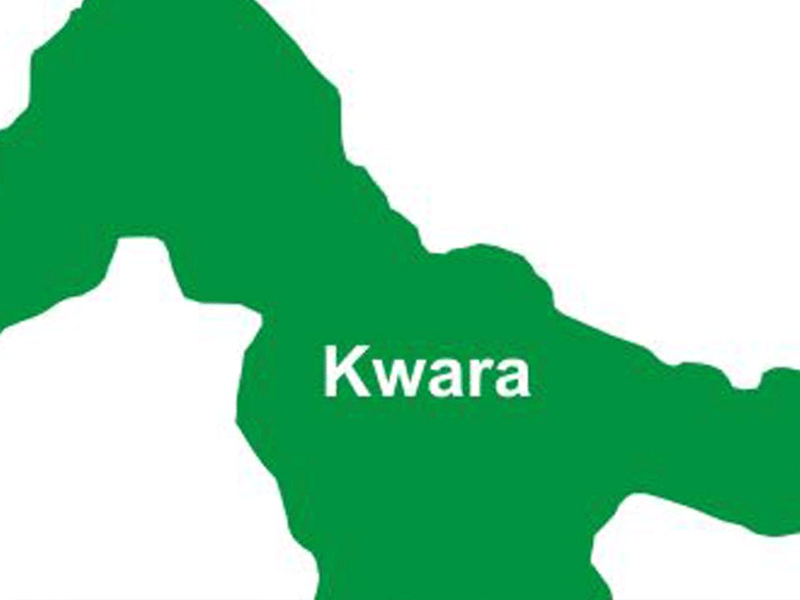
Grassroots Development Monitoring and Advocacy Centre (GDMAC) has raised alarmed and urgently calls for decisive and coordinated efforts to tackle the growing menace of armed bandits infiltrating the forests and communities of Kwara State, particularly in Kwara North and South senatorial zones.
According to the group, recent attacks have triggered fear and displacement among villagers while threatening the state’s agricultural backbone and environmental sustainability.
The Coordinator of GDMAC, Yinka Razak, painted a grim picture of the current security situation, stating, “Kwara has witnessed brutal attacks that have claimed the lives of forest guards, community leaders, and innocent residents in places like Oke-ede, Maganiko Ndanagi, Babanla, and Ogbayo. These violent incidents have forced many villagers to abandon their homes and seek refuge in Ilorin and other safer towns.”
He further disclosed the plight of herders as “thousands of cows have fallen prey to kidnappers in these troubled areas,” deepening the crisis.
On the wider implications, Razak stressed, “Criminals are turning thick forest reserves into camps by cutting trees for shelter and firewood, engaging in bush burning to mask their trails, and polluting vital water bodies. This environmental degradation, combined with the cessation of farming activities due to fear of attacks, risks plunging Kwara into food insecurity and community disintegration.”
GDMAC contended that prevention efforts must be prioritised before bandits establish permanent bases. Razak urged, “It is easier and less costly for Kwara to stop bandits from settling in its forests and farmlands than to dislodge them later, as has been painfully learned from the experiences of other states like those in the Northwest, Northeast, Benue, and Plateau.”
In concrete terms, the advocacy group calls for an expanded security strategy that “must extend beyond urban centers and highways into the remote forests, farmland, and border communities—especially forest reserves in Kaiama, Baruten, Moro, and neighboring areas. These must not be left unguarded if we are to deny bandits safe havens.”
Other News
The partnership between security agencies, community vigilante groups, and traditional rulers is pivotal, according to GDMAC. “Protecting farmers and herders is central to Kwara’s economy and culture,” Razak declared. “A deliberate plan to safeguard these livelihoods is vital. Coordinated efforts between security personnel and local leadership can reassure communities and prevent displacement.”
To reinforce community capacity, Razak emphasised that, “Bandits thrive in divided and fearful communities. We must strengthen unity and vigilance by encouraging residents to report suspicious activities fearlessly. Women and youth should be empowered as frontline actors in community early warning and defense systems.”
Communication strategies that promote accurate information dissemination while avoiding panic are essential, the group advised. “Religious leaders, traditional rulers, and civil society must foster messages of unity and shared responsibility, not division or blame,” Razak added.
He also highlighted the need to integrate developmental initiatives with security efforts: “Guns and patrols alone cannot resolve this. Kwara needs to invest in reforestation, renewable energy, and livelihood support programs.
Environmental protection is a security matter, as a healthy environment underpins peace and sustainability.”
The group issued an urgent appeal: “Kwara must not wait until its forests are lost, rivers polluted, and farmlands deserted before acting. The lessons from other states are stark—delay is dangerous. Strategic prevention, protecting natural resources, empowering communities, and linking security with development are the only paths to resilience. The time to act is now. Kwara must rise alongside government, civil society, security agencies, traditional rulers, and citizens to ensure no room is left for bandits to take root.”