Follow Us on Google

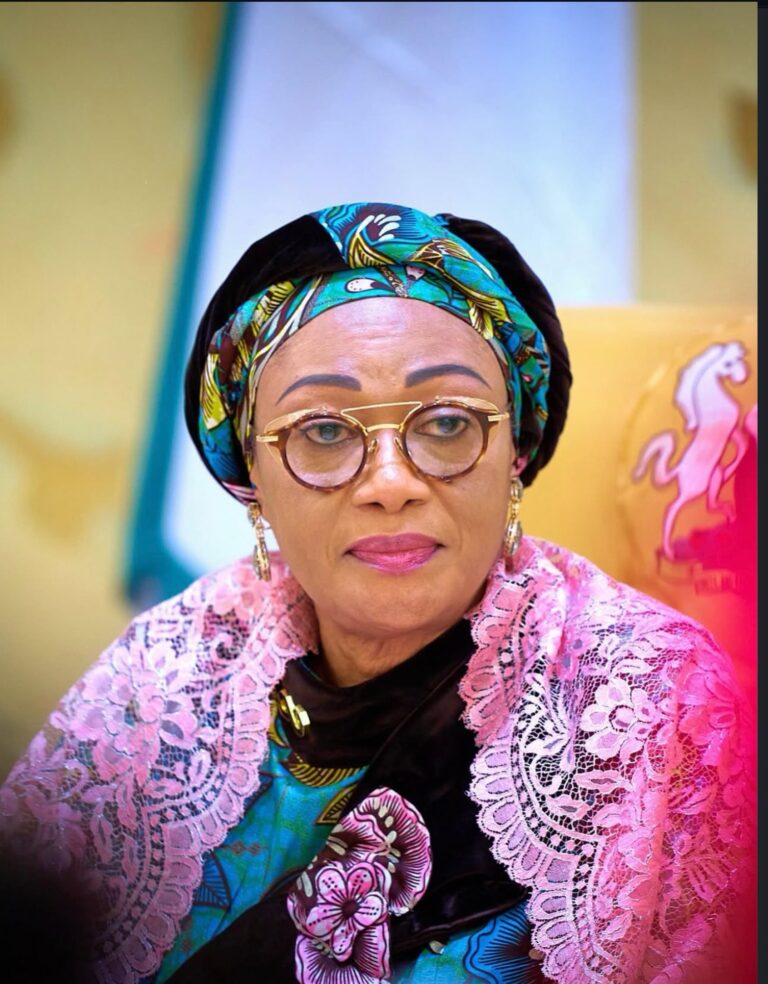
Erelu Sherifatu Eshinlokun-Adegbesan is an educationist by training, philanthropist by passion and the founder of Novelty Nursery and Primary School, Ogun State.
In this interview, this United Kingdom (UK) trained teacher and a charity consultant of Life Changers Foundation, a nongovernmental organization founded to cares for the needy, revealed what made her to sacrifice childhood dream of becoming lawyer for teaching profession among other issues.
Tell us about your educational background
My educational journey encompasses a diverse array of experiences across various institutions. I commenced my early schooling at Steppingstone Nursery and Primary School before continuing my secondary education at Baptist Girls’ College for approximately three years. Subsequently, I transitioned to Corona Secondary School to complete my secondary schooling. In 1997, I embarked on a new chapter by relocating to London to pursue further studies.
In the UK, I pursued a diploma in Business Studies at Lambeth College, laying the groundwork for my understanding of business principles. Building upon this foundation, I then pursued higher education at North London University, now known as London Metropolitan University, where I obtained a bachelor’s degree in international business and marketing. Eager to delve deeper into the realm of education, I later pursued a Post Graduate Certificate in Education, specializing in Special Needs Education, at the University of East London, culminating in my qualification as a teacher.
What fond memories do you recall from your childhood?
Reflecting on my childhood evokes cherished memories of the unwavering love and support within my tight-knit family, the vibrant tapestry of Lagos’ culture, and the enduring values imparted by my parents, which serve as guiding principles to this day. One particular memory stands out vividly: a youthful inclination to extend assistance to families in need, often discreetly sharing portions of our monthly bulk food purchases. I recall instances where, unnoticed by my parents due to their late working hours, I would clandestinely cook extra meals and invite friends from less fortunate families to share in the abundance. These clandestine acts were driven by a sense of joy and fulfillment, coupled with a passion for cooking that made the endeavour all the more enjoyable. Amidst the hustle of our daily lives, my father would occasionally treat us to Shawarma in Festac Town, and weekends were marked by visits to Badagry Beach and the ritual of slaughtering a chicken for our Sunday meal— an occasion I particularly relished, especially savouring the chicken’s head, a preference I maintain to this day. Such reminiscences abound, painting a vivid tableau of a childhood enriched by familial bonds and simple pleasures.
In what ways have your parents’ different heritage robbed off on your personality?
The unique heritage of my parents, with my mother hailing from Lagos, embodying quintessential African values, and my father, a blend of English and Nigerian descent with a strong British influence, has profoundly shaped my personality. This amalgamation of cultural backgrounds has endowed me with a rich tapestry of perspectives, blending traditional African values with modern Western principles.
From my African mother, I inherited a sense of discipline and tradition, grounded in the values of respect, hard work, and community. Conversely, my British father introduced me to a more liberal and cosmopolitan outlook, fostering qualities of adaptability, empathy, and open-mindedness. This juxtaposition of upbringing instilled in me a balance between structure and flexibility, allowing me to navigate diverse cultural contexts with ease.
While I experienced the firm guidance of my African mother, characterized by her strictness, I also found solace in the comforting embrace of my British father, whose nurturing presence provided a counterbalance. These contrasting influences cultivated in me an openness to different perspectives, the autonomy to make informed choices, and a sense of accountability for those decisions. Overall, the amalgamation of my parents’ diverse heritage has imbued me with a nuanced understanding of cultural dynamics and a resilient adaptability in navigating life’s complexities.
What stirred your interest in teaching since you had initially wanted to become a lawyer?
The shift from my initial aspiration of becoming a lawyer to pursuing a career in teaching was driven by a profound desire to directly influence the lives of children and youth. While I harboured ambitions of practicing law, I recognized the immediate impact I could have as an educator in shaping young minds and fostering their development. This realization was further solidified by the establishment of a low-cost, high-quality school in Nigeria, where I endeavoured to uphold international educational standards, drawing from my background as a UK qualified teacher. The experience of founding and managing this institution served as a catalyst for my decision to pursue a postgraduate degree in education, as I sought to deepen my understanding and effectiveness in this field.
Obviously, this spurred you to establish the Novelty Nursery and Primary School in Ogun State, when was the school established and how impactful has it been in the community?
The establishment of Novelty Nursery and Primary School was driven by a commitment to provide quality education and support to children within the community. Founded in 2011, the school has made a significant impact, offering a robust educational framework to numerous children and contributing to the holistic development of the community by nurturing its future leaders. Additionally, we have extended educational opportunities to deserving members of the community through scholarships. Notably, we provided full scholarships to children in challenging circumstances, such as an elderly retired widow tasked with caring for her incapacitated daughter’s children. These scholarships cover all aspects of their education, including tuition, books, stationery, and uniforms, demonstrating our dedication to ensuring access to quality education for all.
Your passion for charity work led to the establishment of the Life Changers Foundation. What are some of the highlights of this NGO and how well are you delivering on its vision as a consultant?
The inception of Life Changers Foundation emerged from my fervent dedication to charitable endeavours, particularly in the realm of uplifting the lives of individuals, notably children and young people. This foundation has yielded significant accomplishments, including facilitating vocational skills training for over 5000 individuals, offering essential healthcare services, and distributing educational materials. Currently, we are actively engaged in the establishment of a children’s home in Lagos State, specifically within the Ibeju Lekki Local Government Area, to provide shelter and support for orphaned and displaced children.
Our initiatives extend beyond physical aid; we collaborate with various monarchs to empower communities through vocational training programs and comprehensive medical assistance, including free eye tests, eyeglasses, and medications. As a charity consultant, I am dedicated to ensuring that Life Changers Foundation remains steadfast in its vision by implementing strategic approaches and fostering partnerships to amplify its impact. Moreover, through the foundation, I’ve had the privilege of engaging with legislators worldwide, conducting Legislative Capacity Building programs in countries such as Pakistan, Maldives, Argentina, Saint Kitts and Nevis, Ghana, and Nigeria, fostering legislative empowerment and advocacy for positive change.
Your new initiative, ‘Give Back Weekend’, what do you set to achieve with it?
The objective of the ‘Give Back Weekend’ initiative is to extend crucial assistance and provisions to vulnerable individuals residing in Lagos and Ogun States, on a monthly basis. Originating from my endeavours in London, where I provided steadfast support to migrant families facing resource constraints due to their limited access to public funds, this initiative has now expanded its reach to encompass various demographics in Nigeria.
In Nigeria, our focus primarily lies on aiding the elderly, widows, single-parent families, and young individuals who are grappling with socio-economic challenges. This support includes the provision of clothing, toiletries, food supplies, and other essential household items. By addressing these immediate needs, we aspire to foster a sense of community cohesion and solidarity among those facing adversity, thereby fostering a more supportive and resilient societal fabric.
From your perspective, are there similarities/differences between working in the United Kingdom and Nigeria?
When comparing the dynamics of working in the United Kingdom and Nigeria, it becomes evident that there are both similarities and differences. While the fundamental principles of charity work and caregiving remain steadfast across borders, the operational landscapes, cultural intricacies, and encountered challenges diverge significantly.
Both contexts share the common objective of effecting positive societal change through charitable endeavours. However, the methods of achieving this goal may vary due to the unique circumstances of each region. One notable distinction lies in the realm of funding. In the UK, accessing financial support for charitable activities is often more accessible, with numerous organizations available for potential collaboration. In contrast, securing funding in Nigeria can pose considerable challenges, as the pool of available resources is more limited.
Additionally, the availability of volunteers differs between the two settings. In Nigeria, there is generally a greater willingness among individuals to volunteer their time and efforts for charitable causes. Conversely, recruiting volunteers in the UK may present occasional difficulties, requiring more proactive outreach efforts.
Despite these variances, the overarching commitment to making a positive impact on society remains a unifying factor across both experiences. By recognizing and adapting to the unique dynamics of each context, organizations like ours have been able to effectively navigate challenges and maximize our contributions to the communities we serve.