Follow Us on Google
From Charity Nwakaudu Abuja
Minister of Water Resources and Sanitation, Professor Joseph Utsev, has said that Nigeria losses not less than three billion dollars annually to open defecation and unsafe environmental practices.
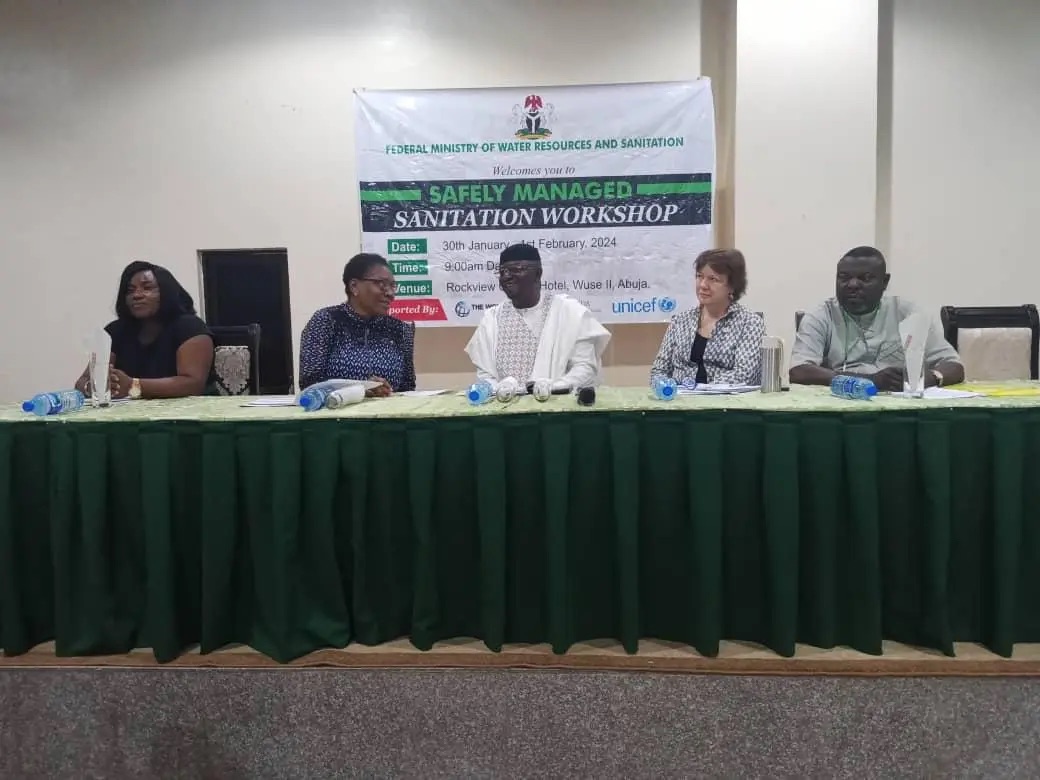
The Minister who made this known at the National Safely Managed Sanitation workshop in Abuja, yesterday, said the country cannot afford to continue losing billions of dollars annually to open defecation. According to him, Nigeria has pledged to triple its efforts towards achieving sustainable and safely managed sanitation, with a target of becoming open defecation free by 2025. He emphasised the crucial role of sustainable and safely managed sanitation in national well-being, wealth and economic growth and called for collective strategies to ensure that the country attains a safely managed sanitation service by 2025.
Asserting that safely managed sanitation is a right for all Nigerians, Professor Utsev said that the country cannot afford to continue losing billions of dollars annually to open defecation and reiterated the Federal Government’s commitment to intensify existing efforts for a comprehensive and effective sanitation system.
“With only six years to Sustainable Development Goals target of 2030, progress on achieving safely managed sanitation services is off track. Achieving the SDGs 6.2 target will therefore require us to make five times the current progress and triple our investment in the sanitation sector. The federal government of Nigeria is committed to the actualization of the SDGs 6 target for sanitation,” Utsev said.
Earlier in her opening remarks, the Director, Water Quality Control and Sanitation in the Ministry, Mrs. Elizabeth Ugoh, explained that although access to safely managed sanitation is a fundamental human right, millions of people across the globe, including Nigeria with a national access of 18%, continue to lack adequate facilities, with dire consequences for public health, the environment and overall well-being.
Mrs. Ugoh therefore stressed that the workshop serves as a crucial platform to collectively explore innovative strategies, share best practices in order to deepen collaboration so as to advance the cause of safe and sustainable sanitation for the populace.