Follow Us on Google
By Michael Anthony
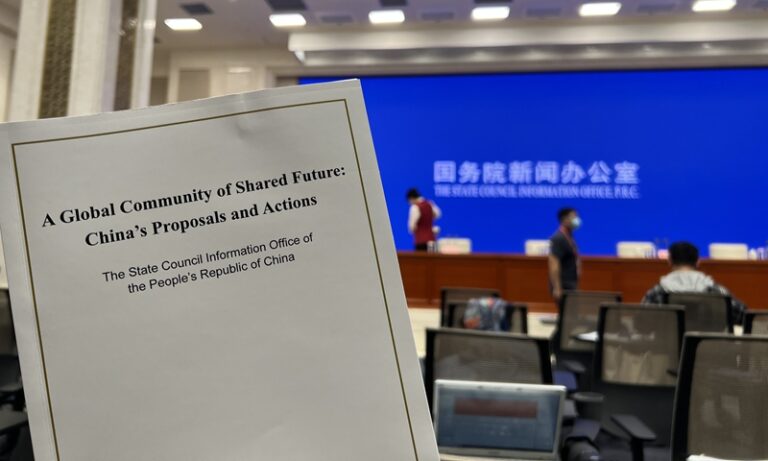
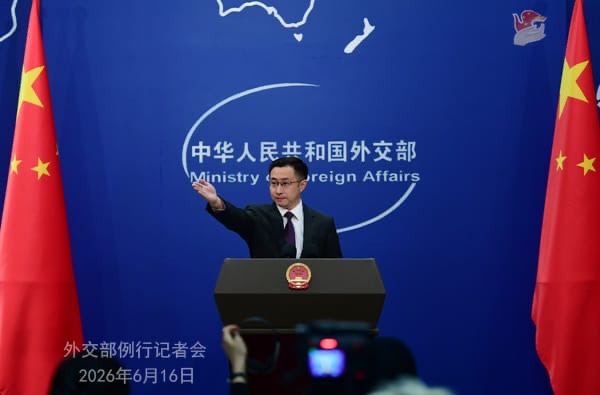
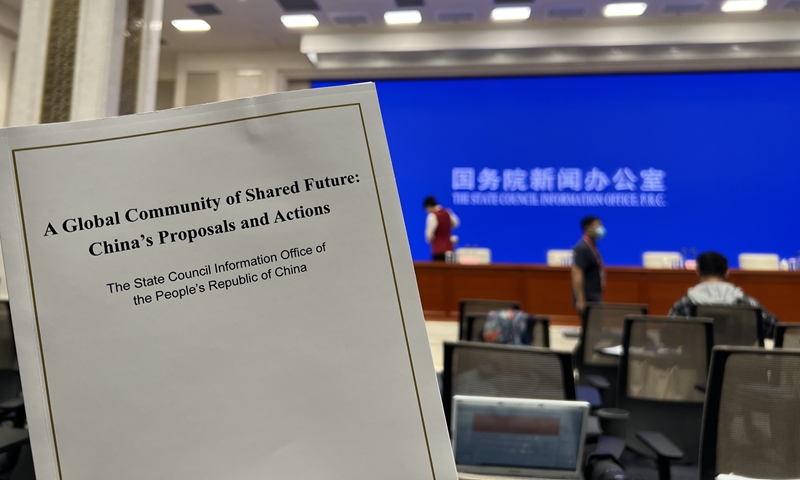
On June 17, 2026, China’s State Council Information Office released a white paper titled More Just and Equitable Global Governance: China’s Principles, Proposals and Actions — a 36-page, roughly 13,600-word English document that puts flesh on the bones of the Global Governance Initiative (GGI) that President Xi Jinping first proposed in 2025. For African readers, and Nigerians in particular, this is not a distant diplomatic abstraction. It is a statement of intent from a partner whose footprint on the continent is now measured in railways, ports, power lines, hospital wards and university scholarships. It deserves a careful, clear-eyed reading.
What the document actually says
The white paper is structured around a diagnosis and a prescription. The diagnosis, set out in its opening section, is bleak: armed conflict at a post-1945 high, the Ukraine crisis in its fifth year, the Middle East aflame, surging military spending, a faltering 2030 Agenda for Sustainable Development, more than 830 million people in extreme poverty and 2.3 billion facing food insecurity. Woven through this is a sharper political charge — that “unilateralism, protectionism, and hegemonism” are spreading unchecked, that certain powers bully the small and weak, weaponise trade, abuse “long-arm jurisdiction,” and erect “small yards with high walls.” Though the United States is never named, the addressee is unmistakable.
The prescription is the GGI itself, built on five stated concepts: sovereign equality, the international rule of law, multilateralism, a people-centred approach, and real actions. The document is careful to insist that the existing UN-centred order should be reformed and improved rather than “dismantled and rebuilt in full.” China positions itself not as a revolutionary seeking to overturn the system, but as a custodian seeking to make it live up to its founding promises — promises, it argues, that the West wrote and then abandoned.
The paper claims the GGI drew support from nearly 160 countries on launch, with over 60 joining a “Group of Friends of Global Governance.” It then catalogues China’s contributions: UN peacekeeping (more than 50,000 personnel across 29 missions, the largest troop contributor among the permanent five), Belt and Road infrastructure, the Global Development Initiative, BRICS expansion, the Shanghai Cooperation Organization, climate finance, and a wave of new institutions — the New Development Bank, the International Organization for Mediation headquartered in Hong Kong, a proposed World Data Organization.
The significance: a contest over who writes the rules
It is worth being precise about what is new here, because most of the GGI’s component parts are not. China already had a Global Development Initiative, a Global Security Initiative and a Global Civilization Initiative. The GGI is the fourth and arguably the keystone: the white paper explicitly frames it as “expanding on the institutions of the other three.” What it does is bundle a decade of Chinese diplomacy into a single doctrine and stake a claim to authorship of the rules of the international order, not merely participation in it.
This is the deeper significance. For most of the post-war era, the normative vocabulary of global governance — “rules-based order,” “good governance,” “human rights conditionality” — was set in Washington, London and Brussels. The GGI is an attempt to seize that vocabulary and redefine it: sovereignty over conditionality, “true multilateralism” over Western-led coalitions, development as the master-key to human rights rather than the other way round. Whether one finds this persuasive or self-serving, it is a genuinely consequential move. The terms of debate are being contested, and that contest is happening partly because the traditional custodians of the liberal order have, in recent years, given the critique a great deal of material to work with — tariff wars, paralysed dispute-settlement bodies, withdrawals from agreements and institutions. The white paper does not have to invent these grievances; it simply has to point at them.
What it means for the Global South
For developing countries collectively, the appeal of the document is straightforward and should not be dismissed as mere propaganda. Three of its arguments land with real force in capitals from Accra to Jakarta.
First, representation. The paper’s complaint that IMF quota reform and World Bank shareholding realignment have been delayed “in accordance with the agreed timeframes and roadmaps” is factually grounded — these reforms genuinely have been stalled, and developing-country voting shares genuinely do not reflect their weight in the world economy. When the white paper notes that the Global South now contributes some 80 percent of global growth on a purchasing-power basis yet remains underrepresented in the institutions that govern that economy, it is articulating a frustration that long predates China’s interest in it.
Second, non-interference and “development first.” The GGI’s framing of human rights as something “advanced through development” rather than imposed through conditionality is attractive to governments weary of Western lectures. This is also where the sharpest critique lies: the same principle that protects a developing state’s policy autonomy can also shield governments from legitimate accountability to their own citizens. African civil society will read “non-interference” differently from African presidents. An honest commentary must hold both truths at once.
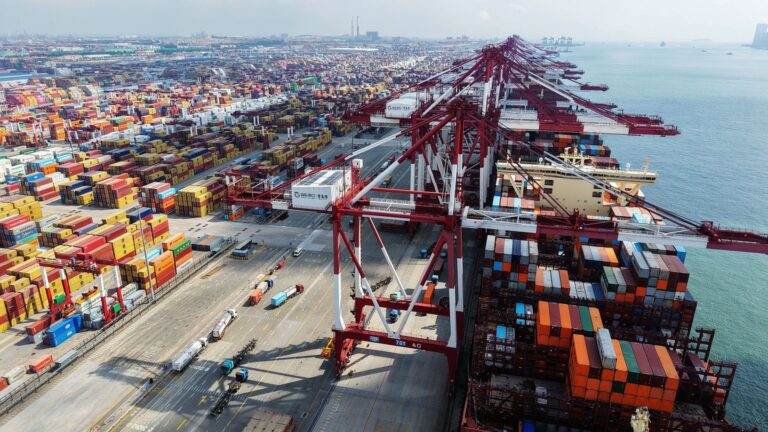
Third, concrete deliverables. The white paper’s strongest suit is not rhetoric but receipts — zero-tariff access for least-developed and African countries with diplomatic ties to China, the New Development Bank’s roughly US$42.9 billion in approved loans, Luban Workshops, Juncao technology, medical teams. For a continent that has spent decades hearing promises, tangible infrastructure has a credibility that communiqués do not.
The caution for the Global South is equally real. A single dominant partner — whoever it is — is not the same thing as the “multipolarity” the document celebrates. Genuine strategic autonomy for African states comes from balancing multiple partners against one another, not from substituting dependence on Washington with dependence on Beijing. The most sophisticated African response to the GGI is neither rejection nor embrace, but leverage.
What it means for China–Africa relations
Africa occupies a privileged place in this white paper, and not by accident. The document elevates China-Africa ties, following the Beijing FOCAC Summit, to an “all-weather China-Africa community of shared future,” pledges modernization across six areas and ten partnership actions, and — most pointedly for the diplomatic chessboard — declares that it is “imperative to address the historical injustice suffered by Africa” in UN Security Council reform, with “priority and special arrangements made for the continent’s demands.”
That last point matters enormously. Africa’s longstanding position, the Ezulwini Consensus, demands two permanent Security Council seats with veto and additional non-permanent seats. By publicly backing African priority in Council reform, China is making a low-cost, high-value play: it costs Beijing nothing today (no reform is imminent), but it banks goodwill and positions China as Africa’s champion against a Western status quo that has talked about reform for thirty years without delivering it. African diplomats should welcome the support while recognising the asymmetry — rhetorical endorsement is cheap, and the real test is whether China would expend political capital to deliver an actual seat.
The China-Africa relationship the white paper describes is one of partnership-as-equals in language and patron-and-recipient in much of its substance. The challenge for African states is to push the relationship toward the former: to move up the value chain from exporting raw commodities and importing finished Chinese goods, to insist on local content, technology transfer and debt terms that build rather than constrain. The document’s emphasis on “industrial chain cooperation” and capacity-building offers an opening here — if African negotiators are disciplined enough to hold China to it.
What it means for Nigeria
For Nigeria specifically, the GGI white paper should be read as both an opportunity and a mirror.
The opportunity is concrete. As Africa’s largest economy and most populous nation, Nigeria is precisely the kind of Global South heavyweight the GGI is designed to court. The zero-tariff commitments, the infrastructure financing channels, the New Development Bank (which Nigeria, as a BRICS partner country, can increasingly access), and the AI and digital-economy cooperation platforms the paper trumpets all map onto Nigeria’s most acute needs: power generation, transport, broadband, industrialisation, and the youth-employment crisis that sits beneath everything else. Nigeria has long sought partners willing to finance large infrastructure without governance preconditions, and the GGI is, in effect, a formal articulation of that offer.
But the mirror is uncomfortable, and it is where a Nigerian reader should be most honest. The white paper’s entire diagnostic — institutions that exist but do not deliver, agendas “discussed but undecided, or decided but not implemented,” the gap between lofty principle and lived reality — describes Nigeria’s own governance pathologies at least as well as it describes the global system. China’s pitch rests on a “real actions” pillar precisely because the world is drowning in declarations that go unexecuted. Nigeria knows this disease intimately. There is a quiet irony in a document so focused on the gap between words and delivery arriving in a country that has produced more development blueprints than completed projects.
The lesson for Abuja, then, is not simply to sign up. It is to approach the GGI with the same instrument the document itself praises — leverage and reciprocity. Nigeria’s bargaining position is stronger than its negotiators often behave as though it is: a market of over 220 million people, regional weight in ECOWAS and the African Union, oil and gas, and a diaspora that is itself a strategic asset. The questions Nigerian policymakers should bring to every GGI-framed deal are unglamorous but decisive: What is the debt sustainability profile? What share of the work and the supply chain is local? Is there genuine technology transfer, or only a finished facility and a maintenance contract? Does this strengthen Nigerian institutional capacity, or substitute for it?
There is also a subtler dimension that Nigerians, with our own experience of multi-ethnic, multi-regional nationhood, are well placed to appreciate. The white paper’s language of “harmony without uniformity,” “coexistence in diversity,” and respect for civilisationaldifference is doing real diplomatic work — it is the velvet around the steel of non-interference. It is genuinely attractive after decades of one-size-fits-all prescriptions. But a people who have lived the difference between having a country and having a nation should be alert to how easily the language of harmony can become the language of suppressed dissent. The principle that protects a state from external lecturing can also insulate it from internal accountability. That is a tension Nigeria should engage with eyes open, at home as much as abroad.
A closing perspective
The honest verdict on this white paper is that it is simultaneously a sincere diagnosis and a self-interested prescription, and that these are not contradictory. The grievances it names — Western double standards, stalled institutional reform, the weaponisation of trade and finance, the marginalisation of the Global South — are real, and the established powers have been remarkably effective at lending them credibility. The solution it offers is shaped, inevitably, to advance China’s own standing.
For Africa and for Nigeria, the productive stance is neither the reflexive suspicion that treats every Chinese initiative as a trap, nor the uncritical enthusiasm that mistakes a powerful new patron for a selfless friend. It is strategic agency: engage the opportunity, bank the support on Security Council reform and development finance, hold China to its own stated principles of equality and shared benefit, and refuse to trade one form of dependence for another. The GGI describes a more multipolar world. The whole point of multipolarity, properly understood, is that it gives middle powers room to manoeuvre. Whether Nigeria uses that room or squanders it will depend far less on what Beijing writes in a white paper than on what Abuja decides to do with it.
The compass the document offers may well point toward a fairer distribution of global power. But a compass only helps those who have already decided where they want to go. That decision, for Nigeria, remains ours to make.
_______________________________________________________
Anthony, a keen follower of Chinese development and modernisation, wrote from Lagos