Follow Us on Google

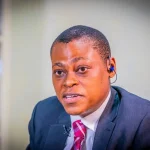
A public affairs analyst, Guillaume Debailly, has said the rise in coups and authoritarianism across Africa, threatened the democratic resilience of the continent, particularly economic and political stability of African countries.
Writing from Brussels, Belgium, Debailly stated that recent coups in the Sahel have weakened the credibility of the Economic Community of West African States (ECOWAS) through its inconsistent response, while the creation of the Alliance of Sahel States (AES) threatened to result in further political division.
He added that while coups were often presented as the result of internal political factionalism, the role of external forces in encouraging and facilitating such actions was overlooked.
In Nigeria, Debailly also said that while Nigeria has a strong and vibrant democracy, recent reports of a coup led by military officers has raised concern among politicians and government officials. Several individuals have been arrested.
“Several factors make Nigeria potentially vulnerable to foreign support for coups or efforts to undermine democracy. For example, economic inequality and hardship has fueled widespread public discontent, while security challenges such as the Boko Haram insurgency mean that Nigeria’s security forces are overstretched and demoralized.
“Nigeria’s history of military rule and low public faith in democratic and political institutions also makes Nigeria particularly vulnerable.
“Recent coups in Niger, Mali and Burkina Faso have increased regional instability in West Africa by creating a security vacuum which has allowed jihadist and terrorist groups to expand their operations along Nigeria’s borders.
“In 2018, the Russian Centre for Promotion of International Initiatives established the Friends for Leadership (FFL) programme which has invited Nigerian journalist members to take part in conferences in Russia.
“African Initiative is similarly engaged with journalists in Mali, Burkina Faso and Niger, and is suspected to be a key facilitator for Russia’s information war in Africa,” Debailly said.
He further said between 2020 and April 2024, there were nine successful coups in Africa, and at least, the same number of failed attempts, marking a significant increase from 2010-2020.
“This is indicative of a wider trend of democratic backsliding and a rise in authoritarian regimes, particularly in West Africa and the Sahel, which threaten democratic progress and economic development more broadly in Africa. There is strong evidence to suggest that support from foreign state actors and proxies has contributed to this trend of coups, particularly through security assistance, financial support and information warfare,” he stated.
In terms of vulnerabilities, Debailly further said several high-profile publications and think-tanks have highlighted key factors that made a country vulnerable to coups.
“German think-tank SWP highlighted three key drivers: “acute crises, politicized armed forces and self-reinforcing regional dynamics”. These crises include socio-economic challenges, corruption, power struggles and terrorist insurgencies, while countries which have a history of the armed forces intervening in politics are more vulnerable.
“The Georgetown Journal of International Affairs noted that coups are more likely to occur where “voters have lost faith in the political system”, for example in Gabon and Guinea where coups prevented political successions. It also noted that all countries in Africa which have experienced a coup since 2020 are classed as a Least Developed Country (LDC), except Gabon, which highlights low economic development as a contributing factor.
“The responses of regional and international organizations to coups have been limited, and often weak. In order to increase resistance to future coups, bodies such as the AU and ECOWAS need to be unified and act decisively,” Debailly recommended.
On methods deployed by perpetrators, he said the vulnerabilities can be exploited by foreign actors, which often encourage coups to advance their own geopolitical or economic interests and undermine democratic processes.
“The most well-documented example in recent years is Russian support to the September 2022 coup in Burkina Faso. However, there is also evidence that foreign actors have exploited such vulnerabilities to undermine democracy through support for authoritarian regimes and political opposition actors. For example, Russian support to President Faustin-Archange Touadéra authoritarian regime in the Central African Republic (CAR) and Russian support to opposition leaders in Angola,” he also said.
Debailly further cited foreign support for coups, particularly in Burkina Faso where he said in January 2022, a military junta led by Lieutenant Colonel Paul-Henri Damiba, successfully deposed democratically elected President Kaboré in a coup triggered by the government’s perceived failure to contain an insurgency.
“In September 2022, a second coup led by Captain Ibrahim Traoré successfully deposed Damiba after Damiba’s regime failed to deliver on its security promises.
“According to the European Council on Foreign Relations, there is strong evidence that Russia provided support both during and after the September 2022 coup.
“An associate fellow at Royal United Services Institute (RUSI) was quoted as saying “The Burkina Faso coup could be the first example of Russia playing a part in instigating a coup rather than just capitalizing on pre-existing unrest.
“Methods used by Russia included sophisticated and coordinated disinformation campaigns, using fake accounts, spreading false narratives portraying Traoré as a “cult-icon” and AI-generated endorsements.
“Russia also provided operational and security assistance, for example, embedding agents in Burkina Faso’s intelligence service, deploying of Russian military personnel to Burkina Faso as “military advisers and contractors”, and delivering of weapons and military training initiatives to the Burkinabe Armed Forces,” he further said.
On foreign support for authoritarian regimes, especially in the Central African Republic (CAR), Debailly said while initially democratically elected in 2016, President Faustin-Archange Touadera’s regime in the Central African Republic (CAR) has become increasingly authoritarian, engaging in constitutional manipulation, violent suppression of political opposition, human rights abuses and corruption and resource exploitation.
“In July 2023, Touadera held a referendum to abolish the two-term limit and allow himself to run for a third term. Russia then sent Wagner Group mercenaries to CAR with the aim of “securing the constitutional referendum”. This has stifled democracy in CAR. In 2021, a UN working group reported that Wagner Group mercenaries had committed human rights abuses following unrest after the presidential elections in December 2020. There were further reports of intimidation and violent harassment by Wagner mercenaries against civilians, journalists, aid workers in minorities in CAR.
“Touadera’s regime has struggled to control threats from political rebels and terrorism which has resulted in a deteriorating security situation. As a result, the regime employed Wagner Group mercenaries as military trainers, national security advisors and presidential bodyguards and entered a military-technical cooperation agreement with Russia, which gained access to CAR’s natural resources in exchange.”
Debailly further referenced foreign support for opposition actors in Angola whereby in August 2025, two Russian nationals were arrested in Angola for criminal association, falsification of documents, terrorism, and terrorist financing in relation to the recruitment and training of a disinformation and propaganda network.
“This network is accused of being behind the recent protests in Angola against the increase in fuel prices.
“Those arrested were identified as Lev Lakshtanov and Igor Racthin. Lakshtanov founded an NGO, known as Farol, which works in Portuguese-speaking countries to foster cultural cooperation and has links to Russia’s official cultural diplomacy agency, Rossotrudnichestvo and a network known as Africa Politology.
“After entering the country on tourist visas, Lakshtanov and Racthin presented themselves as journalists and reached out to UNITA’s leader, Buka Tanda, who helped them to facilitate paid interviews with political figures and conduct an opinion poll on the perception of Russia in Angola.
“This is an example of the use of soft power and propaganda by foreign actors to undermine democratically elected governments in Africa. Multiple organizations have been identified as being linked to Russian information manipulation and influence operations including Rybar, African Initiative, Bureau Legint and GR Group,” Debailly concluded.