Follow Us on Google
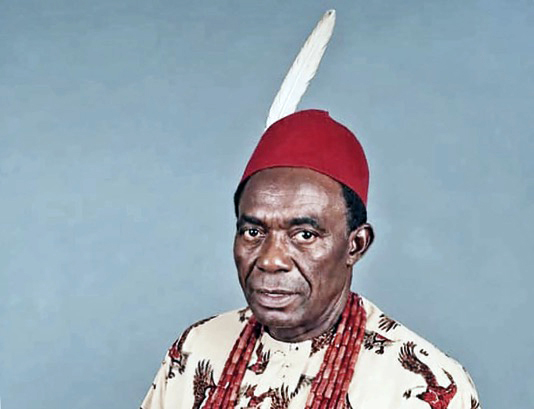
Attempting a complete account of the life of Chief Nzedioramma Uche Okafor (Onyima Dike N’ututu), founding Chairman & MD, U.O.O. Nigeria Plc, in a short piece risks understatement; his achievements and influence deserve a book. Still, this authorised sketch traces his journey from humble beginnings in Nkwukwo village, Unubi, to the head of the U.O.O. Group — a commercial and industrial empire that transformed communities and provided livelihoods for thousands.
Born in 1917, Uche Okafor was the fourth and last child of Okafor Ezeibekwe, a respected farmer and palm-wine tapper, and Nwazuruahu (daughter of Ucheabuaku), a prosperous fish merchant and women leader. He spent his early childhood with his maternal relations and grew up identifying with the Ucheabuka family. As a youth he participated actively in local cultural life, including the Osoji dance.
Nwazuruahu withheld Western schooling for her son, believing his character and focus would be better applied elsewhere. At 13, in 1930, Uche was initiated into the prestigious Nze na Ozo institution — a mark of social standing that raised his status among peers. Although he did not receive formal education, he displayed keen intelligence and later became a staunch supporter of schooling in his hometown.
Business beginnings and growth
Uche’s commercial career began at 13 with capital of eighteen shillings and four pence — proceeds from selling a fowl used in a naming ceremony. He traded palm oil and groceries in nearby markets and, by 1932, had begun trading in Onitsha, a 40-kilometre walk from Unubi. He persisted through hardship, buying first a bicycle in 1936 and later using public transport as his business expanded.
In 1939, facing declining profits from wartime trade, he moved to Aba with his cousin Nnodu Okolo. After a decade-long partnership that ended in 1947 over disagreements on profit-sharing, Uche focused on textiles, opening DUO All Wool Stores at No. 9 Asa Road, Aba. He later renamed it UOO All Wool Stores.
Uche’s first overseas textile import came in 1952 through Bradford Tweed & Co of Great Britain. He trained and absorbed apprentices who became trusted lieutenants. By the mid-1950s he formalised partnerships and, in 1958, relocated core operations to Lagos, adding branches in Ibadan, Port Harcourt and Aba. Expansion into property followed; in Port Harcourt he invested in prime real estate and constructed high-rise buildings that sparked public curiosity and, briefly, unfounded rumours about the source of his wealth.
Post-war revival and corporate consolidation
The Nigerian Civil War (1967–1970) disrupted Uche’s businesses, but he and his team worked swiftly to rebuild. By 1973 the company had regained its pre-war standing and opened trade links to Europe, America and Asia. U.O.O. diversified into textiles, rice, flour, pharmaceuticals, manufacturing, agriculture and real estate. In 1975 the firm incorporated as a limited liability company, with Uche as the founding Chairman and Managing Director. In 2001 U.O.O. became a public limited company, UOO Nigeria Plc, with seven subsidiaries.
U.O.O.’s growth created jobs for over 2,000 people and positioned the group among Nigeria’s notable enterprises originating in the Eastern region. In 1997, the federal government recognised Uche’s industrial contributions when then Head of State General Abdulsalami Abubakar presented him the President’s Best Productivity Award for United Steel Converters Limited.
Champion of education and community development
Although he lacked formal schooling, Uche was an ardent patron of education. He led the clearing of Ohia Akpuagu to establish a boys’ secondary school in Unubi and supported the founding and recognition of a girls’ secondary school. U.O.O. financed a student dormitory bearing the company’s name. He also sponsored a nephew to study pharmacy abroad, reflecting his belief in investing in human capital.
Uche’s philanthropy reshaped Unubi. He funded road construction from Afor Market to Akwaihed, built bridges and culverts, organised and financed the town’s first block tank, and surveyed and negotiated land for the Afor Market. His company established Unubi’s first health centre and maternity, which proved vital during the civil war. He supported Red Cross relief, helped provide electricity through the Unubi Top Club, and offered trade credit and emergency cash assistance to traders and victims of disasters.
Customs, culture and civic life
A custodian of tradition, Uche reformed the Nze na Ozo institution in Unubi and collaborated with language scholars such as Dr F. C. Ogbalu and Dr. Akanu Ibiam to enrich Igbo vocabulary; for example, contributing words such as “Mahadum” (University). Politically non-partisan by nature, he nevertheless backed progressive initiatives that promoted development, donated to infrastructure projects, including the defunct Ochi Local Government and both Anambra and Imo airport projects, and preferred cash support over mere pledges.
He held numerous titles and memberships: pioneer founder and later patron of the Unubi Improvement Union at Aba; member of the People’s Club of Nigeria; foundation member of the Unubi Top Club and the Ikemba Age Grade; head of Nze Unubi and one-time President-General of Nze na Ozo Igboland; honorary fellow of Anambra State Journalism; Paul Harris Fellow; member of Ezeji Title Holders of Ugwunagbo; member of Ohaneze Ndi Igbo; and Chairman of the Board of Trustees of the Godian Religion, holding the title Aji Dike Udo.
Character and legacy
Uche Okafor was versatile — equally comfortable in boardroom management, political conversation and hands-on ventures in farming and construction. He prized honesty, justice and integrity, and demanded hard work and upright conduct from those around him. Known for repairing or building homes for the needy and rewarding industry and truthfulness, he earned a reputation as a defender of the poor.
His life embodied the self-made ascent from “grass to grace.” He took pride in nurturing a business that sustained thousands and uplifted his community. Even in illness, he prayed for U.O.O.’s continued growth and for the company to become a leading conglomerate at home and abroad.
Passing and final wish
Chief Nzedioramma Uche Okafor, Onyima Dike N’ututu, passed away peacefully on Tuesday, Afor, 30 January 2007. He left behind a vast industrial legacy, a strengthened Unubi, a family of successful children and an enduring example of civic duty and entrepreneurship. His family and associates resolve to keep his vision alive and to steer U.O.O. Nigeria Plc onward, preserving the values and community commitments that defined his life.