Follow Us on Google
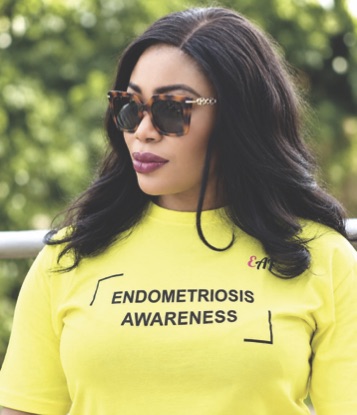
The Endometriosis and Adenomyosis Foundation (EAF) has called for increased public awareness, early menstrual health education and improved clinical capacity to ensure timely diagnosis and comprehensive care for people living with endometriosis.
Chief Executive Officer, Olabimpe Fapohunda, described endometriosis as a systemic condition requiring greater attention from the public, healthcare professionals and policymakers.
Fapohunda noted that global health data estimates that endometriosis affects about one in 10 women of reproductive age, stressing that the condition should no longer be dismissed as ordinary menstrual discomfort.
She made the call while highlighting the experiences of women affected by the condition and the consequences of delayed diagnosis.
An endometriosis survivor, who was diagnosed in 2021, recounted how delayed recognition and limited initial clinical expertise contributed to serious complications, including pelvic endometriosis that affected kidney function.
According to the survivor, the progression of the disease eventually resulted in a “frozen pelvis”, a severe complication associated with extensive tissue adhesions.
Fapohunda explained that although endometriosis commonly affects the pelvic cavity, tissue similar to the lining of the uterus can occur in other parts of the body, making diagnosis and treatment more complex.
She said the condition could involve the chest and lungs, a manifestation known as thoracic endometriosis, while growths around nerves such as the sciatic nerve could cause pain extending down the legs.
The EAF founder further noted that endometriosis-related pain could manifest in unusual locations, including the navel in cases of umbilical endometriosis, stressing that such symptoms require specialised medical assessment.
She advocated enhanced training for radiologists and other healthcare professionals to improve the detection of deep and localised lesions and reduce diagnostic delays.
Beyond healthcare delivery, Fapohunda called for institutional reforms, particularly the integration of age-appropriate menstrual health education into school curricula.
She said early education would help young girls understand the difference between normal menstrual discomfort and warning signs such as debilitating pain and unusually heavy bleeding.
According to her, such knowledge could encourage earlier medical consultations while also helping to challenge the stigma and misconceptions surrounding menstrual health.
EAF said achieving meaningful progress in the management of endometriosis requires coordinated action among healthcare institutions, patient advocacy organisations and government policymakers.
The foundation called for measurable improvements in patient wellbeing through specialised healthcare training, wider access to standardised evidence-based care and stronger institutional support for the long-term management of the chronic condition.
It stressed that efforts to address endometriosis must move beyond basic awareness campaigns to the establishment of systems capable of providing affected individuals with timely diagnosis, appropriate treatment and sustained support.