Follow Us on Google
By Fred Itua, Juliana Taiwo-Obalonye, Romanus Ugwu, Ndubuisi Orji, Okwe Obi, Idu Jude, Abuja; Bamigbola Gbolagunte, Akure; Scholastica Hir, Makurdi; Paul Orude, Bauchi; Lukman Olabiyi; Emmanuel Adeyemi, Lokoja; Aniekan Aniekan, Calabar; George Onyejiuwa, Owerri; and Sylvanus Viashima, Jalingo
As Nigeria marks its 66th independence anniversary, a broad range of public figures have taken stock of the nation. They include former lawmakers, presidential candidates, Senior Advocates of Nigeria (SANs), scholars, regional leaders and civil society activists. They spoke from Abuja, Akure, Bauchi, Calabar, Jalingo, Lagos, Lokoja, Makurdi and Owerri.
Their views differ sharply on the performance of the present administration. Yet they return again and again to the same concerns. Almost all agree that the country has held together. Few believe that survival alone is a sufficient measure of success.
This analysis examines the ten issues that dominated the commentaries. They are presented in order of the weight and frequency with which they were raised. Each is assessed against what the speakers said, where they agreed and where they differed. Together, they offer a guide to the political questions that will shape the run up to the 2027 general elections.
Leadership: The common diagnosis
No issue drew as many voices as leadership. It cut across party lines and across regions. Speakers who disagreed on nearly everything else agreed that the quality of those who governed had shaped the nation’s fortunes.
A member of the Peoples Democratic Party (PDP) Board of Trustees, Chief Eddy Olafeso, said bad leadership had stopped Nigeria’s potential from becoming possibility for millions. He recalled that the gains of the First Republic gave way to military dictatorship. The country, he said, had not found its momentum since the return to democracy.
Chief George Moghalu, a founding member of the All Progressives Congress (APC), said the nation needed to rework its leadership credentials. Chief Soronnadi Njoku, SAN, named the quality of leadership as the greatest challenge. He observed that Nigerians demanded the best in cars, houses and watches but accepted mediocrity in those who governed.
The Labour Party (LP) presidential candidate, Chibuzor Okereke, described poor visionary leadership as the weakest point of the country. Kefas Musa Magaji, Chairman of the Bauchi Fertiliser Company, said the country lacked truly patriotic leaders. He said early leaders had started well but derailed.
Two contributions added depth. Professor Jerome Nyame traced the problem to recruitment. He said many leaders emerged through fraud, purchase or sentiment, and that such leaders served the cabal that installed them. Hon. Tajudeen Yusuf, a former member of the House of Representatives, cautioned against treating leadership as an isolated failure. In his words, leaders do not fall from heaven. They are products of society.
The speakers were describing two separate problems. One was the character of those in office. The other was the process that placed them there. The first could be addressed by exhortation. The second required reform of party primaries, electoral administration and the role of the courts in deciding mandates. That difference explains why the leadership debate ran directly into the democracy debate.
Economy and cost of living: Two readings of the same reforms
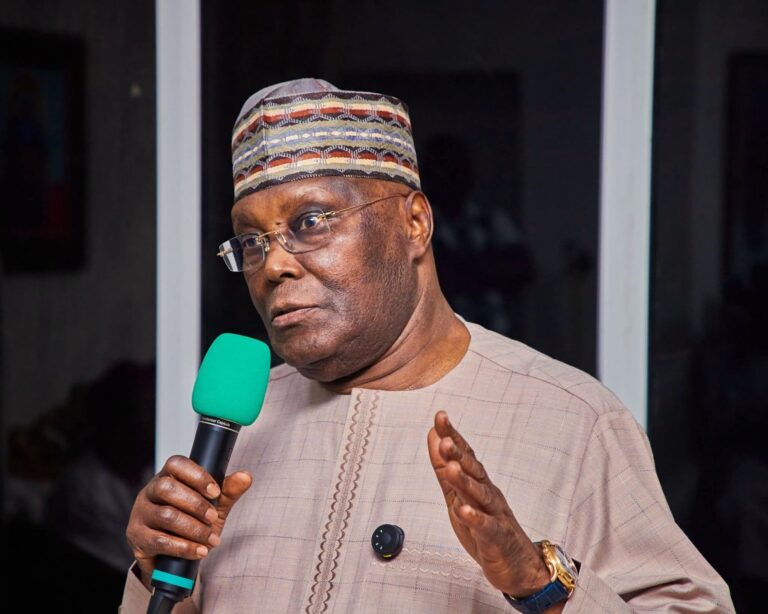
The economy was the second most contested issue. Here the speakers diverged most. Former Vice President Atiku Abubakar, the African Democratic Congress (ADC) 2027 presidential candidate, spoke through his aide, Phrank Shaibu. He said higher fuel prices had pushed up transport fares, food costs and the expense of running a small business. Chief Iorbee Ihagh, a Benue statesman, put fuel at N1,500 per litre and said ordinary Nigerians had gained nothing.
A former National Secretary of the New Nigeria People’s Party (NNPP), Dipo Olayokun, claimed Nigeria had slipped to fourth place among Africa’s economies, behind South Africa and Egypt. That figure was his own assertion and was not supported with data in the commentaries.
Other News
Mba Ukweni, SAN, offered a structural view. He said the high cost of living was a direct result of low production. He pointed to the disappearance of warehouses on Calabar’s Marina. He also cited rubber estates in his community that once employed up to 10,000 people but now employed fewer than 20.
Supporters of the administration read the same period differently. The National Organising Secretary of Afenifere, Abagun Kole Omololu, said the removal of fuel subsidy showed courage. He said a relatively stable exchange rate showed that the reforms were working. He compared the process with Singapore’s rise. Moghalu noted that subsidy removal had put more money in the hands of state governments, although much infrastructure work remained.
Between the two camps stood Nella Andem Ewa, SAN, a former Attorney General of Cross River State. She said the federal government had many good policies. Yet citizens did not feel their impact.
Both camps accepted that the pain was real. They disagreed on whether it was temporary or structural. That question will define the economic argument of the next election. Governments seldom win on projections. They win when households feel relief. Omololu himself urged elites to explain the reforms to the public. He also asked governors to pass on the benefits through loans and grants. That appeal was an admission that the gains had not yet reached many homes.
Insecurity: The threat beneath other problems
Insecurity ranked third. Speakers presented it less as a separate problem than as a force that worsened every other.
Chief Ihagh, a former Comptroller of Prisons, alleged that armed herdsmen killed people without being arrested. He said soldiers who saw killings took no action. He had been an internally displaced person for 16 years and could not bury his wife in his ancestral home. His account put a human face on the statistics of displacement. He also linked insecurity to reduced farming. Displaced farmers, he argued, could not contribute to food production.
Moghalu made a similar link. He said insecurity affected food production, tourism and travel. He praised the sacrifices of security agencies. Yet he described the problem as fundamental. Professor Nyame blamed a lack of political will.
Comrade Idris Abdul Miliki, Executive Director of the Conscience for Human Rights and Conflict Resolution in Lokoja, gave the most technical assessment. He said violent extremism drew strength from governance failure, corruption, inequality and unemployment. He described the national response as fragmented. Federal, state and local actors, he said, worked without shared data or a unified policy. He urged the National Security Adviser and President Bola Tinubu to release a validated counter terrorism policy document prepared with the National Counter Terrorism Centre.
Ms Andem Ewa warned that desperate people could become dangerous. The thread running through these views was clear. Insecurity was tied to poverty, weak coordination and the argument over policing. Mr Omololu’s call for state police reflected a wider concern. A single centralised force, many believed, could not protect a country of Nigeria’s size.
Democracy and electoral credibility
Democracy was the fourth major theme. Speakers valued it. Many doubted its quality. The Founding National Chairman of the ADC, Chief Okey Nwosu, said nearly 28 years of unbroken civilian rule was the only achievement Nigeria could celebrate. He said the course had been abused by indiscipline, greed and leadership failure. He described the National Assembly as a rubber stamp for the Executive. He alleged that lawmakers had backed a position that fake certificates should no longer disqualify candidates. That allegation was his own and should be read as such.
Olayokun argued that the democracy practised since 2023 had reduced earlier gains. He cited a lack of freedom of speech, association and movement. Chief Ihagh said Nigeria should not become a one party state, and that votes must count. Professor Nyame said some mandates were taken from winners through the courts. Ms Andem Ewa called for real time transmission of results. Mr Miliki appealed to parties, candidates and voters to respect the rules.