Follow Us on Google
•Too many children still die from menace
Every year, an estimated 400,000 children and adolescents aged 0 to 19 develop cancer globally. Yet for many of them, a cancer diagnosis is not necessarily a death sentence.
In countries where comprehensive childhood cancer services are available, more than 80 per cent of affected children can be cured. But in most low- and middle-income countries, fewer than 30 per cent survive.
The wide gap is not simply about the nature of the disease. It is also about whether a child is diagnosed early, receives the correct treatment, has access to essential medicines and can complete treatment without facing financial and other barriers.
For families in resource-constrained settings, these challenges can turn a potentially curable illness into a tragedy.
Cancer can affect children at any age and can develop in almost any part of the body. Unlike many cancers in adults, however, most childhood cancers have no known cause and are not generally linked to lifestyle or environmental exposures.
According to experts, the most common childhood cancers include leukaemias, brain tumours and solid tumours such as neuroblastoma and Wilms tumour. Among adolescents, lymphomas, bone cancers and thyroid cancer become more common.
The World Health Organisation (WHO) says current evidence suggests that about 10 per cent of children with cancer have a genetic predisposition to the disease.
Certain infections can also increase the risk of some childhood cancers, particularly in low- and middle-income countries, it disclosed. These include HIV, Epstein-Barr virus and malaria. This makes prevention of childhood cancer particularly challenging.
Unlike some adult cancers, there is generally no effective population-wide screening programme for childhood cancer. WHO says screening is not generally helpful, although it may be considered for certain children at high risk because of inherited genetic mutations.
With prevention and screening offering limited opportunities, early recognition of symptoms becomes critical.
Warning signs can include persistent fever, severe and persistent headaches, bone pain and unexplained weight loss. Such symptoms may be noticed by parents, caregivers or primary healthcare workers.
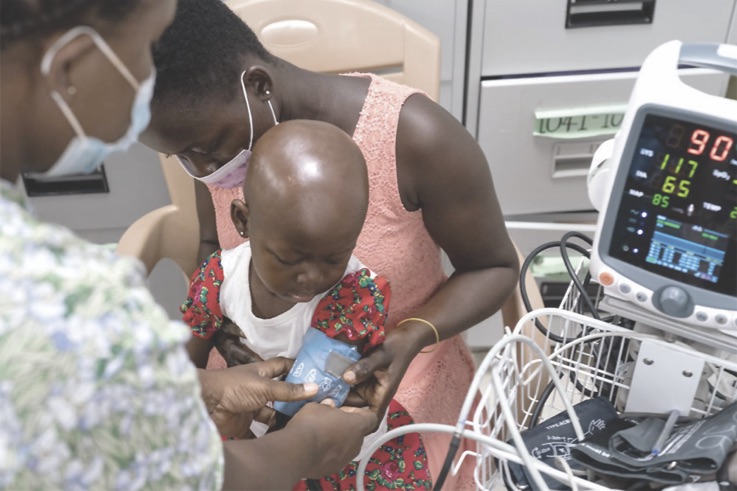
But recognising a warning sign is only the beginning. A child must then receive an accurate diagnosis, have the extent of the disease determined and gain prompt access to appropriate treatment.
When diagnosis, treatment come too late
For children with cancer, time can make a critical difference.
WHO identifies delayed or incorrect diagnosis, difficulty accessing treatment, abandonment of treatment, treatment toxicity and relapse among the factors contributing to avoidable deaths in low- and middle-income countries.
A correct diagnosis is particularly important because childhood cancers do not all respond to the same treatment.
Depending on the type and extent of the cancer, treatment may involve chemotherapy, surgery, radiotherapy or a combination of these. Children also require specialised supportive care that takes account of their growth, development and nutritional needs.
But access to these services remains unequal.
Essential medicines, pathology services, blood products, radiotherapy, appropriate technology and psychosocial support are not consistently available in many parts of the world.
The availability of cancer medicines illustrates the gap. WHO reports that only 29 per cent of low-income countries say cancer medicines are generally available to their populations, compared with 96 per cent of high-income countries.
Other News
For families already struggling with the emotional burden of a child’s illness, difficulty obtaining medicines or reaching specialised treatment can become an additional barrier.
Treatment abandonment is another problem. When families cannot sustain the cost, travel or other demands associated with prolonged treatment, a child may fail to complete therapy.
The consequences can be devastating.
WHO notes that when childhood cancer is diagnosed early and treated effectively, children have a much greater chance of survival. Early diagnosis can also mean less intensive treatment, less suffering and lower treatment costs.
Fight for survival
The possibility of cure makes the global inequality in childhood cancer survival particularly significant.
WHO says more than 80 per cent of children with cancer can be cured when appropriate services are accessible. Many of the medicines required are inexpensive generic drugs included on the WHO Model List of Essential Medicines for Children.
The challenge, therefore, is not simply discovering new treatments. It is ensuring that children who need proven treatments can actually receive them.
For those who cannot be cured, care must still continue. Palliative care can relieve pain and other symptoms while improving the quality of life of children and their families.
WHO considers paediatric palliative care a core part of comprehensive cancer care and says it should begin when the disease is diagnosed, regardless of whether treatment is intended to cure the child.
Such care can be provided in hospitals, communities and homes, with pain relief and psychosocial support forming important components.
Closing the gap
The global response has increasingly focused on closing the survival gap.
In 2018, WHO, with support from St Jude Children’s Research Hospital, launched the Global Initiative for Childhood Cancer, with a goal of achieving at least 60 per cent survival for children with cancer by 2030.
The initiative seeks to help countries strengthen childhood cancer programmes, improve early diagnosis, expand access to treatment and essential medicines, and protect families from financial hardship.
In 2021, WHO and St Jude also launched the Global Platform for Access to Childhood Cancer Medicines, aimed at supporting an uninterrupted supply of quality-assured medicines.
Childhood cancer may not always be preventable, according to WHO, but many childhood cancers are treatable and curable.
The difference between survival and death can depend on whether a child is recognised early, correctly diagnosed, treated promptly and supported throughout the treatment journey.
For thousands of children born into poorer health systems, closing that gap could mean turning a cancer diagnosis from a sentence of loss into a chance to grow up.