Follow Us on Google
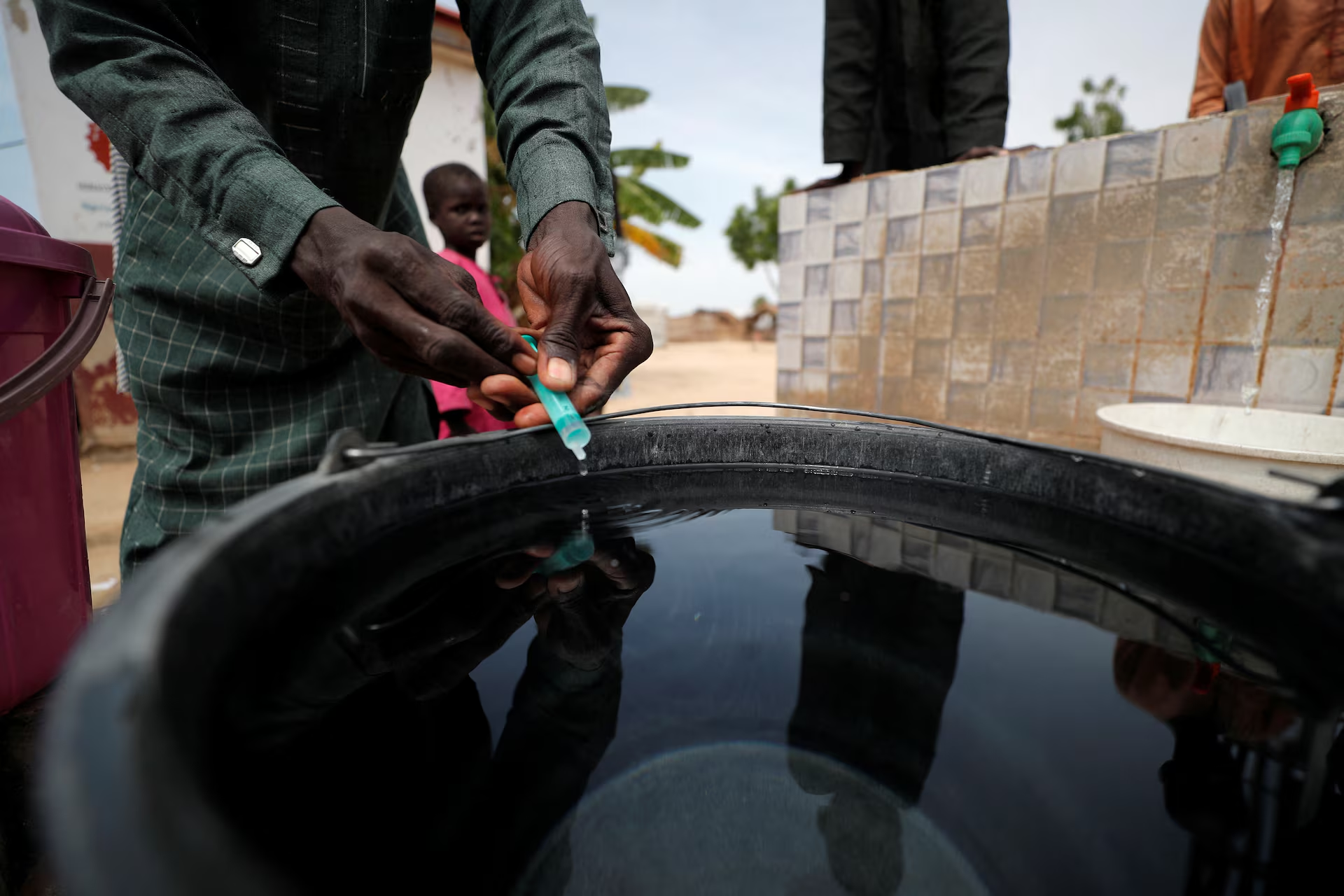
Nigeria is among seven countries that accounted for about 90 per cent of cholera cases and deaths reported globally in 2025, as the World Health Organisation (WHO) raised the alarm over a sharp rise in deaths from the preventable disease.
WHO’s latest global disease surveillance report, released on Tuesday, showed that 7,870 people died from cholera in 2025, a 30 per cent increase from the previous year, despite 451,499 cases being reported across 47 countries.
The death toll was the highest annual number reported to WHO since 1999.
Besides Nigeria, the other countries bearing the heaviest burden were Angola, Bangladesh, the Democratic Republic of the Congo (DRC), South Sudan, Sudan and Yemen.
Africa recorded the worst deterioration, with reported cholera cases rising by 34 per cent and deaths increasing by 58 per cent compared with 2024.
WHO warned that the figures might not reflect the true scale of the crisis because many cases are never reported.
According to WHO, cholera is caused by Vibrio cholerae, a bacterium spread mainly through food and water contaminated with faeces. It can cause severe diarrhoea and rapid dehydration, leading to death within hours if treatment is delayed.
WHO said more than one in five reported cholera deaths in 2025 occurred outside health facilities, suggesting that many patients did not receive medical care in time.
Among patients treated in health facilities, the global case fatality rate remained below one per cent, the level WHO considers an indication of adequate care. However, 12 countries recorded fatality rates above one per cent.
The Executive Director of the WHO Health Emergencies Programme, Dr Chikwe Ihekweazu, said the rising deaths showed that urgent action was still needed.
“No one should be dying from cholera today when we have the tools to prevent and treat this disease,” he said.
Other News
He said the concentration of cases and deaths in a small number of countries showed where investment in safe water, sanitation and hygiene could have the greatest impact.
WHO also called for stronger surveillance, community engagement, vaccination and access to quality healthcare.
“There has been progress in cholera vaccination. Global production of oral cholera vaccines more than doubled from about 30 million doses annually in 2022 to approximately 80 million in 2025,” it stated.
WHO stressed that vaccines alone cannot end cholera, warning that without clean water, sanitation, early diagnosis and prompt treatment, the disease will continue to exploit weaknesses in health systems.
Meanwhile, the fight against meningitis is showing more encouraging results.
In 2025, 24 of the 26 countries in Africa’s meningitis belt reported 21,526 suspected cases and 971 deaths, the report showed. Among countries with comparable data, reported cases fell by 5.9 per cent.
“Vaccination has reduced meningococcal A disease by more than 99 per cent among vaccinated populations since the introduction of the meningococcal A conjugate vaccine in 2010,” WHO said.
WHO said no confirmed serogroup A case had been reported since 2017 in countries that introduced the vaccine.
The global health body also warned that plague remains a threat.
Between 2019 and 2025, 3,847 suspected cases and 423 deaths were reported across 10 countries.