Follow Us on Google
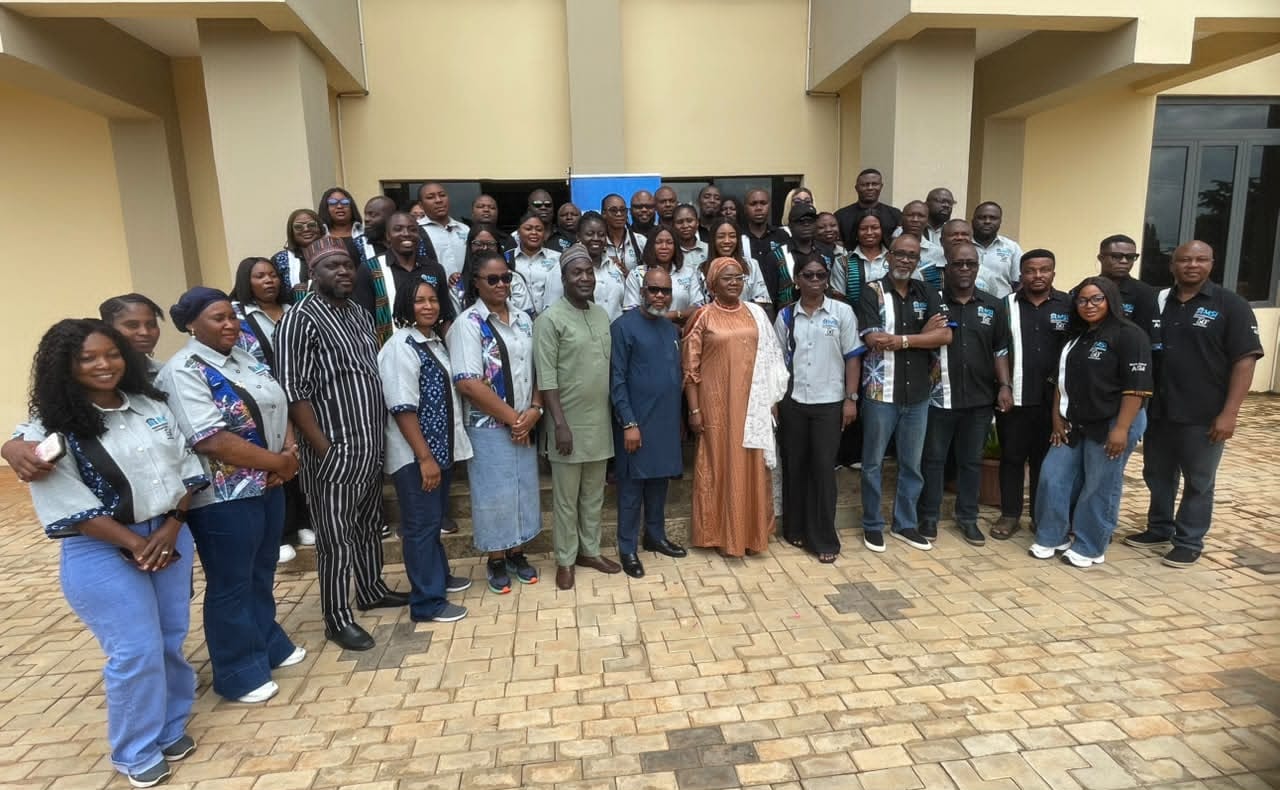
The Benue State Government has called for stronger accountability and collaboration among government agencies and development partners in the health sector to ensure that interventions in reproductive health translate into measurable improvements in maternal and child health outcomes.
The Benue Deputy Governor, Dr Sam Ode, made this call at the opening of the 2026 Annual General Meeting of MSI Reproductive Choices, North Central Region, in Makurdi.
The meeting, which was held under the theme, “Growing Together: Accountability and Teamwork for Greater Impact,” brought together government officials, MSI Nigeria management and staff as well as other stakeholders to review the organisation’s performance, examine operational challenges and develop strategies for improved service delivery across the region.
Sam Ode, who was represented by the Secretary to the State Government, Mrs Deborah Aber, said the theme of the meeting was in line with the approach of the administration of Governor Hyacinth Alia, stressing that “Partnerships must be aligned with government priorities, strengthen public systems and, most importantly, deliver measurable results for our people.”
According to him, the state government remained committed to accessible and quality healthcare as a critical component of human capital development, stressing that through the IMPACT Project, 98 primary healthcare centres had been targeted for rehabilitation and revitalisation.
Ode, who noted that the government’s vision went beyond renovating health facilities, said: “A renovated PHC must have trained personnel, commodities, equipment, functional referral systems and sustainable financing. Our objective must therefore be to move from rehabilitating health facilities to building a resilient health system that produces measurable health outcomes.”
Ode challenged government officials and development partners to look beyond the number of training sessions, meetings and people reached when assessing the impact of health interventions, urging them to focus more on actual outcomes.
He called on the Commissioner for Health and Human Services, Dr Paul Ogwuche, to work with the ministry, its agencies and development partners to institutionalise a year-on-year health-sector performance briefing showing how government and partner investments were contributing to the reduction of maternal mortality and improvement of other priority health indicators.
According to him: “This is not about who takes credit. It is about collective accountability for results. It should help us understand what is working, where the gaps remain and where government and partners should direct resources for greater impact.”
The Deputy Governor also urged MSI Nigeria to deepen its partnership with health training institutions in the state, arguing that pre-service training should complement the continuous in-service training of health workers. He said strengthening institutions producing nurses, midwives, community health workers and other professionals would ensure that essential competencies were embedded before they entered the workforce.
Other News
He further challenged MSI Nigeria to focus more deliberately on Internally Displaced Persons (IDPs) and host communities, noting that displacement created additional barriers to maternal and reproductive healthcare while placing further pressure on already stretched health facilities. He said: “We do not want parallel systems. We want stronger government systems capable of serving IDPs, host communities and the wider population sustainably.”
Earlier, the Country Director of MSI Nigeria Reproductive Choices, Emmanuel Ajah, said the AGM was designed to review the North Central region’s year-to-date performance, confront operational and human-resource challenges, reinforce integrity and ethical standards and develop strategies for sustainable impact. Ajah disclosed that MSI Nigeria, which began operations in the country in 2009 and in Benue in 2012, currently supports more than 6,000 public primary healthcare facilities nationwide and operates across all 36 states.
He said the organisation, whose mission is “children by choice, not chance” and whose vision is “a world in which every day is wanted,” remained focused on expanding access to family planning and reproductive health services, particularly for women and girls. He added that in 2025 alone, MSI Nigeria served 4.6 million Nigerian women with long-acting reversible contraception.
The Director-General of the Bureau for International Cooperation and Development (BICD), Dr Leo-Angelo Viashima, commended MSI Nigeria for its interventions in Benue State and praised Governor Alia for creating an enabling environment for international development partners and organisations to have full presence in the state.
The Benue State Commissioner for Health and Human Services, Dr Paul Ogwuche, said reproductive health and family planning were integral to the state’s broader health and development agenda, linking them to maternal and child health, women’s empowerment, economic productivity and universal health coverage.
He said: “Government cannot achieve these objectives alone. Progress requires coordinated action, shared responsibility and sustained collaboration among government institutions, development partners, implementing organisations, professional bodies, traditional institutions and the communities we serve.”
Ogwuche said the partnership between Benue State and MSI Nigeria remained valuable because it could help align interventions with state priorities, strengthen existing systems and ensure that investments produced measurable benefits.
He urged participants to focus on service delivery, community engagement, commodity security, quality of care, data use, workforce capacity and sustainable financing.
The MSI Regional Manager, North Central, Patience Otache, while welcoming participants, urged them to speak openly, learn from one another and strategise for stronger results before the end of the year.