Follow Us on Google

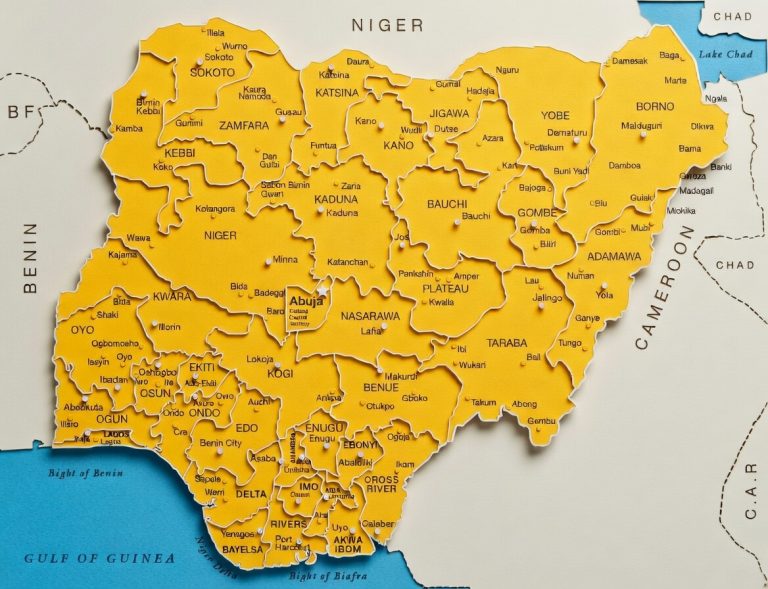
Leading safety advocate, Femi Da-silva has issued a sharp rebuke of Nigeria’s public health and regulatory monitoring systems following a devastating methanol-poisoning outbreak in Ondo State that has left 48 people dead and seven others permanently or partially blind.
The outbreak, which has recorded 182 cases, was traced by the National Agency for Food and Drug Administration and Control (NAFDAC) to dangerously high concentrations of industrial methanol in locally brewed alcoholic and herbal concoctions.
Da-silva, who is Chief Executive Officer of AfriSAFE, expressed outrage that the state is repeating a crisis virtually identical to the 2015 tragedy in Irele and Odigbo Local Government Areas, where local residents suffered the exact same pattern of sudden headaches, blurred vision, loss of consciousness, and death.
“Forty-eight people are dead. Five have reportedly lost their sight completely. Two are partially blind. A total of 182 cases have been recorded,” Da-silva said. “But beyond the deaths and arrests, there is a question we should be asking: How did we allow this to happen again? Because this is not the first warning.”
Noting the lapse in long-term regulatory oversight, Da-Silva stressed that institutional memory appears to have failed the affected communities over the last decade.
“In 2015, Irele and Odigbo LGAs in Ondo State experienced another methanol-poisoning outbreak,” he pointed out. “Eleven years later, we are talking about methanol, blindness and deaths again. So what did we learn from 2015? What preventive systems were introduced? Were producers monitored? Were products routinely tested? Were communities continuously educated? Was the supply and possible diversion of methanol monitored? And where were the early-warning systems?”
Da-silva challenged regulators, including NAFDAC, to look inward and assess their operational safeguards, inspection routines, and internal accountability.
“Perhaps regulators, including NAFDAC, must also be willing to look inward. Who regulates the regulators?” Da-Silva asked. “What internal safeguards ensure that inspections are thorough, approvals remain credible, enforcement cannot be compromised, and officers entrusted with protecting the public are themselves held to the highest standards of accountability?”
Other News
He emphasized that these concerns are not meant as an explicit accusation, but rather as standard benchmarks required of any trustworthy health authority.
“This is not an accusation of wrongdoing. It is a question every credible safety system should be able to answer,” Da-Silva asserted. “Because public confidence depends not only on regulations, but on the integrity of the people and systems responsible for enforcing them. But these questions are not for NAFDAC alone. They are for government, public-health authorities, local governments, producers, distributors, professional bodies — and us in the safety profession.”
Comparing the lack of industry-wide outrage to an industrial disaster, the AfriSAFE boss called on safety professionals to treat consumer product safety with the same urgency as workplace hazards.
“If 48 people died in a factory explosion, the safety profession would be talking. Why should this be different?” he argued. “Food safety is safety. Chemical safety is safety. Product safety is safety. Public safety is safety. Our responsibility cannot end at the factory gate.”
Turning to the broader national picture, Da-silva linked the Ondo deaths to growing public anxiety regarding the authenticity and safety of everyday consumer products across Nigeria, ranging from dairy items to popular soft drinks. While NAFDAC has cautioned that social media reports are not scientific proof, he insisted that prompt, transparent investigation is necessary to reassure citizens.
“When citizens repeatedly raise safety concerns, who independently tests the products and publicly communicates the findings?” Da-silva asked. “Where allegations are false, clear the manufacturers and restore public confidence. Where they are true, act before somebody dies. We cannot wait for illness, blindness or death before food-safety concerns become national headlines.”
The AfriSAFE CEO called for a fundamental redesign of Nigeria’s safety architecture to shift focus from reactive crisis management to proactive risk elimination.
“The Ondo tragedy should therefore force us to ask a much bigger question: Are our safety systems designed to detect danger before tragedy or simply to investigate tragedy after it happens?” Da-Silva warned. “Because safety is not what we do after people die. Safety is everything we should have done to prevent them from dying.”