Follow Us on Google

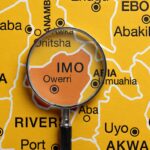
Despite the gradual normalization of economic activities in the five states of the South-East region, there are still concerns that the weekly sit-at-home order will undermine this year’s N5.7 trillion total budget of the region, if the situation persists. Although the Indigenous People of Biafra (IPOP), which imposed the order on August on 9, 2021, has suspended it, some groups sympathetic to its cause still enforce it.
No doubt, the enforcement of the sit-at-home order by some rogue elements will hamper the targets of the fiscal plan of the five states in the region. They had made a budget of N5.57trillion in 2026 to accelerate economic development. Enugu State had the highest budget of N1.62trillion, followed by Imo with N1.44trillion, Abia, N1.02trillion, Ebonyi, N888billion, while Anambra had the smallest budget of N757billion for 2026 fiscal year.
The five states also intend to make about N1.3trillion from Internally Generated Revenue (IGR) to meet their respective targets. The rest will come from the Federal Accounts Allocation Committee (FAAC). According to the National Bureau of Statistics (NBS), the five South-East states received a total of N624.91billion from FAAC between January and August 2025. Imo State received the lion share of N139.25billion, followed by Anambra, N128.81billion, Abia, N122.78billion, Enugu, N131.87billion and Ebonyi, N112.19billion.
The projected N1.3trillion IGR for 2026 may not be realized on account of the economic disruption caused by the sit-at-home. For instance, Enugu State plans to raise N870billion internally this year, Abia, N223.4billion, while Imo and Anambra have projected IGR of N44.3billion, N60 billion, respectively. The total amount of IGR projected by the five states is almost the N1.15 trillion Lagos State realised as IGR from January-August, 2025.
The fiscal plan of the South-East may not be fully realised if the sit-at-home continues. For the first two weeks in January, most businesses in the region remained closed, while some business owners relocated their businesses to Delta, Rivers and Akwa Ibom states. Therefore, if the South-East states must meet the projected revenue for their budget estimates, each of them will raise an average of N65billion internally every month. The sit-at-home order has negatively impacted the economy of the region as well as the human rights of the citizens. Last year, a report by Amnesty International and SBM Intelligence, estimated that the region lost N7.6trillion from 2021-2025. The SBM report titled: “Four years of Economic Disruption,” detailed how what started as a non-violent protest to demand for the release of IPOB leader, Nnamdi Kanu, had morphed to a protracted economic, security and humanitarian crisis, with devastating consequences. According to the report, about N4.6trillion was lost annually by Small and Medium Enterprises (SMEs) in the region.
Transport companies lost between N10billion and N13billion every Monday. The amount lost by transport companies is put at over N800billion annually and more than N3.6trillion over the last four years. The losses, according to the two reports, stemmed mainly from widespread market closures that disrupted businesses in the region. In the 332 violent attacks that led to the destruction of property and infrastructure in the region, no fewer than 776 people were killed within the five-year period. Despite the proscription of IPOB by the federal government and measures put in place by South-East governors to bring normalcy to the region, some freedom agitators and unknown groups still disrupt economic activities. Before the sit-at-home began in August 2021, the South-East economy was buoyant, especially in agriculture and manufacturing; contributing heavily to Nigeria’s Gross Domestic Product (GDP).
For many years, the zone recorded the largest Diaspora remittance in the country. A survey by the International Centre for Investigative Reporting (ICIR) revealed that between August 2021 and December 2022, South-East economy lost N5.32trillion. Also, data from the NBS showed that in the past five years, the geopolitical zone was one of the least in terms of Internally Generated Revenue (IGR). Sadly, none of the South-East states met its projected revenue target in the last four years.
For example, Anambra that used to boost the highest IGR realised N12.77billion, a paltry 27 per cent of projected revenue in 2022. Others realised less than 15 per cent of projected IGR in 2021/2022. Abia realised just N7.5billion, Enugu (N14billion), Imo (N9.9billion), and Ebonyi(N7.7billion). Out of the $456.7billion that Nigeria recorded as Foreign Direct Investment (FDI) from 2020-2023, the South-East attracted only six per cent due to the sit-at-home crisis.
Within this period, investor profile for the region stood at $263.8 million, while capital importation inflow stood at all-time high of $20.29billion. Between July 2023 and 2024, Anambra was infamously ranked the “headquarters of ransom payments for kidnapping,” after victims of kidnapping paid N350million ransom. There is need for urgent intervention by federal and state governments, as well as business owners to ensure the return of normalcy to the region. The unconditional release of Nnamdi Kanu will douse tension and bring normalcy to the region.