Follow Us on Google
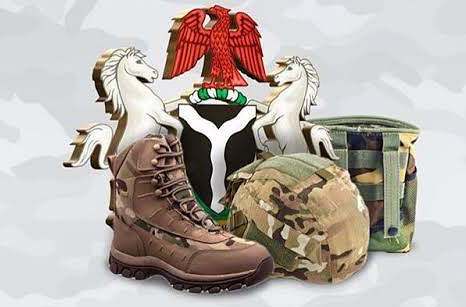
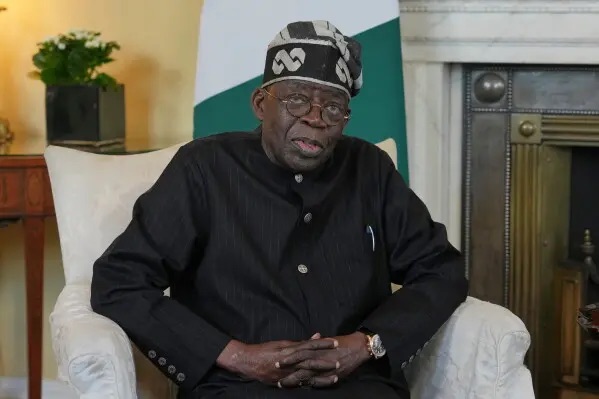
Any initiative that enhances the welfare of the armed forces is always welcome. Hence, President Bola Tinubu deserves commendation for approving a pay rise for the Nigerian Armed Forces. It was long overdue. The salary increase, which ranges between 30 and 80 per cent for personnel of the armed forces, takes effect from September 1, 2026, and will benefit 250,000 military personnel across all ranks.
Under the new structure, officers above the rank of colonels, including brigadier-generals, major-generals, lieutenant-generals and generals, will receive a 30 per cent salary increase. Personnel from colonel down to warrant officer will enjoy a 50 per cent increase, while private to staff sergeant will receive 80 per cent. The review will increase the Armed Forces’ annual salary bill from N660 billion to N924 billion.
This is the second salary increase within a month. Privates got a monthly salary increase in July from N49,000 (about $36) to N100,000 (about $73) a month. President Tinubu said his administration remained resolute in mobilising all military and law enforcement assets to eliminate security threats and protect the lives and properties of all Nigerians. He urged servicemen to take the gesture as a sign of deep appreciation of their services to Nigeria.
“The men and women who help to keep us safe in our homes must be supported and appreciated in the course of their duties to our nation. Our administration will continue to prioritise troop welfare and modernise the armed forces by providing the weapons and technological tools needed to discharge their duties,” he said.
Salary increase is good and serves as a motivating factor for the armed forces. The British Army reportedly reviews salaries every year to make them match that of civilian careers or even, in some cases, exceed them. This is one of the ways the Army attracts and retains talented personnel into the service.
A private or recruit in the British Army earns a basic annual salary of £27,282 or approximately £2,273.50 per month before tax, national insurance and pension contributions. Sergeant earns £3,835.16 gross per month and £46,022 per year. Captains and majors earn £54,716 and £68,624 per year respectively.
In the United States, the pay depends on exact rank (E1-E9) and years of service. For instance, Private (E-1) receives a basic salary of about $2,226 (over N3 million) to $2,319 per month. Private First Class (E-3) gets $2,100 to $2,400 per month. Commissioned Officer (O-1) gets $3,998 per month. This is in addition to non-taxed allowances for housing and food, including free medical and dental care.
Sergeants (E-5) with less than two years in service gets $3,342.90 (over N4 million) per month. This increases with more years in service. A sergeant major of the Army (E-9) receives a basic monthly salary of $11,166.90 (over N15 million). For the Chief of Staff of the Army, Chief of Naval Operations, and Chief of Staff of the Air Force, the basic pay per month for officers at pay grades O-7 through O-10 is $18,999.90.
We believe better salaries and welfare go a long way to attract and retain skilled personnel into the army. The recent pay rise will likely boost the morale of our soldiers and stop their occasional complaints on social media over welfare matters. Other security agencies also deserve pay reviews because the army can’t do it alone.
We urge the government to increase the numerical strength of the armed forces to at least 500,000 personnel. This is because 250,000 personnel are grossly inadequate for a large country like Nigeria with over 200 million people.
Good enough, the President had, earlier last month, ordered the recruitment of 28, 000 extra soldiers and the creation of four new army divisions. Thus, the army will now operate 12 divisions spread across the country for easier intelligence sharing, improved operational command and force deployment, faster response times, and better coordination.
Nigeria is buffeted by insurgency in the North-East, banditry in the North-West, herdsmen attacks in the North-Central, separatist unrest in the South-East, oil theft in the Niger Delta, and kidnapping for ransom, among others.
Both civilians and soldiers are victims of this spate of insecurity in the country. Terrorists reportedly attacked 15 military bases in Borno and Yobe states between January and April 2026. Many soldiers, including generals, have been killed by these insurgents. Some others have been abducted.
Beyond the pay rise is the urgent need to adequately equip our soldiers with modern weapons. They must be technologically-driven. Investment in drones, AI and other high-precision equipment should be prioritised in an era of global terrorism and insurgency.
Besides, there is need to focus on broader welfare issues, including uniforms, boots, health insurance and death benefits, advanced training and retraining opportunities. There is also the need to improve the living conditions in military barracks across the country in line with global best practices. Our soldiers, in turn, must be more committed to the tasks ahead in defence of the country and democracy. They must emphasise professionalism at all times.