Follow Us on Google
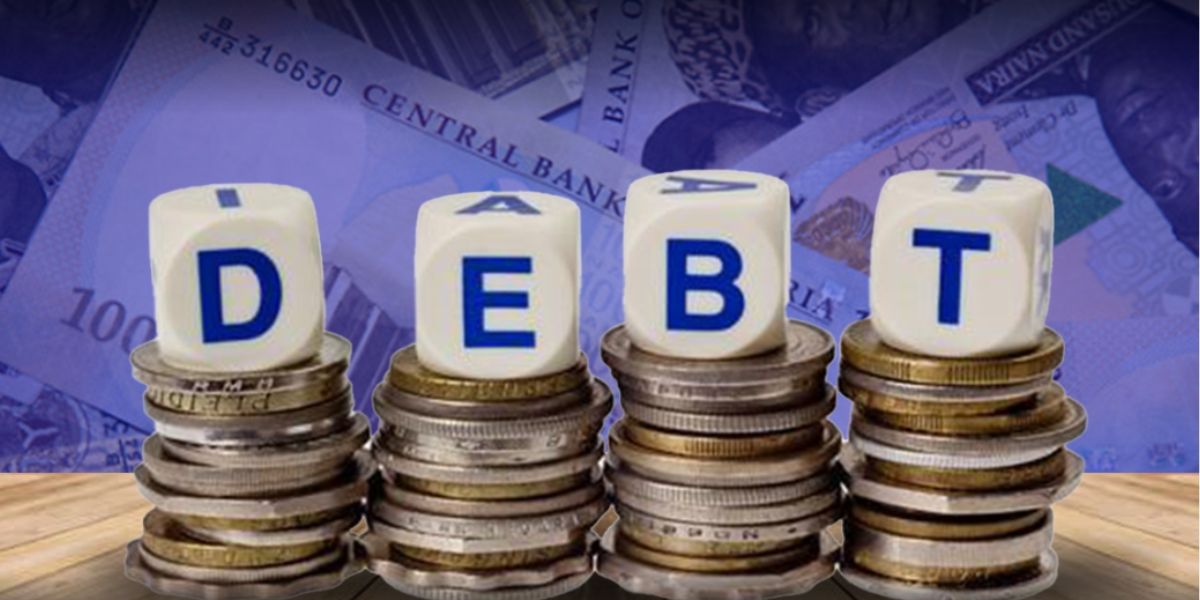
It is disturbing that Nigeria’s borrowing has reportedly exceeded the approved borrowing limits by N47.79 trillion. This has pushed new debts to N12.62trillion to cover a widened budget deficit. The government should be more concerned about the economic implications of reckless borrowing. Borrowing should be aimed at achieving tangible results. Loans should deliver real impact on the people, create jobs, target production rather than consumption, grow the Gross Domestic Product (GDP) and improve the development of the country.
Currently, Nigeria’s total public debt stands at N159trillion (approximately $110.97billion). A breakdown of the debt by the Debt Management Office (DMO) shows a total domestic debt of N84.85trillion ($59.11billion), accounting for 53.27 per cent of the total, while external debt stands at N74.43trillion ($51.86billion) making up the remaining 46.73 per cent. This includes the combined borrowings of the Federal Government, the 36 states, and the Federal Capital Territory (FCT).
The latest high borrowing is due to revenue shortfall, which has pushed the fiscal deficit to N13.51trillion. This is above the approved deficit of N9.18trillion, raising fresh concerns about Nigeria’s debt service sustainability. According to 4th Quarter and Consolidated Budget Implementation Report for 2025, the Federal Government’s new borrowings exceeded what was budgeted by 61.2 per cent or N4.79trillion. The report also shows that aggregate Federal Government revenue stood at N20.98trillion, compared with the budget estimate of N25.88trillion, representing a shortfall of N4.90trillion, while deficit exceeded the N10.55trillion recorded in 2023. This shows increasing pressure on public finances.
The good news, however, is that the non-oil sector exceeded expectations in the last two years, reaching N16trillion. This is more than the annual estimate of N10.8trillion or 48.9 per cent. It 2025, Nigeria’s debt-to-GDP ratio reached approximately 53.9 per cent by first quarter 2025. This significantly surpassed the Federal Government’s 40 per cent ceiling. It has triggered serious worries over fiscal sustainability, with debt servicing consuming a massive portion of the national budget.
This has far-reaching implications for the economy. The huge debt bill could mortgage the future of the country. In the last quarter of 2025, the Senate approved N17.89trillion new borrowing request by President Bola Tinubu for 2026 financial year. Nigeria’s debt burden has escalated sharply since 2023, moving from N49.85trillion to over N150trillion in a short span. Debt servicing and personal costs had already gulped about 105 per cent of the Federal Government’s total revenue from January to July 2026, even as receipts fell sharply below target and capital projects suffered deep crisis.
Other News
Analysis of the 2026-2028 Medium Term Expenditure Framework (MTEF) and Fiscal Strategy Paper by the Budget Office, showed that contrary to the claims, the Federal Government earned only N13.67trillion as aggregate revenue, compared with a pro-rata target of N23.85trillion. With the new loans, Nigeria’s public debt has been projected to reach a new high of N188trillion by end of 2026. This translates to N652,000 per Nigerian citizen. The implications are ominous for the economy, and future generation.
In all, the rising public debt in both domestic and external fronts has surpassed the acceptable threshold, thereby making a moratorium on borrowing necessary. As of September 2025, external debt stock profile showed that multilateral creditors remain Nigeria’s largest lenders. Loans from the World Bank Group and the African Development Bank (AfDB) Group, alongside other multilateral institutions accounted for $23.41billion, representing 48.3 per cent of the total external debt. In this category, loans from the International Development Association (IDA) accounted for $18.18billion, while loan from the International Bank of Reconstruction and Development was $1.36billion. Nigeria owes the AfDB about $2.15billion, as well as other lenders like the Islamic Development Bank and the International Fund for Agriculture.
Last year, former Minister of Finance and Coordinating Minister for the Economy, Wale Edun, revealed that the Federal Government faced a significant N30trillion revenue shortfall, with expected revenue at N10.7trillion against N40.8trillion target. He attributed this to weak performance of oil/gas earnings that resulted in rolling over capital projects to 2025. The shortfall, he added, impacted negatively on the 2025 budget. The current unpleasant situation did not come by accident. It is as a result of years of accumulated debt and unrealistic revenue projections that predated the present administration. The matter has been made worse by government’s unrealistic revenue projections, driven by excessive borrowing and weak expenditure discipline.
Again, we advise the government and its policymakers to be careful about matters that weaken policy execution that can also plunge the country into serious debt crisis. Loans must be judiciously used in worthwhile projects. Otherwise, it could lead to the confiscation of choice national assets by the lenders as had happened with some African nations facing severe debt distress. These include Zambia, Kenya, Djibouti and others. With Nigeria’s public debt exceeding the acceptable thresholds, government should be cautious and circumspect in future borrowings.