Follow Us on Google


Oil is a blessing, whether palm or petroleum. Even spiritually, oil represents the presence and power of the Spirit of God throughout the Bible. The petroleum oil and natural gas industry does more than meet the energy needs of society. They generate employment, boost local businesses, drive research and development, and promote education and training. In any case, a sector that contributes approximately 80 percent of the Federal Government’s revenue and 90 percent of Nigeria’s export earnings cannot be described in any other way except that it is a blessing to the country. However, whenever cursed, incompetent and selfish people take over the leadership of a country, the people mourn. There is then nothing intrinsically wrong or cursed with our oil, the only problem with oil in Nigeria is the mismanagement of it.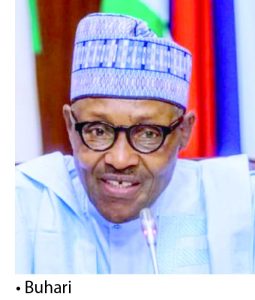
I had the fortune of being educated by the first Professor of Management in Africa at the University of Nigeria, Prof Agwu Akpala, and he was so fond of my proficiency in Management, that in addition to awarding me with a certificate for academic excellence for being the best student in the Faculty of Business Administration that year by the Faculty, he encouraged me to come back to the University to become a Lecturer immediately I concluded my Bachelor’s degree. I ran away into the movies that was non existent then but with the prior knowledge of Management, we were able to establish that industry, Nollywood, which has become the toast of the world, starting with the movie, Living in Bondage, which I acted as Andy Okeke, the Lead Actor. Efficient Management can positively change any sector of the economy for the betterment of the lives of the people.
Management, according to Prof Akpala, is “the process of combining and utilising, or of allocating an organisation’s inputs (men, materials and money) by planning, organising, directing and controlling for the purpose of producing outputs (goods and services or whatever the objects are) desired by costumers so that the organizational objectives are accomplished”. Oil was first discovered in Nigeria in commercial quantity around 1958, before independence, and before most countries discovered theirs. The mere fact that after 64 years of the discovery of oil in Nigeria, the company in charge of the management of the oil, the Nigerian National Petroleum Corporation (NNPC), cannot produce the goods and services (predominantly refined oil) desired by the consumers or customers or even maintain the available refineries, tells you the extent of mismanagement that is going on in the oil sector. Meanwhile, Dangote oil refineries, commenced about 3 years ago, will soon start operations. The gap is too much between the inefficiency of management in the corrupt public sector and the efficient private sector. Don’t even think that this rot in the public sector is peculiar to any section, tribe, state or geo-political zone. It is systemic.
As terrible as the Government is, in the management of businesses, in Nigeria, the law bestowed the management of oil and gas exclusively on the Federal Government. Not even the State or Local Governments are eligible to participate in the operations of the oil and gas sector. There was a time, during the military regime, when tampering with oil in Nigeria attracts death sentence. Specifically, Section 44(3) of the Constitution of the Federal Republic of Nigeria, 1999 (as amended) states that “ … the entire property in and control of all minerals, mineral oils and natural gas in, under or upon any land in Nigeria or in, under or upon the territorial waters and the Exclusive Economic Zone of Nigeria shall vest in the Government of the Federation and shall be managed in such manner as may be prescribed by the National Assembly”.
It is not surprising that after 64 years of the discovery of oil in Nigeria, rather than the Federal Government earning trillions of Naira exporting refined oil it produces, it is spending trillions of Naira, purportedly, subsidising petroleum products it is importing. The truth is that the whole subsidy regime is a fraud as President Buhari pointed out before coming into power. The same subsidy syndicate is the reason our refineries are made to be permanently dysfunctional. The same syndicate inflate their purchase invoices and blackmail the government into paying them by refusing to supply their product if the Government fails to pay the over-bloated invoice. It is the same syndicate that ensures that any Minister who is serious in repairing our refineries is ignominiously removed from office. I recall the days of Ibe kachikwu who vowed to repair our refineries before 2019 as the Managing Director of NNPC or resign. He was denied the chance of seeing the President for six months as Minister of State for Petroleum. Of course he was not re-appointed. Our refineries are not working till date. The reason for this is corruption and the unsuitability of Government as manager of businesses. Nigeria is the only country in the world where people get frightened when international oil prices rise, rather than rejoicing, because international high oil prices mean high local prices since every litre of oil consumed in Nigeria is imported.
It is to the credit of this present Federal Government, under President Buhari and the National Assembly under Ahmed Lawan that the Petroleum Industry Act was enacted. The sole aim of the Act is to ensure that the NNPC Limited conducts its affairs on a commercial basis in a profitable manner without recourse to government funds and their memorandum and articles of association shall state these restrictions. Also to grant licences to capable persons to be part of the management of the oil industry. This in effect should usher in the liberalisation and commercialisation of the oil industry, which the country desperately needs. It is summarily called deregulation.
The success or failure of this scheme will depend on the transparency of the licensing regime. We experienced incredible success in our telecommunication when competent persons and companies were granted licences and this crashed the prices of buying a telephone line from hundreds of thousands of Naira, when it was the exclusive privilege of NITEL, and when a sitting Minister of Communication proclaimed that telephone was not made for poor people, to free of charge, within two years of the licensing. The price of making calls fell from N50.00 per second, when licences were issued, to about 8k per second today, on some networks. There’s no reason the price of petroleum products wouldn’t have been one of the cheapest in Nigeria today but for the corruption in that sector.
It is with indignation that the entire Nigerian people welcomed the news of a possible increase in the price of fuel from the present N165.00 to about N340.00 or N420.00 in the first quarter of 2022. The President of Nigeria Labour Congress, Ayuba Wabba, was clear on it when he quipped that “It is difficult to convinceNigerian workers why our dear country is the only country among the OPEC member countries that cannot produce its own refined petroleum products and thus adopts the neo-liberal import production model of refined petroleum products”. Whosoever that released the message of price increase is very insensitive to the current harsh economic atmosphere. In the words of Muda Yusuf, Former DG, LCCI, “No doubt there is a sound economic and business case in favour of fuel subsidy removal. But the social and political contexts are equally critical”.
What Nigeria is yearning for is deregulation not price hike. If deregulation is perfectly carried out, although there might still be mild increase in prices initially, the prices will soon come down when more experts flood the petroleum sector with better technological ways of refining oil. Can you imagine how low the price of fuel will be in Nigeria if the cost of shipping our crude abroad and the cost of shipping the refined oil back to Nigeria is removed because the entire oil required for domestic use will be domestically refined? This is why David Adonri, Licensed Trader, submitted that “discontinuation of fuel subsidy is an economic imperative but the petroleum industry and electric power industry need to be fully deregulated first”. Deregulation means that the government will no longer monopolise the management of the oil sector. It will imply that our refineries should be working in full capacity. It is in this regard that the recent decision by the current Minister of Petroleum to invest $1.5b of borrowed foreign money to the refurbishment of our refineries is an avoidable waste of resources. There’s no assurance that the money will not be stolen or that the refineries will be efficiently managed by Government after refurbishment. The best option is to sell off the refineries to private capable hands who will immediately turn the fortunes of these companies around. Also the purported interest in the Government to invest more than $3.5b in Dangote oil refineries should be halted immediately. There’s nothing special about petroleum products. It is not even a security product, it is simply an essential commodity which is necessary for the smooth running of the country. Food is more of an essential commodity than oil. So Government should de-emphasize its sentimental attachment to oil and fully deregulate. It must allow Dangote oil and all other private refineries to operate freely, independently and economically. It should not establish a precedent that will encourage future governments to interfere in the affairs of a private economic initiative. Dangote should also resist such unholy alliance and manage his business in accordance with prevailing economic realities.
Telecommunication is a more security prone product, yet the Government is not interfering with the services of the private telecom providers. Oil should be treated the same. We, therefore, reject such insensitive promulgation of high oil prices on the people and rather advocate for a transparent, speedy and total deregulation of the oil industry which will in turn eventually bring down the oil prices after the initial slight price increase. The Government should refrain from mentioning premeditated high prices, because that’s a testimony that it is not deregulating. In a fully deregulated economy, it is the market forces that determine the price not the Government. In America, oil industry is fully deregulated and they enjoy the benefits of oil till date. Same can happen in Nigeria with proper management of the oil industry.