Follow Us on Google
•Ijaw Nation says Senate rejection an act of betrayal •Afenifere, MBF, South-East youth leaders, Yoruba elders berate lawmakers
By Vincent Kalu, Oluseye Ojo and Femi Folaranmi
The rejection of proposals for control of mineral resources by the states where they are deposited by the National Assembly Joint Committee on Constitution Review has triggered angry reactions from a number of ethnic nationalities across the country.
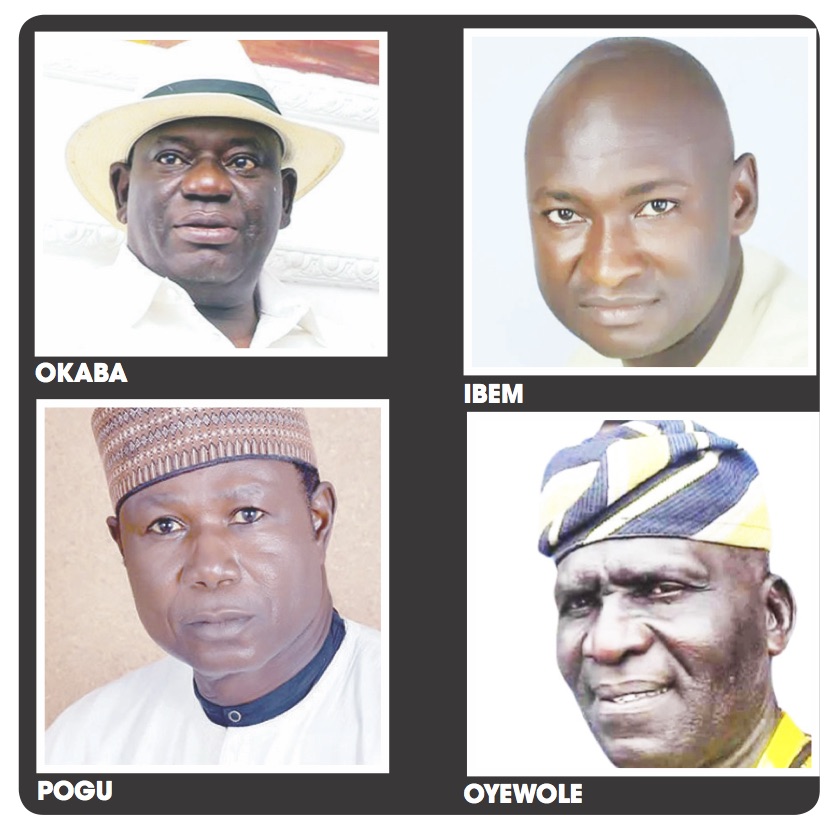
Rejection an act of betrayal – Okaba, Leader, Ijaw National Congress
The President of the apex organisation of the Ijaw Nation, the Ijaw National Congress (INC), Prof Benjamin Okaba, declared that the rejection was another act of betrayal by the Nigerian State.
Okaba, in an interview, lamented that those currently in charge of the Nigerian state do not believe in justice for ethnic nationalities.
According to him, the continued havoc being visited on ethnic nationalities in Nigeria is inimical to the progress of the country.
‘’This issue is not about the Niger Delta or the Ijaw nation only. As far as I am concerned, it is one act of the betrayal of trust in Nigeria. We came together as a country believing that respect would be given to individual ethnic nationalities on the principle of derivation, which is that natural justice should be respected. If we continue to have situations like this, where people who provide the resources that sustain a nation are not given the opportunity to benefit first or benefit enough, then I don’t know where we are going as a country.
“ I have said it earlier that when we continue to commit monumental havoc on people because of our advantageous position, it is the nation that suffers. Where there is no equity, there cannot be justice. And where there is no justice, there cannot be providence. You can only enjoy your wealth in peace, and, unfortunately, the characters in government in this country have decided to only think about the moment and not look at the future. It is unfortunate, but again, it has become the norm.’’
On the steps to be taken, Okaba, who ruled out violence or confrontation, insisted that the Ijaw nation would take its matter to the international community.
‘’We are already in our struggle. Our fight for self-determination is on. This again would give us another impetus. There are several obnoxious polices and programmes of this government that we have been incited. We are documenting all, and we are going to approach the international community.
‘’INC under my watch has declared that nationally and internationally, our fight for justice will be civic, peaceful, and through strategic engagement, and not by violence. “We are not going to engage in violence. We believe that we can actualise our liberation without even losing blood. We shall not fight anybody; we shall not take the fight to anybody, but we would also be ready to defend ourselves when matters get to that point.’’
A retrogressive move – MBF president, Pogu
The President of Middle Belt Forum (MBF), Dr Bitrus Pogu, said it is retrogressive to have jettisoned that item that would ensure the progress and development of the country.
According to Dr Pogu, those who do not want resource control enshrined in the constitution don’t want progress for the country. In his words, it was rejected because some people feel that without the oil money, Nigeria cannot move forward.
“What we could get from some of the mineral resources that are abundant in all parts of this country is adequate to keep us economically strong, but we are used to the oil money and we don’t want to live in any other way but to depend on the oil revenue, which is a depleting resource.
“It is unfortunate that our mindset is tuned in that direction. Before the oil came in, North was surviving on agriculture, the East was surviving on the palm oil, palm kernel, while the West was surviving on its cocoa, and Nigeria was progressing; and we valued what we earned.
“Now people have gotten used to oil money, free money. In fact, the resources in the North – gold and other minerals, can earn more than even the money from the oil, but unfortunately, people have glued themselves to the oil money.
“It is high time we came to the realisation that the oil is not what we need to progress, but we should focus on the development of the federating units through other means than the oil money. There is no part of this country that cannot survive successfully without oil revenue, but our mindset is tuned towards oil money.
“As a solution, we can have a timeframe within which every federating unit should get deep into developing its resource base, and then we detach from the oil money. “But, the future of this country is resource control, where every community, every part of this country will develop its revenue base and contribute to the centre, which is the way forward,” Pogu stressed.
Rejection a disheartening act– COSEYL leader, Ibem
President General of Coalition of South East Youth Leaders (COSEYL), Comrade Goodluck Ibem said it was disheartening. Comrade Ibem, the president general of COSEYL, the apex sociopolitical youth group in the South East geopolitical zone, pointed out that while the decision of Committee on Constitution Review resources is disheartening, but noted that the group’s resolve to promote equitable development and economic empowerment in the South East remains unshaken.
“We reiterate that greater control of resources at the state level is crucial for sustainable grassroots development. Access to increased revenue from mineral resources will empower state governments to invest in critical infrastructure, create job opportunities, and reduce youth restiveness and crime through gainful employment. Economic development at the community level is a proven pathway to social stability.
“The federal government should establish a clear, transparent and accountable framework that ensures revenues generated from mineral resources in the states are effectively channelled for local development. Mechanisms should be put in place to monitor and enforce transparency and accountability by state governments in the management of these funds, giving citizens confidence and fostering trust.
“We are committed to constructive dialogue with all stakeholders to find practical solutions that ensure the South-East, and indeed all resource-endowed states, benefit fairly from their natural resources. The FG, legislators, and community leaders should engage in a collaborative process to unlock the full economic potential of our states for the benefit of all Nigerians,” Ibem said.
Ethnic nationalities should have control over their resources – Yoruba elders
The rejection of the proposals for control of mineral resources in states where they are deposited by the Nigeria National Assembly (NASS) Joint Committee on Constitution Review has sparked outrage and disappointment among South West elders. They spoke through the Yoruba Council of Elders (YCE), expressing their rejection of the National Assembly’s stance. They vowed to continue their push for resource control for states where they are deposited.
The Secretary-General of YCE, Chief Oladipo Oyewole, in a chat with Saturday Sun, reiterated the council’s position that the South West should have control over mineral resources in its domain. The call for resource control is part of a broader push for true federalism and greater autonomy for states in Nigeria. The South West region has argued that it is unfair for the Federal Government to control the resources of the region, while denying it the right to manage them.
Oyewole emphasised that this is in line with the established standard set by the Tax Reform process, which recognises the rights of states to manage their resources.
“For this issue, there is now an established standard put in place by the Tax Reform process.
“The YCE remains firm in its convinced position that the South-West should have control over mineral resources in its domain. Same should apply with all states,” Oyewole said. He explained that if states are given control over their resources, they would engage in a process of remittance of an agreed value to the centre, ensuring that the inflow of income in such areas benefits the people.
“If that is done, states will thereafter engage in a process of remittance of an agreed value to the centre, such that the inflow of income in such areas will be enjoyed by and for the welfare of people in their respective places,” he said. The YCE stated that granting states control over their resources is essential for the stabilisation of the polity and the overall development of Nigeria.
“YCE believes that all things to stabilise the polity should be encouraged for the benefit of all communities in moving Nigeria forward,” Oyewole stated.
Rejection of resource control by Senate unfortunate – Afenifere
Also speaking, the National Publicity Secretary of the pan-Yoruba socio-political organisation, Afenifere, Mr Jare Ajayi, stated that the decision by the Joint Committee of the National Assembly to reject the bill meant to liberalise solid mineral exploration “is unfortunate”..
Ajayi spoke in the wake of the rejection by the Legislatures’ Joint Committee on Constitutional Review of a bill seeking to grant states control over mineral resources within their territories.
A bill aimed at moving ‘mines and minerals’ from the Exclusive Legislative List to the Concurrent Legislative List, was rejected th committee. The bill, meant to allow both federal and state governments to legislate, and manage resource extraction, was rejected by the National Assembly Joint Committee on Constitution Review last week. Under Section 44(3) of the 1999 Constitution (as amended), the ownership and control of all mineral resources, including oil fields, oil mining, and natural gas, are vested exclusively in the Federal Government.
According to Ajayi, the quantum of items under Exclusive List in Nigeria is too much for a country that is supposed to be running a federal system. “We have been shouting restructuring for a long time. Lawmakers, both in the Senate and in the House of Representatives are from among us. The feeling across the country is that too much power is vested in the federal government, which was why some items in the Exclusive Legislative List are being reduced. “It is therefore a thing of surprise to us that members of the Joint Committee on Constitutional Review could reject a bill that would have further empowered the states, thus enhancing the federal nature of our political system the more!”
Afenifere spokesman called on the legislators to relate more with their constituencies “and ensure that the positions they take on key issues are in line with the yearnings of their constituents.”
Maintaining that the lawmakers erred on this issue, Ajayi asserted that by rejecting the bill, “a key component of restructuring and self-determination is being thrown away by the very people who were supposed to uphold and promote the interest of the people.
“In January this year 2025, the National Assembly Joint Committee on Solid Minerals rejected the Federal Ministry of Solid Minerals’ 2025 budget estimates, criticising the paltry allocation to the sector as insufficient to attract necessary investment and promote economic diversification.
“But the latest decision of the Legislatures seemed to run counter to the posture they pretended to project. “It is hoped that they will revisit the issue and act in line with what is in the best interests of their constituencies, which is to reduce the items on the Exclusive Legislative List,” Ajayi said.