Follow Us on Google
• Celebrating seven decades of maritime security, strategic growth and national service
By Philip Nwosu
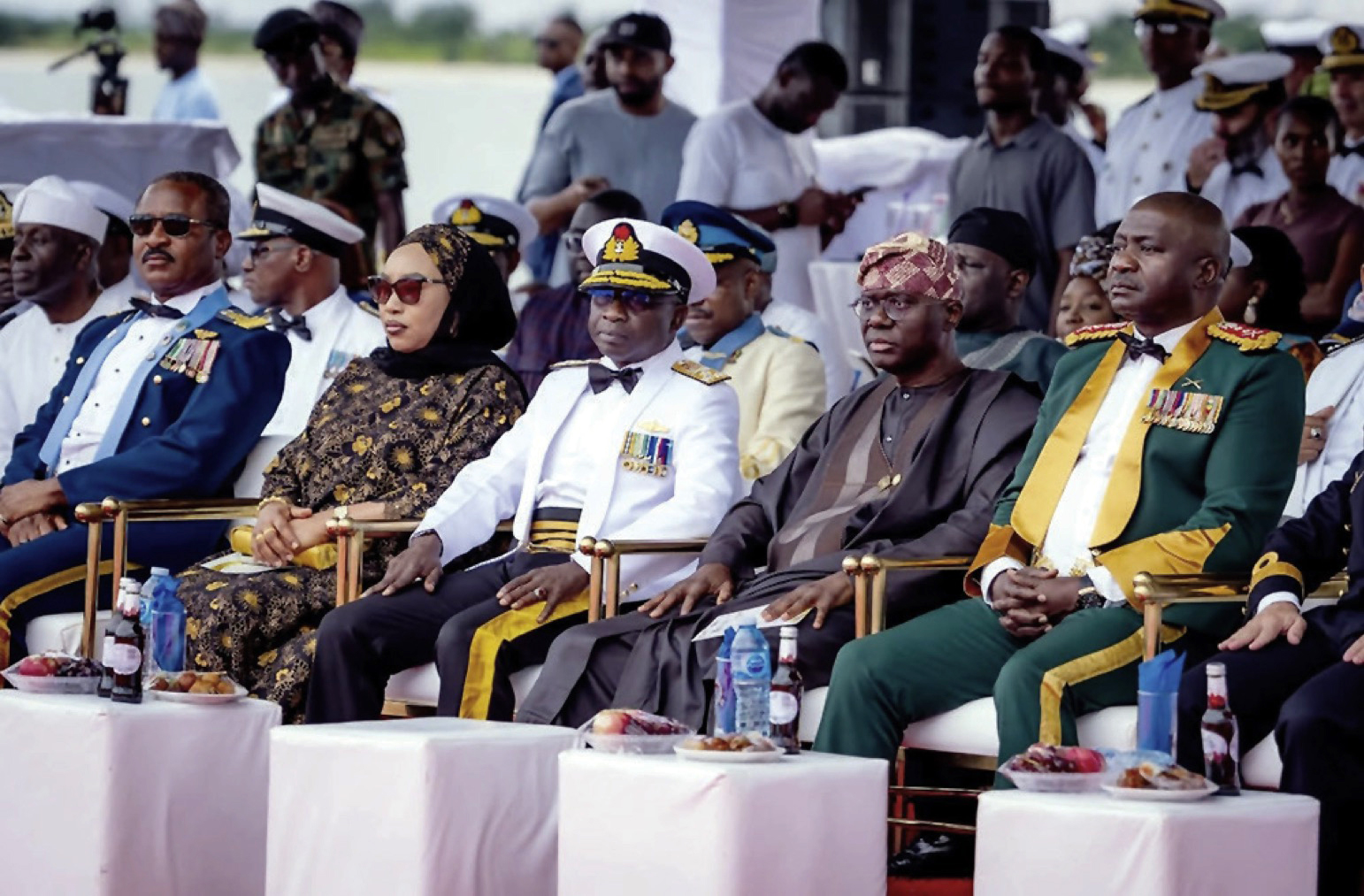
It was grand ceremony recently in Lagos as the Nigerian Navy pulled its officers and men and those of over 40 countries within Africa and other parts of the continent to celebrate its 70th anniversary.
The occasion presentsed not only a moment of celebration but also an opportunity for sober reflection on the force’s journey from a modest coastal marine outfit to one of Africa’s most strategic maritime forces.
Since its establishment in 1956, the Nigerian Navy has evolved into a critical institution in the defence architecture of Nigeria, safeguarding the nation’s vast maritime domain, supporting economic stability and contributing to regional security operations across the Gulf of Guinea.
President Bola Ahmed Tinubu, who flagged off the International Fleet Review to open the weeklong activities at the Eko Atlantic City, said: “A nation is only as strong as the courage of those who defend it. The Nigerian Navy remains the guardian of our waters, sailing forth with courage to safeguard our maritime domain and secure the nation’s economic future.”
He lauded the Navy’s sustained efforts against crude oil theft and maritime criminality, noting that these operations have significantly boosted oil production, improved national revenue, and strengthened investor confidence in Nigeria’s maritime sector.
“Beyond the maritime domain, I also commend the Nigerian Navy for its contributions to counterterrorism and counterinsurgency operations across the country. The courage and professionalism demonstrated by the Special Boat Service in executing complex missions are truly commendable.
“More so, with the recent induction of the Nigerian Navy Marines into operational theatres, I am confident that even greater successes will be recorded. Indeed, the Nigerian Navy has become an indispensable pillar of both national and regional security,’’ the President said.
The platinum anniversary of the Navy comes at a time when maritime security has become increasingly central to Nigeria’s economic survival and geopolitical relevance. With over 80 per cent of the nation’s trade conducted through the sea and crude oil exports remaining the backbone of the economy, the role of the Navy has never been more consequential.
One of the most significant achievements of the Nigerian Navy in recent years has been its aggressive campaign against crude oil theft, sea piracy and illegal refining activities in the Niger Delta. These crimes had for years drained Nigeria’s economy and threatened investor confidence in the oil and gas sector.
Through operations such as Operation Delta Sanity and coordinated joint task force missions, the Navy has intensified surveillance and interdiction activities along the nation’s waterways. Naval authorities have repeatedly reported the destruction of illegal refining sites, arrest of oil thieves and seizure of vessels involved in economic sabotage.
These operations have contributed to improved crude oil production figures. Recent data from the Nigerian National Petroleum Company Limited indicated an increase in Nigeria’s oil production output, a development security analysts partly attribute to enhanced maritime security enforcement by the Navy.
The Navy has also recorded major successes in anti-piracy operations within the Gulf of Guinea, once regarded as one of the world’s most dangerous maritime zones. The deployment of maritime surveillance systems, fast attack craft and improved regional cooperation has led to a reduction in piracy incidents in Nigerian waters.
Another milestone was the introduction of the Deep Blue Project by the Federal Government in collaboration with the Navy and other security agencies. The project strengthened maritime domain awareness through special mission aircraft, drones and rapid-response assets aimed at curbing insecurity within Nigeria’s Exclusive Economic Zone.
Beyond kinetic operations, the Navy has played crucial humanitarian and internal security roles. Naval personnel have participated in disaster response missions, election security operations and counter-insurgency campaigns in support of other branches of the Armed Forces.
Internationally, the Navy has represented Nigeria in multinational exercises and peace support operations, enhancing diplomatic ties and projecting Nigeria’s influence in West African maritime affairs.
In recent years, the Nigerian Navy has made deliberate efforts toward local shipbuilding and indigenous technological advancement. The construction of locally built seaward defence boats and patrol vessels signalled a growing ambition to reduce dependence on foreign military procurement.
Other News
The Naval Dockyard Limited in Lagos has emerged as a strategic asset in vessel maintenance and fabrication. Indigenous engineers and naval architects have demonstrated increasing competence in ship repairs and construction, reflecting the Navy’s long-term vision for self-reliance.
Similarly, investments in maritime intelligence, satellite surveillance and electronic warfare capabilities have improved operational efficiency. The establishment of modern training institutions and simulation centres has further enhanced professionalism within the service.
Despite these accomplishments, the Nigerian Navy continues to grapple with several structural and operational challenges that limit its effectiveness.
One of the major concerns remains inadequate funding relative to the enormous responsibilities placed on the service. Nigeria possesses a coastline stretching over 850 kilometres and an expansive maritime domain that requires sustained surveillance and rapid response capabilities. Yet, budgetary constraints often affect fleet expansion, maintenance and personnel welfare.
Aging platforms also pose a challenge. Although the Navy has acquired new vessels in recent years, some operational ships remain old and expensive to maintain. Delays in procurement and dependence on foreign technology sometimes reduce operational readiness.
Another persistent issue is manpower shortages relative to operational demands. The increasing complexity of maritime crimes such as cyber-enabled piracy, illegal bunkering and transnational smuggling requires highly specialised personnel and continuous training.
Experts have also pointed to inter-agency rivalry and bureaucratic overlaps among maritime security institutions as obstacles to seamless operations. Greater coordination among the Navy, Marine Police, Customs, Immigration and maritime regulatory agencies remains essential.
Corruption within the broader maritime sector equally undermines enforcement efforts. Analysts argue that collusion between criminal syndicates and compromised officials has occasionally weakened anti-oil theft operations despite the sacrifices of frontline personnel.
Future Threats and Emerging Maritime Challenges
Looking ahead, the Nigerian Navy faces an evolving security environment shaped by technology, geopolitics and climate change.
Maritime terrorism, cyber threats targeting port infrastructure and the use of sophisticated surveillance evasion tactics by criminal networks are expected to become more pronounced. The increasing deployment of unmanned systems and artificial intelligence in naval warfare globally means Nigeria must continuously modernise its capabilities to remain effective.
Climate-related issues such as rising sea levels, coastal erosion and illegal fishing are also emerging as strategic concerns with implications for national security and economic sustainability.
Furthermore, competition for maritime resources within the Gulf of Guinea could heighten regional tensions, making diplomacy and maritime cooperation increasingly important.
The push toward achieving Nigeria’s target of higher crude oil production by 2030 will equally place additional responsibilities on the Navy to secure offshore assets and energy infrastructure against sabotage and criminal attacks.
A Force at a Historic Crossroads
At 70, the Nigerian Navy stands as a symbol of resilience, sacrifice and national service. From the creeks of the Niger Delta to international waters, the force has demonstrated its importance in protecting Nigeria’s sovereignty and economic lifelines.
Yet, anniversaries are not only about commemorating the past; they are also about preparing for the future. For the Nigerian Navy to sustain its operational successes, there must be sustained investment in modern platforms, personnel development, technological innovation and institutional reforms.
As Nigeria navigates an increasingly uncertain global security environment, the Navy’s ability to adapt will determine not only the security of the nation’s waters but also the protection of its economic future.
The celebration of 70 years therefore serves as both a tribute to generations of gallant officers and ratings and a reminder that the next chapter of the Nigerian Navy’s story may be even more demanding than the last.