Follow Us on Google
Why millions of children are choosing survival over education
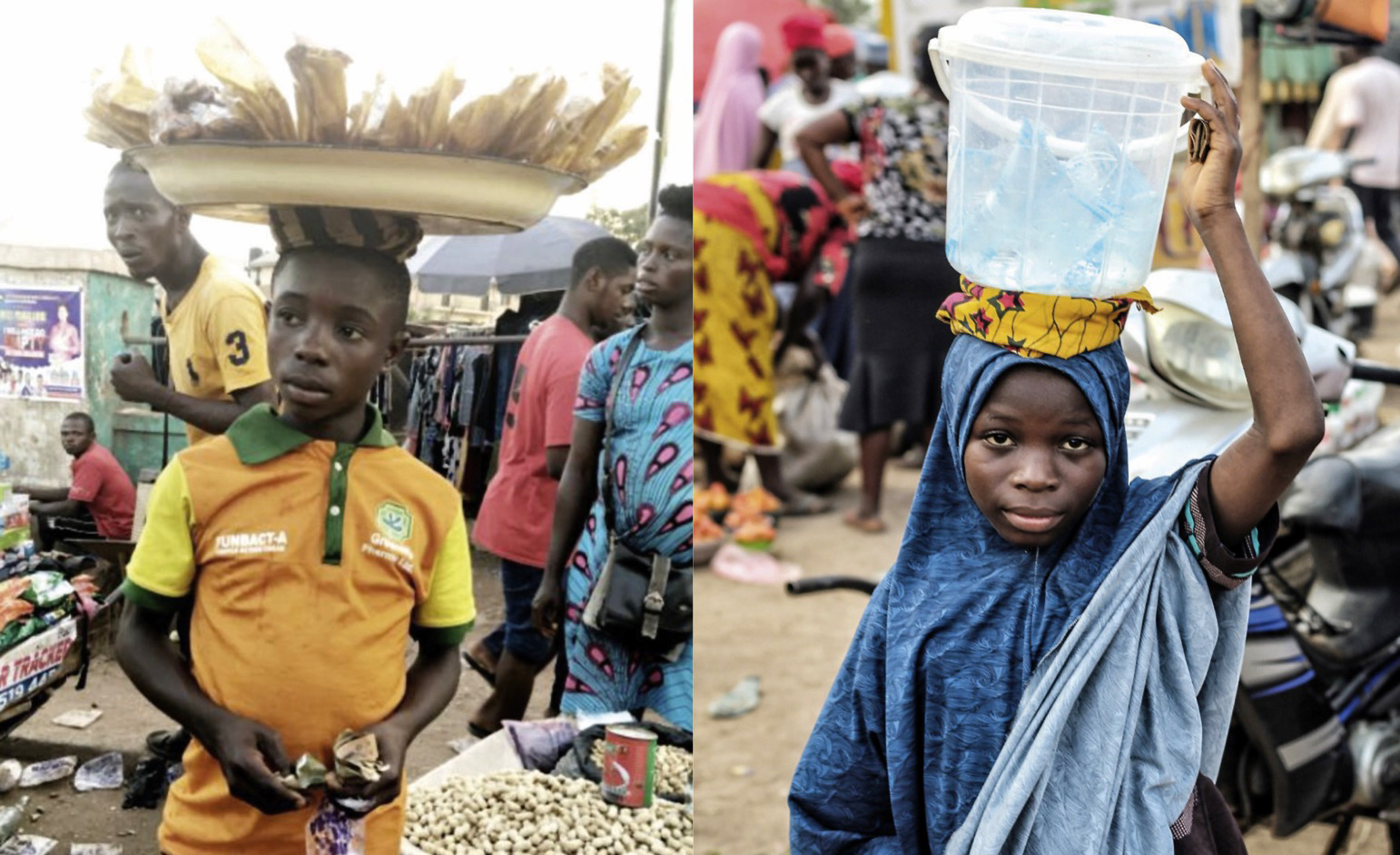
Every weekday across Nigeria, two different journeys unfold. While some children walk into classrooms eager to learn, millions of others head to markets, farms, workshops, motor parks and busy highways, not to study, but to work.
They hawk sachet water in traffic, sell fruits under the scorching sun, assist artisans, work on farms or help support family businesses. For many of them, education has taken a back seat to survival.
For these children, dropping out of school is rarely a choice. It is the consequence of circumstances beyond their control.
They leave classrooms not because they lack intelligence or ambition, but because poverty has rewritten their future. What begins as a temporary effort to help families survive often becomes permanent. Dreams of becoming doctors, engineers, teachers or entrepreneurs gradually give way to the daily struggle to earn enough for the next meal.
The irony is striking. Nigeria’s Universal Basic Education (UBE) Act guarantees free and compulsory education for every child of school age. Yet the country continues to have one of the largest populations of out-of-school children in the world.
Education experts say one of the biggest reasons is poverty, which forces parents to make painful choices between putting food on the table and keeping their children in school.
Speaking during a two-day media dialogue on Digital Learning, Artificial Intelligence and Skill Development for Out-of-School Children (OOSC), UNICEF’s Chief of Lagos Field Office, Celine Lafoucriere, described the out-of-school children crisis as one of the most pressing challenges confronting Nigeria’s education sector, warning that millions of children risk being left behind as technology reshapes the future of work.
Lafoucriere noted that about 10 million Nigerian children are currently out of school. She also expressed concern that only one in four Nigerian children attending school can read proficiently and perform basic mathematics by the age of 14, underscoring the country’s learning crisis.
On his own part, UNICEF Nigeria’s Education Specialist, Harold Kpojime, described poverty as one of the strongest drivers of educational exclusion.
“There are some parents who are not able to afford those basic resources,” he said while discussing the factors responsible for keeping children out of school.
According to him, although basic education is officially free, many families still struggle to pay for uniforms, exercise books, transportation, school bags, writing materials and feeding.
He challenged participants to look beyond government policy.
“If the Federal Government says basic education is free, is it really free across all the states of Nigeria?” he asked.
The question reflects a harsh reality confronting millions of Nigerian households.
For many low-income families, school-related expenses can consume a significant portion of household income.
A parent may not pay tuition in a public school, but uniforms, notebooks, sandals, examination materials and transport still come at a cost.
For households already battling rising food prices, unemployment and inflation, these expenses often become unaffordable.
As a result, many children are withdrawn from school or never enrolled at all.
Others combine schooling with economic activities, a situation that often affects their attendance and academic performance.
Education experts warned that when children are forced to work at an early age, learning becomes secondary.
Recent survey findings presented during the dialogue painted a disturbing picture of Nigeria’s education landscape.
The survey, which covered 9,632 households across the country and assessed the schooling status of more than 22,000 children aged between five and 17 years, found that one in every three primary school-age children is not in school.
Even more worrying is that school attendance declines steadily as children progress through the education system.
Many who complete primary school fail to transition to junior secondary school, while others drop out before completing senior secondary education.
Other News
For Kpojime, addressing the crisis begins with accurate data. “You cannot say you have returned children to school if you do not know who those children are,” he noted, stressing the need for reliable information to guide interventions.
The relationship between poverty and child labour has become increasingly evident.
In many communities, children contribute to household income through petty trading, farming, domestic work or apprenticeships.
For struggling parents, every extra source of income matters. However, education advocates warned that what appears to be a short-term coping strategy often creates long-term consequences.
Children who miss out on education often enter adulthood without the literacy, digital and technical skills increasingly required in today’s economy. Instead, many remain trapped in low-paying informal jobs, reinforcing a cycle of poverty that passes from one generation to the next.
Education today is no longer just about learning to read and write. It is about preparing children for a future driven by technology, innovation and artificial intelligence. Without these skills, millions of out-of-school children risk being left even further behind.
Experts insisted that solving the country’s education crisis is not only about getting children into classrooms. Retention, transition and completion are equally important.
Children who enrol but drop out before completing basic education remain vulnerable to unemployment, exploitation and social exclusion.
Kpojime noted that school attendance falls at every stage of the education ladder, making it necessary for governments to focus on keeping children in school rather than simply increasing enrolment figures.
Some state governments have introduced measures to reduce the number of school-age children on the streets.
Kpojime referenced initiatives where officials monitor compliance and discourage child labour during school hours.
While such policies may improve attendance, experts argued that enforcement alone cannot solve the problem.
Unless families receive economic support, many children removed from the streets may eventually return.
This is why education advocates continue to call for school feeding programmes, conditional cash transfers, free learning materials and improved social protection for vulnerable households.
While the challenges are enormous, examples from across the country show that children who leave school because of poverty can still rebuild their futures when given the right support.
One such initiative is the Princess Ruth Ainu Ataiyero Skills Acquisition Centre in Ilesa, Osun State, where school dropouts, admission seekers and vulnerable youths receive free vocational training in areas such as fashion design, ICT, catering, plumbing, beauty therapy and entrepreneurship.
Supported by the Osun State Government in collaboration with UNICEF and other development partners, the initiative combines practical skills with digital learning, giving young people opportunities to become productive members of society.
For many trainees, the programme represents more than learning a trade. It offers hope that interrupted dreams can still be revived, whether through returning to formal education or establishing sustainable businesses.
Education experts believe expanding similar initiatives across the country could provide alternative pathways for thousands of vulnerable children while equipping them with the skills needed for a rapidly changing economy.
As Nigeria explores digital learning and artificial intelligence to reach more learners, experts believe technology can complement existing efforts to reduce the number of out-of-school children.
However, they caution that digital solutions cannot replace the need to address the underlying economic realities confronting millions of families.
For a child who goes to bed hungry or whose parents cannot afford school supplies, access to technology alone is unlikely to guarantee education.
Ultimately, every child seen hawking goods instead of sitting in a classroom represents more than a personal tragedy. It is a reminder of the opportunities Nigeria is losing every day.
The battle between child labour and education cannot be won through enforcement alone. It requires tackling poverty, supporting vulnerable families, improving access to quality education and creating second-chance opportunities for children who have already fallen behind.
Until that happens, millions of Nigerian children will continue to trade school bags for survival.
But where governments, communities, development partners and the private sector invest in education, digital learning and skills development, poverty no longer has the final word. Instead, children who once believed their dreams had ended can begin to imagine a different future.