Follow Us on Google
From Noah Ebije, Kaduna
As climate change continues to threaten livelihoods through rising temperatures, erratic rainfall, deforestation and land degradation, stakeholders in Kaduna State are intensifying efforts to reverse environmental decline with a renewed commitment to afforestation and climate resilience.
In what observers describe as a significant boost to the state’s green recovery agenda, the Kaduna State Climate Change Accountability Mechanism (KADCCAM) has secured the donation of 5,000 tree seedlings from the Kaduna State Horticulture Association to support tree planting, ecosystem restoration and environmental sustainability across the state.
This is coming at a time when the Kaduna State Government has set a four-year target to plant millions of seedlings across cities, suburbs and rural villages of the state.
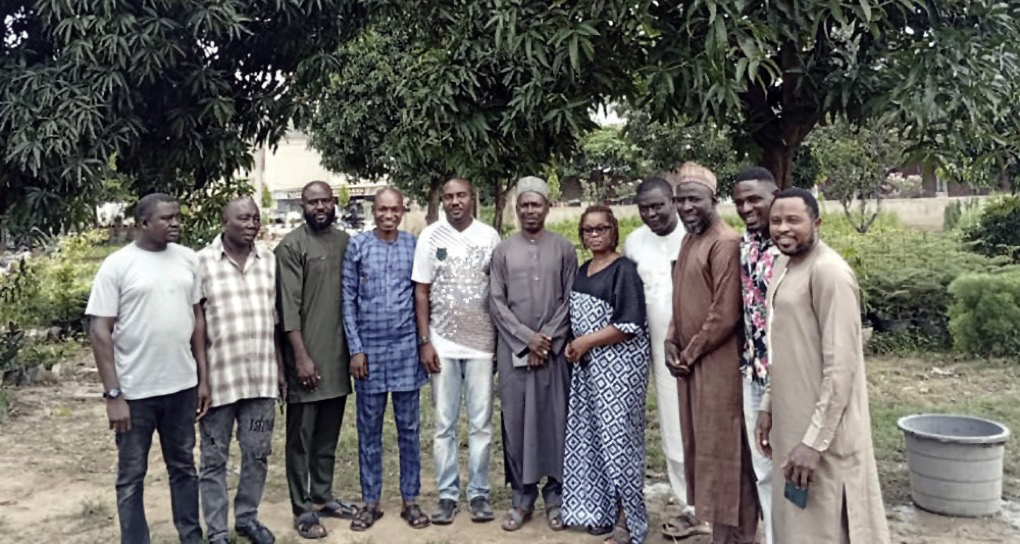
The donation, comprising economic and non-economic tree species, followed a strategic advocacy and partnership meeting between KADCCAM and the leadership of the Kaduna State Horticulture Association recently in Kaduna.
It was observed that the initiative came at a time when Kaduna, like many states across northern Nigeria, is grappling with the devastating impacts of climate change, including shrinking forest reserves, increasing desertification in some communities, declining soil fertility, prolonged dry seasons, flash floods during heavy rains and the loss of biodiversity.
These environmental challenges have continued to undermine agricultural productivity, threaten food security and expose rural communities to greater economic hardship.
Environmental experts say rapid urban expansion, indiscriminate tree felling for firewood and charcoal production, bush burning, illegal logging and unsustainable farming practices have further depleted the state’s vegetation cover, making afforestation initiatives increasingly urgent.
Against this backdrop, KADCCAM described the donation as a major contribution toward restoring degraded landscapes, increasing tree cover and strengthening community resilience against the effects of climate change.
Speaking during the meeting, the KADCCAM delegation, led by Engr. Shehu Muhammad Dalhat and Rev. Michael Ijah Ikpa, expressed appreciation to the Kaduna State Horticulture Association for supporting climate action through practical interventions rather than advocacy alone.
The delegation noted that tree planting remains one of the most cost-effective nature-based solutions for mitigating climate change, improving air quality, conserving biodiversity and protecting watersheds while providing economic benefits through fruit-bearing and other commercially valuable tree species.
Chairman of the Kaduna State Horticulture Association, Mr. Bala Umar, reaffirmed the Association’s commitment to supporting initiatives that promote environmental protection and sustainable development.
He commended KADCCAM for creating a platform that encourages collaboration among government institutions, civil society organisations and private sector stakeholders in addressing climate challenges.
“Our association remains committed to supporting initiatives that advance afforestation, climate resilience, sustainable agriculture and environmental protection in Kaduna State,” Umar said.
He noted that environmental sustainability can only be achieved through collective action, urging more organisations and residents to embrace tree planting as both an environmental responsibility and an investment in future generations.
The Executive Director of Jobulb EduConsult, Ms. Joyce Adeji, also spoke at occasion, emphasizing that climate action must go beyond government policies to include active citizen participation, especially among young people.
Other News
According to her, schools, communities and faith-based organisations have a critical role to play in nurturing environmental consciousness and building climate-resilient communities.
She advocated the establishment of Climate Clubs in schools and communities to educate students and young people on environmental stewardship, sustainable agricultural practices and climate adaptation strategies.
Adeji also highlighted the historical importance of agriculture, describing it as humanity’s earliest form of education long before the advent of Western formal education.
She urged policymakers and development practitioners to integrate indigenous agricultural knowledge with modern scientific innovations to improve food production while protecting natural ecosystems.
“Climate education should begin early. By combining our indigenous farming knowledge with scientific innovations, we can improve food security while protecting the environment for future generations,” she said.
Climate advocates noted that Kaduna State possesses enormous ecological potential due to its diverse vegetation zones, fertile agricultural lands and strategic location within Nigeria’s Guinea Savannah belt.
However, they warned that increasing pressure on natural resources could reverse decades of environmental gains if urgent conservation measures are not sustained.
The experts note that beyond absorbing carbon dioxide from the atmosphere, trees help reduce soil erosion, improve groundwater recharge, regulate local temperatures, provide habitats for wildlife and create livelihoods through timber, fruits, medicinal plants and other forest products.
For farming communities across Kaduna, increased tree cover is also expected to improve soil fertility, serve as windbreaks against desert encroachment and reduce the vulnerability of crops to harsh weather conditions.
KADCCAM further acknowledged the commitment of its leadership, particularly the Co-Chair representing Civil Society Organisations, Mr. Ibrahima Yakubu, and the Co-Chair representing Government, Alhaji Dr. Abubakar Buba, for strengthening climate accountability mechanisms and fostering partnerships that continue to produce positive environmental outcomes across the state.
According to the organisation, the donation of 5,000 seedlings represents more than a symbolic gesture, describing it as an important milestone in Kaduna State’s broader efforts to restore degraded ecosystems, conserve biodiversity and build resilience against the growing impacts of climate change.
The organisation also stressed that the long-term success of the initiative would depend on ensuring that the seedlings are properly distributed, planted and nurtured to maturity through sustained community participation and institutional support.
KADCCAM therefore called on government agencies, development partners, the private sector, educational institutions, traditional and religious leaders, community-based organisations and residents to actively participate in tree-planting campaigns and adopt environmentally responsible practices.
It maintained that protecting forests, restoring degraded lands and promoting climate-smart agriculture require coordinated action by all stakeholders, adding that no single institution can address the climate crisis alone.
As Kaduna continues to pursue sustainable development amid increasing climate pressures, stakeholders believe initiatives such as the 5,000-tree seedling donation represent practical steps toward building a greener, healthier and more climate-resilient future for communities across the state.