Follow Us on Google
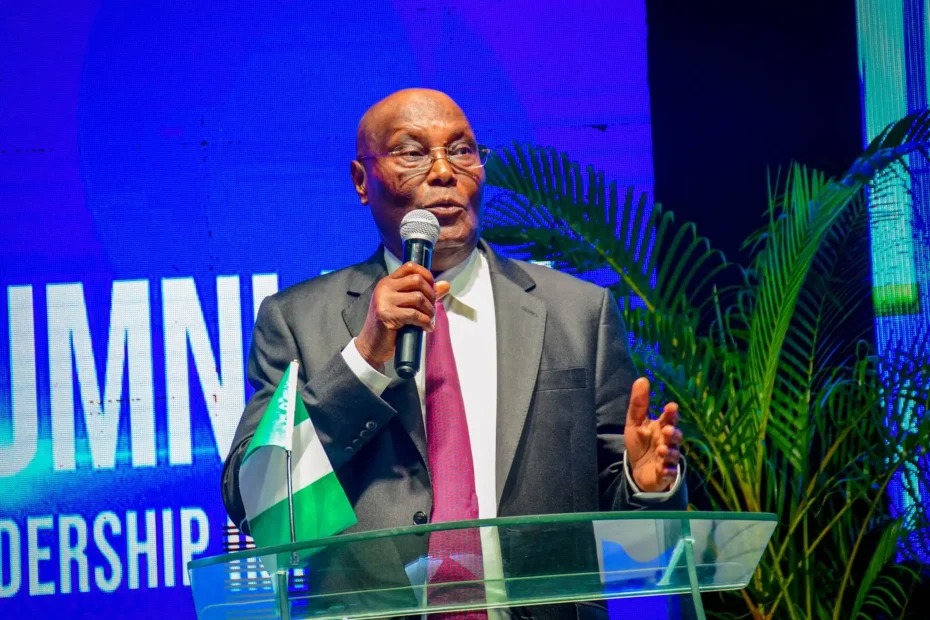
Former Vice President and African Democratic Congress (ADC) presidential candidate, Atiku Abubakar, has accused President Bola Tinubu of presenting a false picture of Nigeria’s economy.
Atiku argued that the closure of hundreds of manufacturing firms and the growing distress in the industrial sector contradict the administration’s claims of economic prosperity.
In a statement issued on Monday by his Senior Special Assistant on Public Communication, Phrank Shaibu, Atiku said the collapse of 767 manufacturing companies and the financial struggles facing another 335 firms showed that the government’s economic reforms had failed to strengthen the country’s productive sector.
According to him, no administration could credibly celebrate economic progress while industries were shutting down and businesses continued to battle mounting operational challenges.
“A government cannot claim its economic policies are working when the country’s industrial sector is actively shutting down.
“Nations do not build prosperity by celebrating macroeconomic statistics while their factories close their gates,” the statement read.
Atiku’s response followed the Presidency’s insistence that the Tinubu administration’s economic reforms were producing positive results, while dismissing allegations of fiscal recklessness, excessive borrowing and poor management of public finances.
The former Vice President, however, cited data from the Manufacturers Association of Nigeria (MAN), which showed that manufacturers were holding about ₦2.14 trillion worth of unsold finished goods.
He argued that the situation was not driven by weak production but by declining consumer purchasing power, as millions of Nigerians could no longer afford necessities.
He also pointed to the exit of multinational manufacturers, including Procter & Gamble, GlaxoSmithKline, Sanofi and Kimberly-Clark, as well as the suspension of operations by indigenous firms such as Jubilee Syringe Manufacturing, describing the developments as evidence of an increasingly hostile business environment.
Atiku further stated that local manufacturers spent approximately ₦1.11 trillion on diesel to power their operations following sharp increases in electricity tariffs for Band A customers, adding that rising energy costs had significantly worsened the cost of production and undermined industrial competitiveness.
Rejecting the Presidency’s reliance on Gross Domestic Product (GDP) growth figures as proof of economic recovery, Atiku maintained that economic growth was meaningless if it failed to improve living standards, create jobs or revive domestic production.
“Factories do not shut down because the opposition writes press statements. Manufacturers do not accumulate trillions of naira in unsold goods because critics hold press conferences.
“Multinational companies do not abandon billion-naira investments because of political rhetoric.
“They leave because the economic environment has become increasingly hostile to production, investment and enterprise,” he said.
The former Vice President maintained that the true measure of an administration’s economic performance should be reflected in thriving industries, sustainable jobs and increased production rather than government statistics or official narratives.
He argued that until manufacturers begin expanding operations instead of shutting their doors, claims of economic prosperity would remain difficult to reconcile with the realities facing businesses and households across the country.