Follow Us on Google
•Grid collapses to 2,033.66MW, infrastructure in tatters •Nigerians blast minister, say ‘your claim of steady power supply at variance with realities’
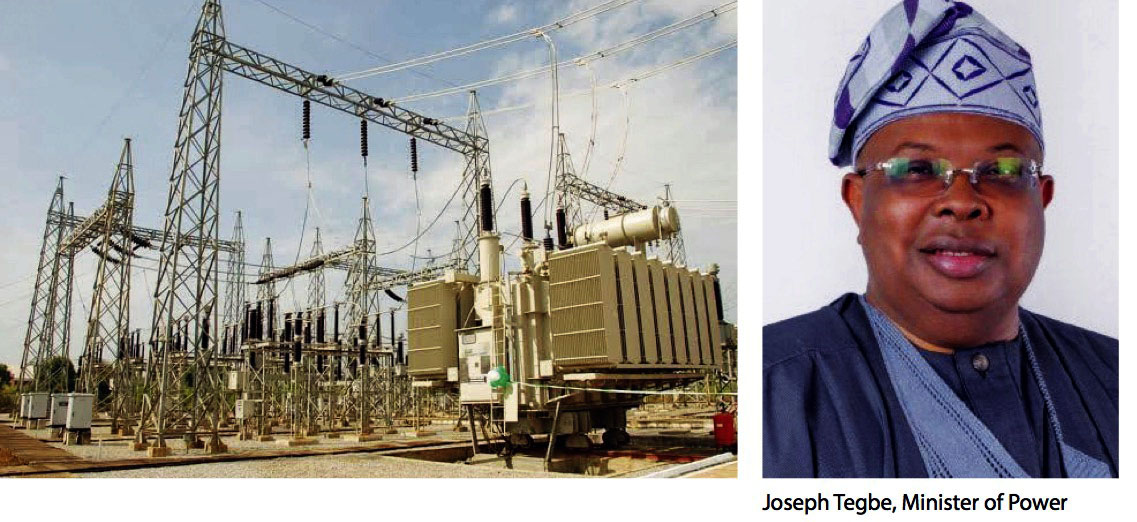
Nigeria’s worsening power crisis has exposed the widening gap between government claims of improvement and the reality confronting households and businesses, as electricity generation plunged to about 2,033.66MW on Monday, with 16 of the country’s 33 generating plants recording zero output.
The latest drop came barely weeks after available generation was reported at 5,403.3MW, highlighting the gulf between installed generation capacity, actual plant availability and electricity ultimately delivered to consumers.
Among the plants that recorded zero generation were Egbin, Geregu NIPP, Olorunsogo NIPP, Jebba, Kainji and Okpai.
On Tuesday, September 22, 2026, the National Control Centre (NCC), Osogbo, Osun State, announced peak generation of 5,403.3MW, out of which 4,379.07MW was delivered to electricity distribution companies (DisCos).
Abuja DisCo received the highest allocation at 700MW, followed by Ikeja with 581MW, Ibadan 550MW and Benin 531MW. Eko received 519MW, Enugu 512MW, Port Harcourt 466MW, Kano 161MW, Kaduna 155MW, Jos 134MW and Yola 70MW. A further 1,024.18MW was categorised as exempted load, covering power stations and auxiliary consumption, transmission losses and sub-station services, as well as bilateral and international supplies.
But the apparent improvement proved short-lived.
Less than two weeks after the peak-generation report, Ikeja Electric notified its customers that reduced hours of supply were caused by a shortfall in the amount of power allocated to its network from the national grid.
In a notice to customers, the DisCo said the reduction in supply hours was due to a significant drop in the allocation received from the national grid. It explained that the development had affected its ability to maintain the usual supply schedule and appealed to customers for understanding while efforts were being made to improve the situation.
The development has raised fresh questions about claims that electricity supply is improving and whether temporary increases in generation are being mistaken for a structural turnaround in the power sector.
Power Minister, Mr Joseph Tegbe, recently said some Nigerians had asked him to “slow down” improvements in electricity supply because their freezers were working continuously.
But consumers interviewed by Saturday Sun gave a sharply different account, with several reporting prolonged outages and increased reliance on generators.
An operator of a pure-water factory in Ogba, Mr Moshood Adekunle, said the prolonged blackout had forced his business to depend heavily on diesel-powered generators.
According to him, the cost of diesel was adding to the pressure on the business at a time when other operating expenses were already rising.
In Iyana-Iba, a resident, Mr Jude Ezeobi, said his neighbourhood had been without electricity for more than two days, describing the situation as a major setback for households and small businesses.
The infrastructure problem
The Lead Consultant at Power Sector Prospective, Mr Kola Olubiyo, said the power crisis could not be resolved simply by pursuing higher megawatt figures.
According to him, the critical issue is not only how much electricity Nigeria generates, but how many Nigerians have reliable access to it.
Olubiyo explained that a generating plant could have hundreds of megawatts of installed capacity and still produce little or nothing because of inadequate gas supply, mechanical faults, maintenance requirements or transmission constraints.
He said the latest collapse should therefore not be dismissed as another temporary grid fluctuation but viewed against the structural weaknesses that have continued to undermine the electricity value chain despite decades of reforms and interventions.
Olubiyo identified inadequate investment in transmission infrastructure as one of the sector’s biggest constraints.
He said Nigeria could generate more electricity, but without sufficient transmission capacity to evacuate it, additional generation would remain stranded or underutilised.
For him, investment in modern grid-management systems, replacement of obsolete equipment and stronger maintenance mechanisms must accompany efforts to increase generation.
He argued that the issue was not merely an engineering problem because a country could not industrialise on an electricity system incapable of reliably moving power to industries and households.
The megawatts obsession
Partner at Bloomfield Law Practice, Mr Ayodele Oni, also cautioned against judging the health of the electricity sector primarily by installed generation capacity.
Nigeria’s installed generation capacity has generally exceeded 6,000MW, he noted, but available capacity is significantly lower because of limited gas supply, load shedding and weaknesses in transmission and distribution.
Oni said the more important questions were why existing plants remained unavailable, why gas supply was unreliable, why equipment repeatedly failed, why transmission capacity remained inadequate and why distribution networks could not consistently deliver available power. He linked many of these problems to inadequate maintenance.
According to him, power plants require scheduled maintenance, periodic overhauls, replacement of critical components and continuous investment in asset integrity. The same principle, he said, applies to transmission and distribution infrastructure.
Oni argued that Nigeria had repeatedly allowed infrastructure to deteriorate until failure occurred, only to respond with emergency interventions that temporarily restored performance before the cycle resumed.
“Preventive maintenance is almost invariably cheaper than emergency rehabilitation,” he said.
He added that the Ministry of Power itself had acknowledged ageing generation equipment and deferred maintenance, alongside challenges involving transmission, distribution, regulation, governance and market liquidity. He said that diagnosis was more consistent with the sector’s realities than treating a brief increase in generation as evidence of fundamental transformation.
Gas, liquidity remain central problems
Experts also point to gas supply and market liquidity as major obstacles to sustained generation.
A large proportion of Nigeria’s electricity generation comes from gas-fired plants. When gas supply is disrupted or generating companies cannot meet their obligations to suppliers, generation falls. At the same time, generators face outstanding debts from the electricity market, while gas suppliers also complain about unpaid obligations. DisCos, on their part, face revenue-collection challenges and other regulatory constraints.
The minister has said the Federal Government is pursuing a Power Sector Bond to address legacy obligations owed to generating companies, gas suppliers and other market participants.
But Oni’s analysis suggests that financial interventions alone cannot produce a sustainable electricity market without addressing the underlying asset and operational problems.
For the sector to stabilise, he argued, the market must ultimately generate enough revenue to pay for gas, maintenance, personnel, infrastructure and new investment.
Why solutions haven’t worked
Nigeria has pursued privatisation, unbundling, new generation projects, transmission rehabilitation, metering programmes, rural electrification, renewable-energy initiatives and repeated liquidity interventions.
Yet the same problems continue to reappear.
Olubiyo said the country must approach the electricity sector as an interconnected value chain rather than a collection of separate problems.
Generation depends on gas; gas supply depends partly on payment; generation depends on transmission; transmission depends on distribution; while distribution depends on metering, revenue collection and financially sustainable tariffs.
He said failure to address these links simultaneously would continue to produce temporary gains followed by fresh deterioration.
The consequences are increasingly being borne by consumers. Nigerians pay electricity bills to DisCos but also spend heavily on petrol, diesel, generators, inverters, batteries and solar systems to compensate for unreliable grid supply.
Businesses bear an even heavier burden, with manufacturers incorporating self-generation costs into production, small businesses reducing operating hours and hospitals maintaining expensive backup systems.
Olubiyo also argued that Nigeria should view the energy transition as an opportunity to develop local manufacturing capacity for renewable-energy equipment, creating jobs, technical skills and potentially export opportunities. But he warned that such opportunities could remain limited if attention remained focused largely on fire-fighting the existing electricity system.
Minister’s improvement claim
Against this backdrop, Tegbe has said the country has begun to record encouraging improvements in generation, claiming that Nigeria consistently generated around 5,000MW for two weeks. He attributed the improvement to better plant availability and coordination across the electricity value chain.
However, the subsequent plunge in generation to about 2,033MW, with 16 generating plants recording zero output, has complicated that narrative. The issue, according to Olubiyo and Oni, is not whether Nigeria can occasionally generate 5,000MW. It is whether that level can be sustained and translated into reliable electricity for consumers. For households, the test is whether electricity can be predicted. For manufacturers, it is whether production can continue without heavy dependence on diesel. For small businesses, it is whether operating costs can be kept under control. For hospitals, it is whether the grid can be relied upon for critical services. The gap between these realities and official claims of improvement is therefore becoming increasingly difficult to ignore.
What government must measure
If government wants Nigerians to believe that the power sector is improving, Olubiyo and Oni’s arguments point to the need for broader performance indicators beyond headline generation figures. These should include sustained average daily generation, plant-by-plant availability, forced-outage rates, maintenance periods, gas supplied to major thermal plants, transmission constraints, system losses, distribution-level supply hours, collection efficiency and outstanding market debts.
Such measurements would provide a clearer picture of whether improvements are structural or temporary. Olubiyo’s warning on transmission and Oni’s distinction between installed and available capacity expose the limitations of Nigeria’s megawatt-centred approach.
The objective, therefore, should not simply be to announce how many megawatts the country can generate at a particular time, but to ensure that electricity is reliably available to the Nigerian who needs it. Nigeria has spent decades producing policies, restructuring institutions, privatising the sector, announcing new plants, rehabilitating transmission infrastructure, introducing metering schemes, adjusting tariffs and injecting funds into the electricity market.
Yet the same problems keep returning.
Perhaps the sector’s greatest failure is not simply that Nigeria has been unable to generate enough electricity, but that it has struggled to keep generation, gas supply, transmission, distribution and market financing working simultaneously and consistently.
The latest collapse in generation is therefore more than another bad day for the national grid. It is a reminder that Nigeria’s power crisis remains structural.
Until success is measured by sustained electricity delivered to households, businesses and industries not temporary increases in generation as claims of improvement will remain disconnected from the experience of consumers.
For Nigerians who have spent decades buying generators, petrol, diesel, inverters and batteries to compensate for the national grid, improvement cannot be measured from a ministerial podium.
It must be measured from the light switch. And, for now, the light switch is telling a very different story.