Follow Us on Google
•How Obasanjo inspired my journey into agriculture
By Simeon Mpamugoh
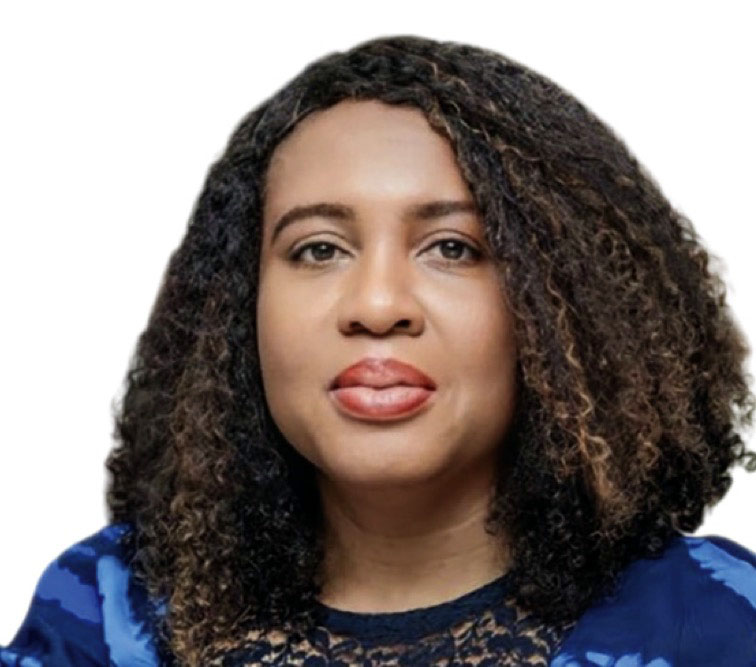
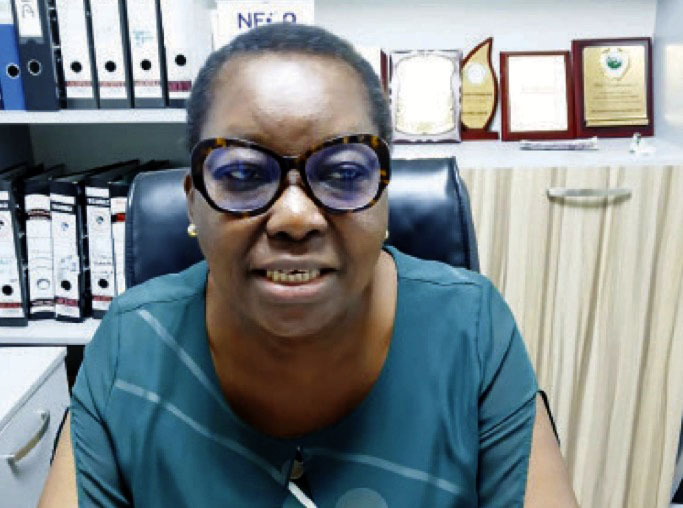
Mrs Edobong Akpabio is the Executive Director of Greenport Nigeria and a prominent agro business strategist. She was the 2nd Vice President of NECA’s Network of Entrepreneurial Women (NNEW). An ILO-SIYB trained trainer and appointed YouWin mentor, Akpabio is also a mentor with the Cherie Blair Foundation.
Through her work at Greenport Nigeria, Visionage Agro-Tech Farms and several speaking engagements, she actively advocates for the empowerment of women in agribusiness and provides strategic mentorship to young entrepreneurs across West Africa.
In this interview with Saturday Sun, she shares how former president Olusegun Obasanjo inspired her journey into agriculture, and sundry issues.
You hold a rich resume as a resource management expert and mentor with over 30 years. What were you doing before going into agro business?
I studied English, and graduated in 1988 from the University of Uyo in Akwa Ibom State. I passed out of NYSC in Owerri, Imo State in 1989 and had my first appointment as a management trainee at Ideal Flourmill, Kaduna for six months: October 1989 to March 1990 and my appointment was confirmed. We were hired and given basic induction training about the company in different departments. It didn’t matter what one read. We were six. Some of us read engineering, accounting and some marketing. During the induction one could be asked to work with the Human Resources department today, tomorrow in the Accounts Department, next to Production, Workshop Maintenance, even in the canteen, and the company was producing maize and flour, wheat brands. So after six months I was posted to HR and Admin as an executive. In February, 1991, I got married and in March 1991, my appointment was confirmed as HR and Admin officer. In September 1991, I was transferred to a sister company C&C construction in Lagos. They were into roads construction and other projects in Abuja. They were behind the construction of one of the Defense Academy campuses in Kaduna and OPIC plaza near Ikeja Sheraton Hotel. They had about three projects in Lagos State with their office in Sapara William Close in Victoria Island Lagos. So I was with them till 1993 when I got a job with FSB International Bank. I resumed in September of the same year until October 1997 when I left for a consulting firm. I left them in 2000 for National Sports Lottery. From there, I moved to Compagnie Generale D’location d’Equipements (CGL), a French logistics company. I worked with them from 2002 to December 2005 when I left to start my own business.
What was the attraction in Agro business?
At the time I left CGL, I was interested in what ex-president Olusegun Obasanjo was doing in agriculture. He was talking so much about cassava. I didn’t know that cassava can deliver so much. In cassava we have garri, fufu, tapioca and the local delicacy called abacha. I was reading and hearing a lot about so many other things that were done with cassava. I picked interest in it and began to attend seminars. A lot of the seminars were convened by Institute for Industrial Technology (IIT) and I needed to go to seminars convened by credible organisation and IIT proved one of them. In many of the seminars, I met people I knew who made encouraging remarks seeing me. And I was eager to know what was going on. They would explain to me and we exchanged phone numbers. GSM has come out that time. There was no WhatsApp but people could send text messages on places where such seminars were been held, under the superintendence of credible organisations. There, people were sharing presentations about cassava. I became fascinated. Some of my pastors were also there. One of them told me that there was a piece of land available for lease. But my husband didn’t want lease but outright purchase because cassava is a long term crop. It could take a whole year and we don’t want to run it on leased land. At that time, we were not known for credibility. We don’t want to lease land and six months later, somebody would say he wanted to use the land. So we preferred to buy outrightly so that we know that the land belonged to us. That was how our journey into agriculture began. My husband already had his own business but was supporting me because that was what I wanted to do. We bought our first land in 2006 and registered our company Visionage Agro-Tech Farms, which was the first company we started as a family business. Meanwhile our first son was passionate about Sport Journalism. One day we called him to know what he could do for us in the area of the farm because we knew he was so organised in brainstorming sessions. We asked him what young people like about what is happening in the farm. It was then we knew that there was a very little awareness with young people about farming.
Could you share your findings with us?
As a certified trainer I noticed that there was a gap in what is happening in the agro field no matter what we’re doing in the field. And what is happening out there allowed me to step back a little to devote a lot of time in training. When I joined NNEW in 2009, my immediate objective was to find where I can be guided on my business. I needed mentorship, people who can handhold me, more so, going into business for the first time, especially in agriculture where I didn’t have any technical knowledge. I met people in the industry who were well ahead of me with years of experience, and they were willing to take me through it with nothing to hide. They were ready to give me information as if there was no competition. One of them told me: “you can’t compete with me. It’s when you succeed that I also succeed. If I hide anything from you, then I’m unsuccessful on my own.” That made me happy and I was able to share with them some information that came from my son. We opened new knowledge sharing platform. That was how we started running new programmes. In FSB International, I joined as head of personnel administration and later head of training where I also had to train myself because there was a provision for it. That was how I became certified trainer. So I know the techniques of being a trainer, which I brought to the table at NNEW. At the organisation, I rose from Agribiz sector to become the publicity secretary, and to the 2nd Vice President. I was also head of advocacy unit, and also served in many committees.
We’ve had several agro based plans in Nigeria. Why had these efforts been futile in our quest for green revolution technology?
I can tell you that we have discussed this issue extensively at NNEW during our brainstorming sessions and stakeholders engagement programmes many years ago on why agro business in Nigeria remains underperforming, and I could remember major things that came out of it: the first one is poor stakeholders engagement. We discovered that a lot of the time the government does not have good stakeholders’ cohesion. When the Federal Government is putting plans together, sub-nationals are rarely involved; states and local governments are rarely engaged. The Federal Government that has the programmes: do they have the land and the people? They don’t.
We have the National Council of States who could sit down to discuss such plans. The Minister of Agriculture and Food Security and his counterpart in the 36 states of the federation, and the councillors for agriculture and cooperative in the 774 Local Government Areas can drive agriculture in Nigeria. They can sit together and come up with a programme that will boost food production in Nigeria. These were some of our findings: there is no cohesion. And when we talk about stakeholders’ engagement, we’re saying that all hands must be on deck. How do we even talk about agricultural programme when the local governments would come up with “no good roads,” reason not to participate? Even while talks about how to repair roads are ongoing, the councillors for works are not in the meeting, the minister of works is not in the meeting. How would they understand what the farmers’ need? So stakeholders engagement is lacking – the more reason our agro programmes don’t succeed. What about those who will carry out rural electrification? They are not also in the meeting. Yet we are talking about harvest losses. We will always encounter food waste because we don’t have provision for storage due to lack of electricity supply. And the agencies that are in charge are not always on their duty posts. The Minister of Agriculture and Food Security and the Commissioners of Agriculture and Cooperative in the 36 states should come together to address food insecurity in Nigeria. Thereafter the commissioners take it notches higher to their states to implement programmes that will improve the system. The same goes for those in the Local Governments Areas. The decision should be in such a way that, at the end of the day, there would be a proper perspective to the issue, otherwise those agro plans will continue to be a waste due to lack of stakeholders cohesion.
How serious have the various governments in Nigeria been in tackling food insecurity?
Governments in Nigeria never see agriculture as a serious business. It is always viewed from social service perspective: “Let us settle those in rural areas in order to keep them busy,” kind of perspective. So it was never seen as a business the way government seems to view oil and gas business. There has never been a regulatory framework around agriculture. Look at the way government reacts when someone wants to set up filling station; the ministry of petroleum ensures the process is fully enforced. The same energy can be deployed in agriculture where if one wants to set up a farming process, one must secure the land with the Ministry of Lands and Survey.
In the 1970s, we used to have extension workers who visited homes in order to know seedlings farmers needed for the farming season. How about re-creating such public service in our agricultural sector?
What was their job description? They were civil servants who didn’t need to do anything. Imagine someone who wants to set up a petrol station. Does the ministry go about asking the promoter what he needs? The Department of Petroleum Resources (DPR), tanks, and Environmental Impact Assessment (EIA) reports or the lightings? In Agri-Tech, we can have a procedure that mandates farmers to do soil test. For decades farmers have been advocating for National Seeds Council (NSC), Registered Seed Producers and Distributors group. Today we have all sorts of seedlings coming from Indonesia, Malaysia and other places; no checks, no standardisation, and our farmers are at the receiving end. If it germinates, it’s okay, if it doesn’t, it is okay. Up till today, government is still distributing fertilizer. Why should this be so? If farming is really a business, I’d be able to buy my hoe and also go to the market and buy my fertilizer and use for my crops. A former Minister of Agriculture and Food Security under President Goodluck Jonathan, Dr Akinwunmi Adesina wanted to motivate Nigerian farmers by getting them android phones so that he could use it for statistical data of farmers in Nigeria. There was going to be an app so that farmers will be registered so as to trail their activities. Nigeria Revenue Service could identify a farmer through his/her NIN, BVN, which will be in the app. The General Packed Radio Service (GPRS) will also have it so that if one says my farm(s), all of them will have the GPRS. When I need seeds for cucumber, where am I going to plant it? We plug it on the app. Right now Greenport has a farm for horticulture in Abeokuta and partnership project in AkwaI bom State University. We just finished one with Dutch, Netherlands government. We are now signing on with FUNAAB. I already have where I can pick up my inputs – fertilizer, seedlings, chemicals etc. So to be able to encourage me for instance, I will need to be subsidised. If it’s N100, I’ll be paying N50. If you are the distributor of those items, I’ll plug-in, it will give me a code and I will bring it to your office and you’ll document it and give me the quantity of fertilizer and seed, and I’ll carry them and pay you fifty percent. And with your documentation, you will invoice the government and they will pay for the remaining 50 per cent. That was what Adesina wanted to implement for Nigerian farmers. All farmers’ details will be programmed in the app and they will be in the tax net. At the end of the day when I sell, Nigeria Revenue Service (NRS) already has my details and when they check against my sales they will know if I have made more than N25 million, which is what they said I’ll need to make in order to make a return. Under N25 million, you don’t need to pay company income tax. With the technology, there’ll be no hiding place for farmers. The app has all the details of farmers and was aimed at encouraging farmers. And when others see how the process is being run, they will sign up. But those who didn’t understand it were peddling falsehood that he wanted to gift farmers phones. We are heartbroken to see how state governments are distributing fertilisers when it was no longer needed. Sometimes they bring in fanfare, expending a lot of money they were supposed to use to assist farmers. Everything is being politicised, even agriculture, a vocation for everybody. In the village if one doesn’t go to farm, the person is seen as a lazy man or woman. Yet the villagers can’t leave on it, they still depend on handouts year in year out, which is not sustainable. So the politicians use it to weaponise poverty of the mind. The truth is that government is not interested in using agriculture to develop the country, even when it has a potential to do better than oil.
What is the connection between Greenport Nigeria and soilless farming which is a small holders farming models?
Greenport Nigeria was established by four of us who are colleagues with various years of industry experience. We came together because we had each run businesses of our own in agriculture. When we started, we wanted to make impact. We were done with profit and had come to the realisation that if we don’t leave our mark, we would not have done justice to what God has done for us in Agribiz industry.
So we came together and formed the company. And because we’ve had a lot of experience: good, bad and ugly one thing was very clear to us: all the grain silos, why people have not been able to make impact in agriculture is because of the small here and there. We realised that collaboration, partnership is the way to go. If we come as a collaboration and partnership, we will do better. And that was how we came together to say: cluster is it. Because young people do not have the capacity to do the kind of collaboration and partnership that will make sense. But for those of us who have been there, we now know what to do. You can get better help when you are able to work as a team. But in that group, you need somebody who knows what to do.
In Greenport Nigeria, we own the land, and we train these young people. We understand the market. We know what the market wants and where it is headed. So we train, onboard and able to guide them on what to do. We become their off takers to feed other ones. And they do that, make their money and feel good about what they are doing before we are able to push them out into the market. And they’ll be ready by that time. So from the small one acre they are doing, by the time they are ready to be pushed, they are ready for ten hectares they can go and get out there. So, whether it is fish, crop, cattle, – even while we still talk about ranch – they’ll be ready. That is what Greenport Nigeria is all about.
What happens to the soilless version of the SHF model?
Whether it is soil or soilless, Greenport Nigeria is there. All of us have our different competencies including soilless farming. What is soilless farming? It’s that version of farming that one is using a medium that is not soil to plant crops. There are many mediums that are not soil. The principle about it is this; what is crop looking for to grow? It is nutrients. If you put a seed in a particular medium and put the right nutrients, it’ll grow. For instance rice chaff from rice mill. Just put the chaff in a small Quaker Oat size container, and put beans seeds and continue to water it, it’ll germinate. As long as there is a nutrient making the seed to be nutritious, the seed will not only germinate but also grow into beans. We have the materials, what happens is that we are taking soil from bush to plant; depleting soil from somewhere to plant. I built my house for instance, make those pots around my house for flowers, I go to buy one tipper of sand to put there.
Where does the sand come from – the environment. But if I use soilless medium, those flowers will still grow. I can get a soilless medium from coconut husk that would have been a waste, rice husk, mills husk, including sawdust. All these would have made soilless medium for me. What the promoters of soilless farming are saying is that we have the properties to use for soilless farming, such that we don’t deplete soil and cause problems in the environment. Soilless materials are there for our use, which is wasting away.
If you visit Uyo at a particular time of the year, you’ll find a lot of coconut. But the city is so filthy that one is wondering how people are literally throwing money away. Yet we’re importing those things into the country for our agro business. Take the coconut husk and soak it inside water for two – three months, it’ll not only soften, but also remove the salinity, and then empty the water to remove the saline. After that, use mortar to beat and crush it like sponge or cotton wool. In Asian countries, it’ll be crushed like cotton wool with machines, packed like blocks. That’s how they packaged it in a bag and export to us to use while our people are busy throwing it on the roadside. Even in sawmills, you find sawdust littered everywhere.
In organised countries, they collect it and go home to treat it, because they know that people are coming to buy it for use as soilless materials. Today, young people have been trained by soilless promoters to be able to produce those materials for use. We also have those who prepare nutrients, which will make those materials to have the kind of nutrition that the plant needs to be able to grow. It is organic fertiliser which adds body to those plants. On their own, they’re sterile but whenever we add water, they’ll add good food for those plants and act like fertiliser and manure for the plants to grow.
You’ve been in Agro-biz for 20 years. What are some of the challenges you’ve faced along the line?
I didn’t have a technical background in agriculture. Like I said I read English in my first degree and logistics and supply chain management for my postgraduate degree. But I consistently have to improve my learning. And where to learn was very challenging. We had people who read agriculture but literally know too much about it. They became themselves a problem. It is not that they didn’t want to teach but they didn’t know. Agriculture is a science, art, process and culture. People don’t seem to understand that village knowledge is also a knowledge one can’t dismiss, even those from our forefathers. When you know what they know, and because you understand it, you’d need to connect it to today’s science. They may not have called it science in their time but it made beautiful sense. So I pick out the science and art of agriculture, thanks to education. It helped me. And because I was determined to succeed, I had to devote time to it. The 20 years I had spent is not in vain. So learning through the ropes was the first challenge. I’m still learning. I’m not yet done with the learning curve.
The second challenge was one of everybody else: unstable government policies, poor infrastructure. I faced all of them, including COVID-19 which pulled down the family business. Just after we started our second farm, the pandemic came and we had put in a lot of resources. It was our second farm in Akwa Ibom State. The pandemic came and there was a lockdown. We couldn’t travel. We couldn’t do anything, the plan was for us to move down to Akwa Ibom State but the pandemic forestalled it. That lasted for seven months and by the time we got there, we had lost everything we put on the farm. We couldn’t recover from it and we have not recovered. So we had to shut it down. That was a business we’ve done for almost 16 years at that time.
A lot of people also faced the same challenges but we didn’t sit down and cry over the spilled milk. What I and my colleagues did was to do hotlines for many other farmers that were having issues: who is having eggs that he cannot sell? Who is in need of it? So we were busy linking farmers to buyers, and buyers to farmers, people that were stuck, those that were been harassed by security forces. It was heartbreaking as we were having day old chicks dying on the road because we had security agencies that were stopping people that were moving farm produce from one point to another. It was really a sordid experience, and learning process during the COVID-19 period.
We also faced personal challenges of the justice system. We lost acres of land with C of O. There we were sitting down, only to hear that there was a judgement against us. We were holding our C of O for the land and somebody went behind us and got a judgement on the land saying it was his own. We were never informed and nobody served us any writ. Somebody just went to court and claimed he was our legal representative. There were several injustices that counted against us, which we reported to the police. These are things that are better left undiscussed, yet we survived it.