Follow Us on Google

• From state to state, community to community, Nigerian mobs keep taking the law into their hands, as accusation becomes death sentence
By Olakunle Olafioye and Ngozi Nwoke
For Dr Afolabi, a Nigerian-born medical doctor based in the United States, a routine visit to Nigeria nearly ended in death recently.
On Tuesday, May 12, 2026, the doctor was driving his Lexus RX 330 SUV along the Eleyele–Ido Road in Ibadan when his journey took a terrifying turn. Around the 2nd Powerline area of Ologuneru, the presence of two girls, aged 15 and 12, inside his vehicle reportedly aroused suspicion. Before facts could be established, a frightening allegation began to spread: the doctor was said to be a kidnapper.
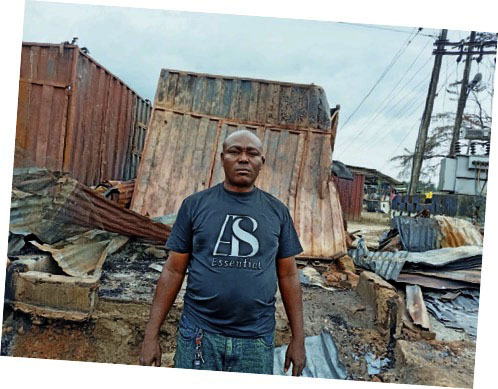
Within minutes, suspicion became accusation, accusation became anger and anger turned into mob action. The crowd descended on the doctor and set his vehicle ablaze. He was reportedly assaulted and was on the verge of being lynched when a distress call brought police operatives from the Eleyele Division to the scene. The police team, led by the Divisional Crime Officer, rescued him from the mob. By then, however, his SUV had been destroyed by fire. The doctor was subsequently taken for medical treatment.
What initially looked to the crowd like a kidnapping case turned out, according to police preliminary investigations, to be a tragic case of suspicion and misinformation. The two girls, identified by the police as Deborah, 15, and Rebecca, 12, were not kidnapping victims. Investigators reportedly established that they had been entrusted to Dr Afolabi by Idowu Abimbola to take them to his mother to assist with domestic chores. The arrangement was reportedly confirmed by the woman, while the girls corroborated the account.
The confusion reportedly began at a checkpoint near The Polytechnic, Ibadan, where the doctor was stopped for routine inspection. The appearance of the girls, coupled with concerns about their condition and the doctor’s difficulty in satisfactorily explaining the situation, heightened suspicion. The girls’ inability to communicate effectively in English or the local language reportedly compounded the misunderstanding. Then came the fatal ingredient in many mob incidents: the rumour that requires no evidence before it becomes a verdict.
The Commissioner of Police in Oyo State, Abimbola Ayodeji Olugbenga, condemned the attack and ordered an investigation, including efforts to identify those responsible for the assault and destruction of property. The command also urged residents to report suspicious activities to security agencies rather than resort to self-help.
For Dr Afolabi, the intervention of the police made the difference between surviving an ordeal and becoming another statistic in Nigeria’s disturbing history of mob violence.
An octogenarian’s final accusation
But not everyone caught in similar circumstances has been so fortunate. In Benue State, an elderly man, Ordue Ikye, reportedly met a brutal end on Sunday, September 6, 2026 after being accused of witchcraft. The Advocacy for Alleged Witches (AfAW) petitioned the Benue State Police Command over the alleged killing of Ikye, said to be above 80, in Tse-Ikye, Gbemacha Council Ward, Gwer East Local Government Area.
According to the organisation, the incident followed the death of Aker Aleva, a younger relative of Ikye. Aleva, reportedly in his 30s, had gone to watch football and complained of a headache after returning home. He subsequently collapsed and was taken to a hospital in Ikpayongo, where he died. Rather than accepting the death as a medical tragedy requiring investigation, members of the community allegedly accused Ikye of causing it through witchcraft.
AfAW, relying on information from a relative whose identity was withheld for security reasons, said a mob confronted the elderly man. The organisation alleged in its petition that fires were made on both sides of Ikye, leaving him standing between them while he was questioned about Aleva’s death. Ikye reportedly denied the accusation. But his denial allegedly failed to stop the mob.
According to the account, some people opposed killing him, but members of the crowd allegedly picked up logs and began beating him. His son, who said he witnessed the attack, reportedly feared intervening because he believed that anyone attempting to stop the mob could also be attacked or killed. Ikye was allegedly beaten to death.
AfAW called for a thorough investigation, protection of witnesses and prosecution of anyone found responsible. Amnesty International also called for an investigation into the case, describing it as another illustration of the danger posed by witchcraft accusations.
The tragedy is particularly disturbing because the accusation rested not on forensic evidence or a police investigation, but on a supernatural explanation for a death. As AfAW argued, an unexplained illness or death cannot constitute proof that another person caused it through supernatural means. Yet in communities where fear, traditional beliefs and misinformation intersect, accusation can quickly become evidence and evidence can become a death sentence.
Missing iPhone became death sentence
In Plateau State, a missing mobile phone reportedly produced another fatal chain of events. On July 26, 2026, 25-year-old Ibrahim Mbaya, popularly known as Ibee, was allegedly beaten to death after being accused of stealing an iPhone 12.
Mbaya, a University of Jos graduate, had reportedly attended a social gathering before deciding to spend the night at a friend’s residence because it was too late to return to his home in Rayfield, Jos. The following morning, according to reports, his friends discovered that an iPhone was missing. Because they were reportedly the only occupants of the room, suspicion fell on Mbaya. However, rather than reporting the matter to the police, those who suspected him allegedly subjected him to violence.
The Plateau State Police Command said a Good Samaritan alerted the Lamingo Police Division after some youths brought an unconscious man to the Jos University Teaching Hospital under suspicious circumstances. Mbaya was identified at the hospital and was pronounced dead on arrival.
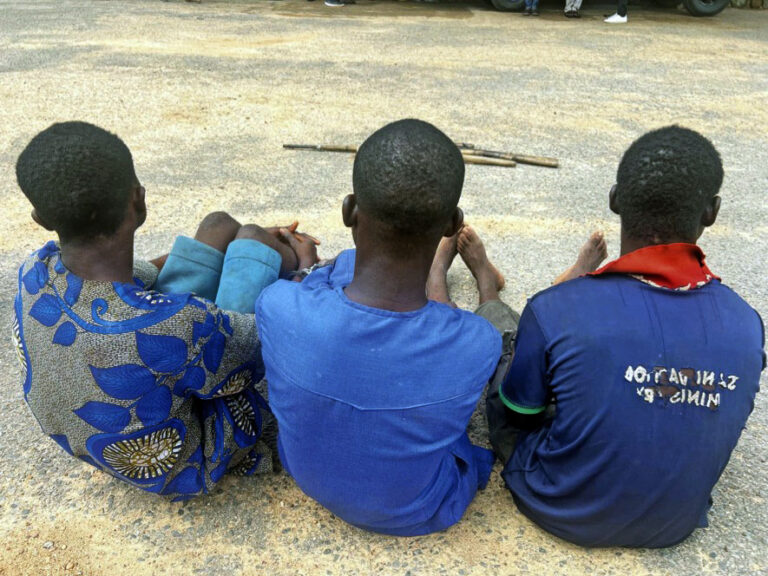
Police investigations led to the arrest of three suspects — Rinji Daniel Fwanji, Emmanuel Newyear and Nensemka Fwanji. Police said Newyear was captured in a video assaulting Mbaya with a large wooden plank. The police later said the suspects admitted that Mbaya had been suspected of stealing the phone and that, rather than reporting the allegation to law enforcement, they took the law into their own hands.
The case again raised a fundamental question: at what point did suspicion become proof, and who gave the accusers the authority to impose punishment?
When mistaken identity becomes fatal
Perhaps one of the most devastating recent examples occurred in Uromi, Edo State, in March 2025 when 16 travellers were killed by a mob after they were reportedly mistaken for kidnappers. The travellers, who said they were hunters returning from Rivers State to Kano, were intercepted by local security personnel. Locally made guns found in their vehicle reportedly heightened suspicion and triggered an alarm.
The suspicion quickly escalated into violence and the travellers were attacked with some of them burnt to death. Police subsequently arrested suspects, while authorities ordered investigations into the killings. The Edo State Government also suspended the commander of the state security corps and announced measures against unregistered vigilante groups.
The Uromi killings illustrated the frightening speed with which fear can transform an ordinary security check into a deadly confrontation. It also demonstrated a recurring feature of mob violence: once a crowd becomes convinced that it has identified an enemy, facts may arrive too late.
Long history of jungle justice
The phrase “jungle justice” may sound like a product of the social-media age, but the phenomenon is much older. Nigeria has witnessed mob killings for decades, arising from allegations ranging from theft and robbery to kidnapping, witchcraft and blasphemy.
One of the cases that remains etched in the country’s collective memory is the killing of the Aluu Four in Rivers State on October 5, 2012. Four University of Port Harcourt students — Ugonna Obuzor, Lloyd Toku, Chiadika Biringa and Tekena Elkanah — were accused of theft, attacked by a mob and brutally killed. The incident generated national outrage and renewed debate about mob justice, policing, poverty, public anger and the failure of formal institutions.
Several other cases have since followed. In 2015, a seven-year-old boy in Badagry, Lagos, was reportedly burnt to death over an allegation of stealing foodstuff. A year later, a LASTMA official, Bakare Olatunji, was killed by a mob in Apapa following a traffic enforcement dispute.
In 2017, amid widespread fear over the activities of the Badoo cult in Ikorodu, Lagos, suspected members of the group were attacked and killed by mobs with scanty or no evidence to substantiate their suspicion or the victims’ culpability.
Other News
In 2021, three boys, including 16-year-old Anthony Okpahefufe, were reportedly lynched in Cross River State over allegations of theft. And a year later In 2022, sound engineer David Imoh was beaten and burnt to death in Lagos after becoming caught in a dispute involving commercial motorcycle operators. That same year, Deborah Samuel Yakubu, a student of Shehu Shagari College of Education in Sokoto, was killed by fellow students following allegations of blasphemy. In 2023, Martina Okey Itagbor was reportedly tortured and killed in Cross River State after being accused of witchcraft.
The list demonstrates that jungle justice does not belong to one region, one religion, one age group or one category of accusation. It can happen anywhere a crowd decides that suspicion is enough to justify punishment.
An old problem with new accelerants
The emergence of social media has added another dangerous dimension. A rumour that once travelled through a market, motor park, street or neighbourhood can now spread to thousands of people within minutes. A photograph, a short video or an unverified voice note can provide the appearance of evidence without actually establishing the facts. By the time the truth emerges, a mob may already have formed.
Amnesty International’s research provides an indication of the scale of the problem. The organisation documented at least 555 victims of mob violence in 363 incidents across Nigeria between January 2012 and August 2023. It recorded killings, torture and other forms of ill-treatment and said failures by law-enforcement agencies to prevent, investigate and prosecute mob violence contributed to a climate of impunity.
The figures do not necessarily represent every incident in the country. Rather, they reflect cases documented by Amnesty International during the period covered by its research. But they underline the fact that mob violence is not an isolated phenomenon.
Why do people take the law into their hands?
Security analyst and commentator Fred Anokam said jungle justice cannot be attributed to a single cause. According to him, distrust in institutions, fear of crime, misinformation, social pressure and the belief that immediate punishment is more effective than formal justice often combine to produce mob action. “When people believe that the police may not arrest suspects, or that cases will drag on without conviction, some conclude that handing a suspect over to authorities will achieve nothing,” he said.
That distrust, he argued, can become particularly dangerous when combined with the slow pace of criminal justice. Where people see criminal cases taking years to conclude, the idea of “instant justice” may appear attractive to frustrated communities.
But the irony is stark. A mob may kill someone before it is established that the person committed any crime at all. And once an innocent person is killed, there is no court process capable of restoring that life. Anokam also identified rumours, false accusations, disinformation, lack of fact-checking and manipulation as important triggers. “Once a crowd believes someone is a thief, kidnapper, ritualist or blasphemer, the allegation can become the verdict,” he said.
Fear of violent crime also plays a role. Nigeria’s experience with kidnapping, robbery, cultism and other forms of criminality has made many communities deeply suspicious of strangers and unusual situations. That fear can produce a dangerous psychological shortcut: someone who looks suspicious is assumed to be guilty.
Psychology of the crowd
Prof Victor Nwachi, a sociologist at the University of Port Harcourt, said people sometimes turn to jungle justice because they believe formal institutions have failed them. “When police are seen as slow or corrupt, or when people believe a suspect will just be released and come back to hurt someone, communities decide to act right there and then,” he said.
He also pointed to anger and crowd psychology. “When something bad happens, crowds get emotional and want immediate punishment. And in some places, it has become what we do — a way to send a message to others not to try it.”
But, according to him, the consequences are destructive. “First, it kills the idea of the rule of law. If everyone becomes judged and executed, then the courts and police don’t matter anymore. Second, innocent people die. We’ve seen cases where someone was burned and later found out they did nothing. There’s no investigation, no defence.”
He said mob violence also teaches society, especially younger people, that violence is an acceptable way to solve problems. “It leaves whole communities living in fear of criminals but also of being falsely accused.”
When anger overrides evidence
A psychologist, Tunde Okafor said the desire for immediate punishment can become particularly strong when people believe they have witnessed wrongdoing. “It feels unfair when you see someone caught red-handed walk free. That creates real anger and a need for payback,” he said.
But he stressed that perceived injustice cannot justify killing. “Mob justice throws away evidence, denies anyone a chance to defend themselves and shuts the door on real justice or reform.”
According to him, the consequences go beyond the immediate victim. “When we see people set ablaze only to later find out they were innocent, that tells us something scary about where we’re headed. It means we’ve gotten to a point where accusation is enough to kill.”
He also noted the psychological consequences for families, witnesses and even participants in mob attacks. “It creates trauma for families, for the people who watched, even for those who participated. And it means no one is safe. A society like that lives in fear, not justice.”
Police: Mob action is murder
Against the background of the recent incidents, the Inspector-General of Police, Tunde Disu, warned Nigerians against jungle justice and declared that people who assault or kill suspects outside the law could face prosecution. He stressed that criminal allegations must be investigated and prosecuted through lawful procedures rather than settled by crowds.
The IGP also warned that liability may extend beyond those who physically attack a victim to people who mobilise crowds, encourage violence or obstruct police intervention. His warning reflects the legal principle that criminal responsibility can extend to participation in or conspiracy to commit an offence, although the precise charge and penalty in any particular case depend on the applicable law and facts.
The warning is significant because mob violence is rarely the action of one person. A crowd may contain the person who starts the rumour, those who amplify it, those who physically attack the victim, those who prevent intervention and those who record and circulate the violence. By the time police arrive, a false allegation may already have acquired the force of accepted truth.
Who protects the accused?
Perhaps the most disturbing question raised by the recent incidents is a simple one: who protects a person who has been accused? In the case of Dr Afolabi, the answer came from the police — but only after his vehicle had been burnt and he had been attacked. For Ibrahim Mbaya, the intervention came too late. For Ordue Ikye, according to the allegation before the police, the accusation ended in death. And for the 16 travellers in Uromi, verification reportedly came only after the mob had already acted.
These cases expose the peril of a society in which accusation can become punishment without investigation. The principle of due process is not designed to protect only the guilty. It protects everyone because no person can be certain that he or she will never be falsely accused. Today, it may be a stranger accused of kidnapping. Tomorrow, it could be a neighbour accused of theft, an elderly person accused of witchcraft, a student accused of stealing a phone, a trader accused of fraud or an innocent traveller mistaken for a criminal. The accusation may be false. But a mob does not always wait for the truth.
Breaking the cycle
Stopping jungle justice requires more than condemning mobs after somebody has been killed. Anokam noted that it requires rebuilding public confidence in the institutions responsible for maintaining law and order.
According to him, police investigations must be credible and timely while criminal cases must move through the courts without unnecessary delays. “Communities must know where and how to report suspicious activity. False information must be challenged quickly, particularly when it is capable of triggering violence.”
Traditional, religious and community leaders also have a role to play in discouraging accusations based on rumours, superstition and unverified claims. “Social-media users have a responsibility as well. Forwarding an unverified kidnapping allegation may appear harmless, but when such information triggers a mob, the consequences can be irreversible,” he noted.
The central lesson from the stories of Dr Afolabi, Ibrahim Mbaya, Ordue Ikye and the Uromi travellers is therefore not simply that mobs can be violent. It is that a society becomes dangerously close to injustice when accusation is allowed to replace evidence, anger to replace investigation and punishment to replace trial. Jungle justice may have deep roots in Nigeria, but its persistence does not make it justice. It remains a form of violence — and every time a crowd turns suspicion into a death sentence, the rule of law suffers another wound.