Follow Us on Google
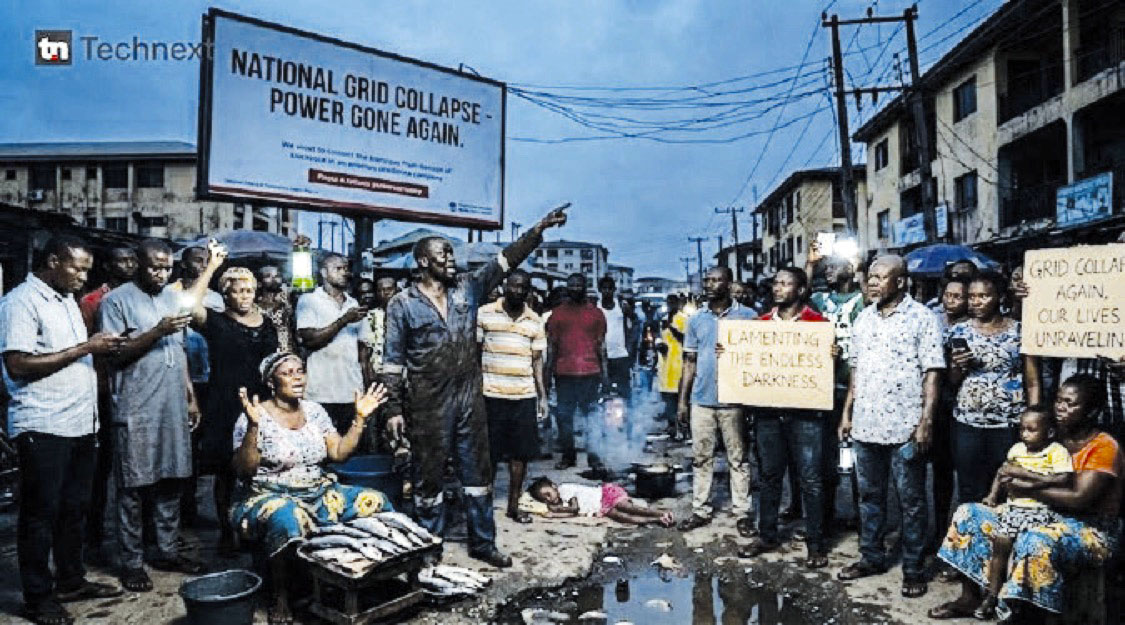
•As power crisis deepens, Nigerians puncture minister’s claim on electricity supply, say ‘we pay for darkness’ •Darkness persists in Niger, Kwara, Rivers, Imo, Abia, Cross River, Kaduna, others, relief in parts of Abuja, Osun
By John Adams (Minna), Fred Ezeh (Abuja), Tony John (Port Harcourt), Okey Sampson (Umuahia), Stanley Uzoaru (Owerri), Vivian Onyebukwa (Lagos), Aniekan Aniekan (Calabar), Noah Ebije (Kaduna), Lateef Dada (Osogbo)
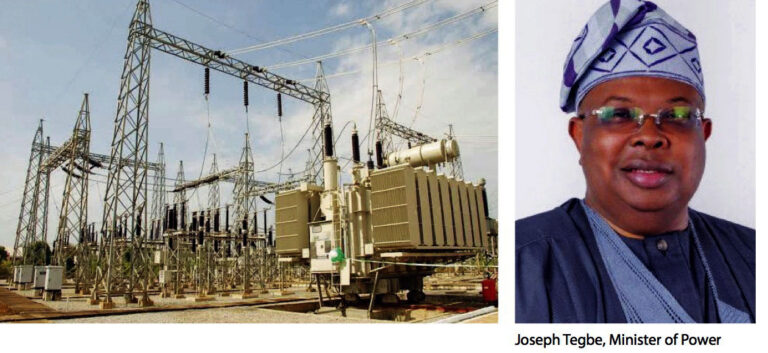
The claim by the Minister of Power, Joseph Tegbe, that some electricity consumers across the country had asked him to slow down on electricity supply as their freezers were freezing everything solid, has drawn mixed reactions.
While there are isolated cases of improvement in electricity supply in some major cities, most electricity consumers consider the minister’s claim as bizarre as majority of the people and businesses still groan under the yoke of epileptic electricity supply that has crippled businesses and made homes uncomfortable. Reports from different parts of the country do not reflect the minister’s claim.

Niger: power state without power supply
Despite claims by the Minister of Power that electricity supply in the country has been considerably steady, business and commercial activities are almost grounded in Niger State over epileptic power supply. Niger is tagged Power State because it is home to three major hydroelectric power stations that generate a large chunk of Nigeria’s electricity.
The power stations are Kainji Dam, Jebba Dam, Shiroro Dam, and lately Zungeru Dam which was built by the Goodluck Jonathan administration with 700 mega watt installed capacity.
All the power stations are working below capacity. Despite their presence, Niger State is among the worst hit in terms of steady electricity supply. Most government institutions in the state have migrated to solar power as an alternative source of energy, while private homes and institutions stay for weeks without electricity.
Worried by the frustrating experience, the state governor Umaru Mohammed Bago advised the citizens to embrace solar power as an alternative to the continued blackout across the state.
“The truth is that we have no choice but to embrace solar power as the only solution to the current misery. It’s obvious that the steady electricity supply is not within reach.
“In the first place, the question is, how many megawatts of electricity is the country generating at present. The electricity is not enough to go round,” the governor lamented.
The situation has deteriorated rapidly from six hours of electricity supply to less than three hours in a day, in the last three months.
The situation is not different from the four major towns hosting the four electricity dams in the state which hitherto now enjoyed 24 hours being the host communities.
For instance, Zumba community, which hosts the Shiroro Hydro Electricity Dam now enjoys six hours of electricity per day as against 24 hours a day which it enjoyed before June this year.
A resident of Zumba, Alhaji Ahmed Saidu, who is the Sarkin Kasuwan Zumba (Head of Zumba Market) told our correspondent on phone that the community has lost the privilege of 24 hours electricity supply it used to enjoy.
Speaking in Hausa, he said “we don’t have steady electricity in Zumba again. It used to be 24 hours but now it is three hours in the day time and three hours in the night.
“We started experiencing this in July, almost three months now we have not been having steady light”.
Also a supermarket owner, in Minna the state capital, Mr. Charles Chukwujekwu while lamenting the current electricity situation in the state said any serious business owner who is relying on power supply from Abuja Electricity Distribution Company (AEDC) should have a rethink.
“People will end up folding up their businesses if they continue to rely on AEDC for power supply because the electricity can never be there. The situation is getting worse every day, from one administration to the other and nothing will change”, he added.
In addition, a Chieftain of the All Progressive Congress (APC) in the state, Jonathan Vatsa described the electricity supply situation in the state as that of a baker without bread to eat.
“Honestly I am short of words to describe the current power supply situation in the country, particularly in Niger state where we have electricity dams but cannot enjoy six hours of electricity. I think this is a story of a bread baker without bread to eat.”
Nevertheless the current epileptic power supply is not peculiar to Niger state alone. Our correspondent who was in Ilorin, the Kwara state capital recently, observed a sharp decline in the electricity supply, with legions of complaints from consumers.
In the densely populated areas and commercial hubs of Ilorin, like Taiwo Oke and Taiwo Salle, Tanke, Offa garage, Adewole estate, Garin Alini and Asa Dam areas, the situation is not different.
Those on dedicated lines usually referred to as 33kva line are not exempted from the current situation even though they still enjoy between eight to twelve hours a day compared to the 24 hours uninterrupted electricity before now.
While some business owners have migrated to solar power to keep their businesses going, others are managing to cope with generators despite the high cost of fuel.
The owner of a local eatery, the Amala Place, along the popular shoprite Road in Ilorin, Madam Rashidat said that poor electricity supply forced her to acquire solar power and a standby generator.
“I have never enjoyed four hours of electricity supply since I opened this place. I am using both generators and solar power to keep my business going.
“You cannot depend on NEPA when you are doing a serious business. You will end up closing down your business one day if it is the business that depends on electricity like my own,” she added.
Abuja: Growing trend on alternative power sources
In line with the claim made by the Minister of Power that Nigerians are experiencing improved electricity supply, Mr. Anthony Ugochukwu, a trader who resides in Jikwoyi, Abuja, confirmed that there has been an improvement in electricity supply in his area.
According to him, however, the improvement may largely be because parts of Jikwoyi are on Band A. He explained that Jikwoyi Phase 2, parts of Phase 3 and parts of Phase 1 are currently on Band A, which has resulted in better electricity supply.
He confirmed that power supply has improved in the area but expressed concern about the high cost of electricity under Band A. He said the high electricity tariff is particularly burdensome for small business owners and traders who depend on electricity to operate their businesses.
Ugochukwu also disclosed that many residents and traders in the area have started installing solar panels on the roofs of their shops as alternative source of power. He said the solar systems are particularly useful when there is an outage, especially at night.
At Army Housing Estate, Kurudu, Abuja, the experience is considerably different. Sabiu Mohammed, a resident of the estate, said electricity supply remains relatively poor in the area. Although power comes occasionally, he said the area is not on Band A and therefore cannot expect the same level of supply enjoyed by communities such as neighbouring Jikwoyi.
He said he believes the estate is on either Band B or Band C, but described the electricity supply as very poor.
At Karu, near the NEPA office, Mrs. Magdalene Uzo said she could not specifically say that electricity supply had improved because, in her experience, the situation had largely remained the same.
According to her, power supply has been more or less normal, although there has been a slight improvement during the rainy season.
She, however, expressed concern that the situation could become significantly worse when the dry season sets in, similar to the experience described by the resident of Kurudu.
In communities outside Band A, such as Kurudu, residents continue to experience poor and inconsistent supply, with some receiving electricity for only one or two hours on certain days. The experiences also show a growing reliance on alternative power sources. Residents and small business owners are increasingly turning to solar panels and inverters to supplement the national grid and prepare for periods of prolonged outages.
Rivers: Minister’s freezer story a joke taken too far
Checks in Port Harcourt, Obio-Akpor, Eleme, and Okrika Local Government Areas, showed that most parts of Rivers State still grapple with epileptic electricity supply, with many households depending on generators, solar and rechargeable lamps.
A trader at Mile 3 Market, Mrs. Blessing Wokoma, said: “In my area at Diobu, we barely get four hours of light in a day. Our freezers have become cupboards. We pay for darkness. Nobody will tell the minister to slow down.”
A cold room operator in Rumuola, Mr. Chidi Amadi, said he spends over N10,000 daily on diesel. “If power improves, it is a blessing. That freezer story is a joke taken too far. Our businesses have collapsed because of power.”
For Mrs. Florence Inye, a civil servant in Borokiri, the situation has forced lifestyle adjustment. “We charge everything once light comes – phones, power banks, lamps. My children read with torch lights. We have learnt to live without NEPA,” she said.
On the contrary, a resident in the new GRA, who craved anonymity, said supply has slightly improved in recent weeks. “We now get light for almost 12 hours. But, it is still not stable enough to freeze anything solid for days,” he disclosed.
A student of Rivers State University, Emeka Peters, said many students now study in business centres and cafes with solar power.
Residents urged the Ministry of Power to focus on real distribution challenges in the state rather than anecdotes, calling for meter availability, transformer replacement and an end to estimated billing.
They said steady power would revive small businesses and reduce cost of living, insisting that no Nigerian would ask the government to slow down electricity improvement.
In Abia, reverse is the case
In Abia State, the picture is quite different from the recent postulation of the Minister of Power Joseph Tegbe that some electricity consumers asked him to “slow down” on the improvements in electric power supply because their freezers were working continuously and freezing everything solid.
In Umuahia the state capital for instance, rather than ask for a slow down on electricity supply, the reverse is the case as they lament poor electricity supply. Residents of parts of Niger Street and environs are groaning that for the past one month, they’ve not had power supply as a result of faulty transformer that was yet to be fixed as at the time our correspondent visited.
“Our transformer has been packed up since September 2, and up till this moment, nothing has been done despite several complaints.
“I don’t think the Minister of Power is serious with what he said because the problem is not only limited to our place, there are some other areas in Umuahia that have similar problems and for over one month, we’ve not had light, Uche Onuoha, a resident said.
In areas where the transformer is not faulty, power supply could be anything but constant.
Other News
Investigations revealed that in those areas, residents enjoy electricity for upward of six to eight hours per day which is not enough to freeze everything solid as the minister claimed.
In Abia North, it will be difficult to identify any community that has had light over the years, talk less of freezing everything solid.
Communities like Item, Umuhu-Ezechi, Ozuitem, Itumbauzo and others, all in Bende Local Government Area have not had electricity supply for some years now and the people are lamenting. To them, the Minister’s assertion is a mirage.
In the commercial city of Aba however, the story is slightly different. With an independent power company supplying electricity to the city, some residents spoke of having power for 10 to 12 hours and on a very good day, 16 hours of power supply per day. That, however, does not mean it is all rosy for electricity consumers in the city. They tell debilitating stories of how the entire city was on different occasions thrown into darkness for over three weeks owing to what was described as non supply of gas to the turbines of Abia Power Plant (Geometric Power).
A mixed bag in Lagos
A Public Relations Consultant who lives in Satlite town in the Ojo area of Lagos, Tony Ohakwe, said that electricity supply in that area is not constant especially when it rains.
“We pay a lot to repair it by ourselves, and Power Holden Company would be giving us excuses. The truth is that we suffer a lot. Each time we interact with them, they keep telling us to bear with them. If there is any truth in what the Minister for Power said, it might be in some areas, not in our Ojo/Badagry axis.”
As a former President of Satellite Town Central Residents Association, and Secretary, Garden Estate Site J Residents Association, Ohakwe said he is very much aware of the electricity problem in that area. He concluded that, “The Minister’s statement should be taken with a pinch of salt.”
In Olodi Apapa, Lagos, residents lament poor power supply. Expressing his frustration, a resident, Tony Chidi said, “They should stop deceiving us. The light situation here is deplorable. As I speak, we have not had light for two weeks. People have turned to solar. Those in Band A in the area can only get electricity supply for 4-5 hours, but the bill is enormous. For others, they just flash the light and take it. So, there is classification in electricity supply in Nigeria,” Chidi said. A human rights activist, Comrade Emeka Anozie, said that in the Ikoyi area of Lagos where he lives, electricity supply is relatively fair, perhaps because of some residents who have private transformers.
“Nationwide, it can’t be said to be the same in all areas. Nigerians lack constant power supply especially in our local areas, where many people depend on solar energy for street lights to check insecurity. It hasn’t improved as such,” Anozie said.
Imo: Students rely on rechargeable lamps, power banks, phone flashlights
The recent claim by the Minister of Power, Joseph Tegbe that some electricity consumers asked him to slow down on improvements in the supply of electricity has generated negative reactions among Nigerians.
The minister’s anecdote does not represent the reality in student communities across Imo State, according to Humphrey Osuji, National Youth Council of Nigeria President, Imo State chapter.
“As the leadership of the youth in the state, we feel it is important to present what Nigerian students are actually experiencing on campuses and in their hostels. “There has not been 100% improvement in electricity supply across student hostels in Imo State. In fact, investigations around hostels close to major tertiary institutions in the state show that many have experienced little or no electricity supply for considerable periods, ranging from weeks to months in some off-campus locations.”
As a result he said students in these areas are forced to rely on rechargeable lamps, power banks, phone flashlights, small generators and paid charging centres.
“It affects night reading, online classes, research, project work, and practical assignments. It also increases financial burden at a time when students are already coping with high cost of living, as they must budget for fuel, power bank charges, and alternative lighting daily.”
“The National Youth Council of Nigeria, Imo State Chapter, is not dismissing the efforts of the Ministry of Power. We acknowledge work being done to stabilize supply.
“Our appeal is that student hostels and campus communities in Imo State should be treated as a priority cluster. If freezers in some areas are now too cold, we ask the ministry to also ensure that reading lamps in student hostels can stay on long enough to read,” Osuji said.
Cross River: Despite hosting over 600MW power plants, 14 LGAs live in darkness
Despite hosting three power plants with a combined capacity of over 600 megawatts, at least 14 out of 18 Local Government Areas in Cross River State have remained in total darkness for years, crippling businesses and inflating costs of living.
The state hosts the Federal Government-owned 550 MW Calabar Power Plant at Odukpani and two state-owned 25MW plants at Parliamentary Extension and Tinapa Road, both in Calabar. Yet, over 90 per cent of power generated at Odukpani is evacuated to the national grid outside the state.
A major reason is the infrastructure gap. There is no transmission line from the Calabar Plant to the Central and Northern senatorial districts. As a result, communities beyond Calabar and its environs depend on weak distribution lines from neighbouring states like Ebonyi and Benue many of which have collapsed.
The two state-owned 25MW plants, initiated by the previous administration to provide embedded power for Calabar metropolis, have also not been energised years after installation, to the frustration of residents who had expected improved supply.
The state also has a gas pipeline taking gas from Akwa Ibom state to a private cement firm in Calabar with a potential to supply gas plants within the state but this potential has not been harnessed. In Ikom, the commercial hub of the state, residents say they have not seen public power in years and in some communities decades forcing traders, welders, cold-room operators and computer business owners to rely solely on diesel and petrol generators.
David Egwu, a computer operator in Ikom, said the blackout has tripled the cost of services: “I have not seen public power for over three years. We run entirely on generators. If I buy fuel at N1,350 per litre, I must transfer the cost to customers. Sometimes we can’t even work because there is no fuel.”
Similar blackouts persist in Boki, where several villages have never been connected to the national grid since creation, and in Bekwarra, Yala and Obanliku, where communities have been without power for over a decade.
Past interventions have failed. Large-scale diesel-powered generators procured to power Yakurr and Obudu were not sustainable and have since been abandoned. A donor-funded solar mini-grid in Biase Local Government has also packed up, leaving benefiting communities back in darkness.
Despite this, the state government has in recent times invested in solar-powered streetlights and solar home systems for vulnerable households, but the scale remains too small to address the statewide crisis. There may be relief, however, for Ikom as the Minister of State for Industry, Senator John Owan Enoh, recently announced that the town has been mapped to benefit from a N12 billion Federal Government power interventions.
Kaduna: Residents reject minister’s claim
Residents across Kaduna State have expressed dissatisfaction with electricity supply in their communities, saying the situation on the ground does not reflect claims that some consumers are asking the government to slow down on improved electricity supply.
Residents interviewed in different parts of the state said their experience was largely the opposite, with some communities receiving only a few hours of electricity daily, while others endure prolonged power outages and rely heavily on generators and other alternative sources.
In Chikun Local Government Area, a resident, Emmanuel Olorunmagba, described the electricity situation as “terrible, frustrating, and economically damaging.”
According to him, some communities receive less than six hours of electricity in a day, while others sometimes experience complete blackouts. He added that some communities were subjected to power rationing, with residents going an entire day without electricity as part of a three-day supply cycle.
“The communities themselves have invested their hard-earned money in providing transformers, electric poles, cables, and other accessories needed to connect them to the national grid,” he said.
“Yet, whenever faults occur, residents are often expected to contribute money to repair or replace equipment.
“To make matters worse, many residents still receive outrageous estimated electricity bills for power they hardly enjoy.
“Small businesses, artisans, traders, and households bear the brunt of the crisis. Business costs rise, productivity falls, perishable goods are lost, and families spend money they can scarcely afford simply to meet basic energy needs,” he said. Olorunmagba said the minister’s reported comment about consumers asking him to slow down improvements was disconnected from the experience of many communities.
Another resident of Kaduna South, Emmanuel Ebong, said the situation in Goningora, in Chikun Local Government Area, did not justify any call to slow down improvements in electricity supply.
“In Goningora, Chikun Local Government Area of Kaduna State, we enjoy approximately four hours per day of electricity supply.
“I don’t think four hours per day of electricity supply is enough to advise him to slow down improvements.”
In Kaduna North, another resident, Amos Ebute, said the minister’s statement was “completely contrary” to the reality in his area.
“We do not enjoy electricity for up to 10 hours a day, yet at the end of every month, we are presented with a full electricity bill for 30 days and expected to pay.”
A resident of Kaduna Central, Ganiyu Alabi, said electricity supply in his area was “a bit stable,” although he identified recurring outages during the beginning of the rainy season as a problem requiring attention.
Osun: Residents applaud improved power supply
Residents and business owners across Osun State have commended recent improvement in electricity supply while expressing strong concerns over the rising cost of electricity tokens.
Speaking with Saturday Sun, several consumers noted that the cost per unit of electricity has become unpredictable due to frequent monthly increases.
Olaniyi Gbadamosi, speaking for Unique FM in Ilesa, confirmed a noticeable enhancement in power reliability, stating that the station now receives between 15 and 18 hours of electricity daily.
He explained that the station only switches to an inverter system during occasional outages, unlike in the past when they relied almost entirely on generators and inverters to remain operational.
Similarly, Oluwafemi Adeniyi of Fresh FM in Osogbo reported a significant improvement in grid stability around the Biket Junction area.
“The number of hours supplied by the distribution company has increased considerably.
“While our station primarily runs on a solar power system during the day, better electricity supply allows us to charge the solar batteries faster, as the system relies on both solar energy and grid power,” Adeniyi said.
He added that while the station maintains a standby generator, its usage has dropped drastically due to the combination of the multi-million naira solar installation and the improved public power supply.
Commercial operators in Osogbo expressed similar sentiments. Mr. Bola Adeola, a cold room operator at Olaiya, urged the government to intervene in electricity pricing despite praising the current supply levels.
“We currently enjoy stable power for 18 to 20 hours a day, but the prices are exorbitant and keep rising,” Adeola said. The Owa of Otan-Ayegbaju, Oba Lukman Ojo-Fadipe, confirmed improvement in the supply of electricity. While brokering peace between the community and officials of Ibadan Electricity Distribution Company in his palace, the monarch expressed displeasure over recurring confrontations between residents and power distribution workers.
•TO BE CONTINUED