 Follow Us on Google

From Fred Ezeh, Abuja
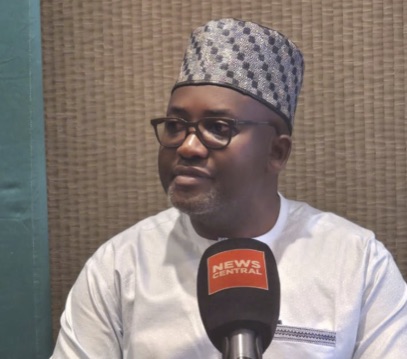
Director of Cancer Prevention and Control at the National Institute for Cancer Research and Treatment (NICRAT), Dr. Usman Waziri Muhammad, has called for stronger private-sector collaboration to bridge Nigeria’s cancer-care funding gap, expand early detection and improve access to affordable treatment.
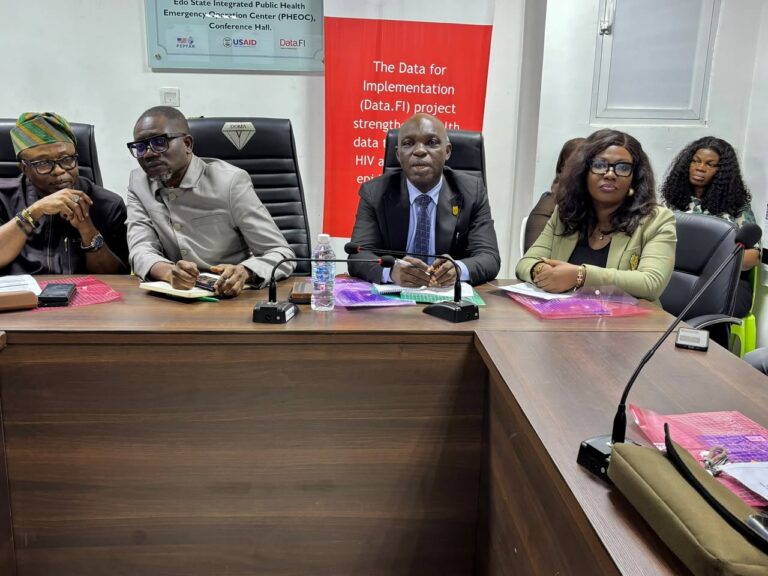
In this interview, conducted at the roundtable on “MSD Advocates Stronger Private Sector Collaboration to Scale Equitable Cancer Prevention and Care in Nigeria,” Muhammad discusses the challenges of cancer prevention and treatment, the institute’s early-detection strategy, the Cancer Health Fund and the need for sustainable financing and partnerships to improve cancer outcomes in Nigeria.
What is NICRAT’s role in this MSD roundtable engagement, and how important is the roundtable to the institute’s work?
NICRAT is at the centre of this engagement because of its mandate in cancer prevention, control, research and access to treatment in Nigeria. From the initial stages, we have been in contact with the partners, including MSD, and have had discussions on how best to make this engagement meaningful. NICRAT is a Federal Government-owned agency under the Federal Ministry of Health and Social Welfare. We are mandated to provide cutting-edge research in cancer care across the entire continuum, from prevention and awareness creation to screening, treatment, palliative care and survivorship. Our responsibility also includes engaging local and international partners, government agencies, ministries and departments working within the cancer ecosystem. We need to streamline our activities, coordinate our programmes and ensure that the collective efforts of all stakeholders produce more effective and sustainable outcomes. Cancer prevention and care require collaboration. Government cannot do everything alone, particularly given the country’s population, the cost of treatment and the increasing demand for cancer services. That is why engagements such as this are important.
What are the major factors preventing Nigerians from accessing timely cancer diagnosis and treatment?
The challenges are multifaceted. They begin with the individual and extend to the healthcare system and the wider community. The first issue is awareness. People need accurate information about cancer, its warning signs, risk factors and available prevention and treatment options. Unfortunately, awareness remains low, even among some educated Nigerians. There are communities where people still believe cancer is exclusively a spiritual problem and that seeking medical attention may not be necessary. When people lack the right information, they may delay seeking care. By the time they eventually visit a hospital, the disease may have advanced significantly, making treatment more difficult and expensive. The second issue is affordability. Even when people recognise their symptoms and decide to seek medical attention, they may not have the financial resources to pay for diagnosis and treatment. Out-of-pocket expenditure remains a major challenge for many patients. The third issue is access to quality care. We need appropriately equipped facilities, trained personnel and effective referral systems that enable patients to receive the right diagnosis and treatment without unnecessary delays. These three factors, namely, awareness, affordability and access to quality healthcare, are interconnected. Addressing one without the others will not produce the outcomes we want.
What is NICRAT doing to improve cancer awareness and what role can the private sector play?
We recognise that awareness campaigns must go beyond simply disseminating information. The information must be accurate, standardised and tailored to the needs of particular populations and communities. Different communities have different beliefs, misconceptions and cultural practices that influence how people perceive cancer. Our communication strategies must take these realities into account. To this end, NICRAT is working with media organisations, professional bodies and international partners to improve cancer communication. We have also partnered with the American Association for Cancer Research on work relating to cancer communication. In addition, we have conducted a scoping review of the cancer awareness ecosystem to identify the organisations and stakeholders involved, the activities they are undertaking and areas where coordination can be improved. We have piloted a cancer communication strategy across the six area councils of the Federal Capital Territory. The government is supporting the expansion of this work across the six geopolitical zones. The strategy will focus on leading cancers in Nigeria, as well as childhood cancers. Our objective is to develop a more coordinated and effective approach to public education so that Nigerians receive appropriate information and understand when and where to seek medical attention. The private sector can support these efforts through funding, public education, research and collaboration with government institutions. Stronger partnerships will help us reach more people and sustain interventions that might otherwise be limited by inadequate resources.
What concrete steps is NICRAT taking to address late diagnosis, particularly for cancers that can be prevented or detected early?
We have identified early detection as a major priority. Some cancers can be prevented, while others can be detected at an early stage when treatment outcomes are generally better.
Cervical cancer is particularly important because it is largely preventable through HPV vaccination and can be detected through screening before precancerous changes progress to invasive cancer. Liver cancer and other cancers also require appropriate preventive and early-detection strategies. This understanding informed the development of our National Initiative for Cancer Early Detection, Screening and Coordinated Access to Network Care, known as NICECAN. The initiative was designed to make cancer screening a more routine part of healthcare for people at risk. We are developing a system based on standardised national guidelines, through which eligible individuals can access screening and, where necessary, receive further evaluation and treatment. We are also piloting the initiative in the Federal Capital Territory and working towards establishing additional centres across the country. The expansion takes account of Nigeria’s population distribution and the need to make services accessible beyond major cities. Our objective is to move from a system in which many people seek care only after symptoms become severe to one in which prevention and early detection are integrated into routine healthcare.
How will the NICECAN initiative work at the primary healthcare level?
We are adopting a hub-and-spoke model. The preventive oncology clinics will serve as hubs, while selected primary healthcare facilities will act as spokes that provide initial screening and referral services. The primary healthcare centres are particularly important because they are closer to communities and are often the first point of contact between citizens and the healthcare system. We are building the capacity of selected facilities and health workers to provide appropriate screening services. When a person tests positive or presents with a suspicious finding requiring further evaluation, the patient will be referred to a designated hub for diagnostic confirmation and treatment where necessary. For example, under the FCT model, women with suspicious cervical or breast lesions can be referred to the Federal Medical Centre, Jabi, for further evaluation. Men with elevated prostate-specific antigen results can also be referred for appropriate urological assessment and further investigations. The objective is to reduce the delays patients experience between screening, diagnostic confirmation and treatment. A positive screening result does not automatically mean that someone has cancer. Further evaluation is required. Under this model, patients should be guided through the appropriate stages of care, whether that involves treatment, counselling or continued monitoring. We are learning from the pilot and hope to expand the approach across the country as resources and capacity permit.
What progress has Nigeria made towards eliminating cervical cancer, and how does the country plan to achieve the WHO’s 2030 targets?
The World Health Organisation has outlined a 90-70-90 strategy for eliminating cervical cancer as a public health problem by 2030. The targets are to ensure that 90 per cent of girls are fully vaccinated against HPV by age 15, that 70 per cent of eligible women are screened using high-performance tests at the recommended ages, and that 90 per cent of women identified with cervical disease receive appropriate treatment. These targets demonstrate that vaccination alone is not sufficient. We must also ensure that women have access to screening and that those who need treatment receive it. NICRAT has established the National Task Force on Cervical Cancer Elimination to drive the implementation of Nigeria’s strategic policy on cervical cancer elimination, in line with WHO recommendations. The task force brings relevant stakeholders together to coordinate activities, strengthen partnerships and improve implementation. The Partnership for the Elimination of Cervical Cancer in Nigeria is also being championed at the highest level of advocacy by the First Lady, Senator Oluremi Tinubu, who has supported the initiative with a contribution of N1 billion, according to our records. We have established subcommittees and undertaken harmonisation activities to improve coordination. Government-led cervical cancer screening was launched in Imo State on April 29, 2026, and screening activities are ongoing. Plans are also underway to extend the programme to additional states, beginning with Niger State, with the long-term objective of reaching communities across the country.
How is the government addressing equipment shortages and downtime in cancer treatment centres?
Government has made significant efforts to improve the availability of cancer treatment services. Currently, machine downtime in most government-owned cancer treatment centres has been brought close to zero, according to our assessment. This has involved substantial government efforts and public-private partnerships in certain areas of care. However, we must recognise that the availability of functional equipment is only one part of the challenge. Cancer care requires a multidisciplinary team, including medical oncologists, surgical oncologists, oncology nurses, oncology pharmacists, radiotherapists and other specialised professionals. We need to continue investing in human-resource development, equipment, infrastructure and the systems that support the delivery of quality care. NICRAT was established to strengthen research and treatment in Nigeria, with the goal of developing evidence-based approaches suited to our national circumstances. Our responsibility is to support a cancer-care system that not only has the necessary equipment but also possesses the expertise and organisational capacity to use it effectively for the benefit of patients.
There have been complaints about patients waiting for months for assistance under the Cancer Health Fund. What is the situation, and how can private-sector participation help?
The Cancer Health Fund is a social intervention programme designed to help indigent Nigerians access cancer care and reduce the financial hardship associated with treatment. The programme predates the establishment of NICRAT, but its operations were subsequently transferred to the institute. It remains at the pilot stage and currently operates through six cancer-care facilities. It covers three cancers: breast, cervical and prostate cancers. Other cancers have not yet been included because the programme has not reached the scale-up stage. The fund was initially conceived as a counterpart-funding programme, but it is currently financed entirely through government budgetary allocations. Funding remains the major challenge. Cancer treatment is expensive, and the number of people who need assistance is much greater than the resources currently available. Some participating centres, including the National Hospital, Abuja, and the centre in Enugu, have exhausted their allocations. Consequently, they have been unable to continue providing services under the fund while awaiting additional funding. Government has approved additional funding, and we are awaiting its release. The last payment for services rendered under the National Hospital’s allocation covered treatment up to May 2026, while other centres have continued to provide services where funding remains available. The demand demonstrates that Nigerians are accessing the programme. At the same time, it shows the limitations of operating a national intervention with resources that are insufficient to meet the needs of the population. This is where private-sector collaboration becomes important. We need sustainable financing arrangements that complement government allocations, support more patients and enable the programme to expand to additional facilities and cancer types.
What is NICRAT doing to improve awareness of the Cancer Health Fund and ensure eligible patients benefit?
We acknowledge that many Nigerians who could benefit from the Cancer Health Fund are unaware of its existence. NICRAT is working with cancer survivors, non-governmental organisations and other stakeholders to improve awareness and help eligible patients understand the programme’s requirements and access procedures. We have also reviewed and upgraded the fund’s digital platform and operational model to improve its efficiency. The platform is designed to facilitate access and strengthen the administration of the programme. However, awareness alone cannot resolve the problem if the funds available at participating facilities have been exhausted. We must address both public awareness and financing. We are exploring additional funding opportunities, including engagement with the National Cancer Legislative Network, which is advocating increased funding for cancer care.
Our goal is to expand the fund’s coverage and increase the number of participating facilities once the necessary resources become available. We also recognise that geographical access matters. Most participating centres are located in urban areas. Where funding is available in another centre, we sometimes advise patients to consider travelling there, although we understand that distance itself can create additional costs and difficulties. The long-term objective is to expand the programme across the country so that more eligible patients can receive assistance closer to where they live.
Finally, what is your message to private organisations and other stakeholders on improving cancer care in Nigeria?
The private sector has an important role to play because the burden of cancer is too significant for government to address alone. We need partnerships that support prevention, screening, research, treatment and sustainable financing. Such collaboration must complement government policies and strengthen the country’s capacity to provide equitable care. We also need partners to support awareness initiatives and help address the misconceptions that prevent people from seeking medical attention early. Ultimately, our success should be measured by whether Nigerians can access accurate information, receive screening at the appropriate time, obtain a reliable diagnosis and begin treatment without unnecessary delays or unbearable financial hardship. Stronger collaboration among government, private organisations, healthcare institutions and development partners is necessary to build a more accessible and equitable cancer-care system in Nigeria.