Follow Us on Google

•Imo centre opens first-of-its-kind facility, targets 500 surgeons
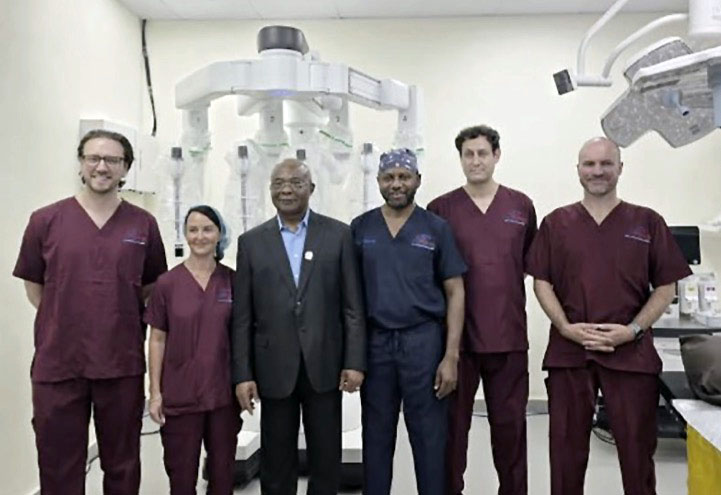
Nigeria’s quest to expand access to advanced surgical care has received a major boost with the establishment of what its founders describe as the first robotic surgery centre of its kind in Africa, alongside a new academy at Imo State University targeting the training of 500 surgeons and surgical teams within two years.
The academy, developed in partnership with the Imo Robotic Centre, is expected to train more than 250 Nigerian surgeons, alongside participants from other African countries.
Consultant urologist and robotic surgeon, Prof. Kingsley Ekwueme, who disclosed this recently, said the initiative would help expand access to sophisticated surgery, reduce medical tourism and build local expertise.
Ekwueme, recently appointed Professor of Robotic Surgery at Imo State University, said the academy was established following a meeting with the university on August 18, 2026, with a university publication dated August 19 documenting the development.
He said a memorandum of understanding was subsequently signed and a departmental building assigned to support the academy’s operations.
The professor, who is also clinical lead for urology at Glan Clwyd Hospital, North Wales, United Kingdom, said the initiative would train complete surgical teams, rather than surgeons alone, to ensure safe and effective use of robotic technology.
Academy targets 500 surgeons
Ekwueme said the programme would draw on international faculty and provide training across specialties, including urology, gynaecology and general surgery.
“We envisaged that over the next two years we would have trained 500 robotic surgeons and teams,” he said.
He explained that the academy would help participating hospitals acquire and instal robotic systems, enabling trained teams to deliver advanced procedures in their own facilities.
The initiative is part of a wider collaboration involving the Imo State Government and the Imo Robotic Centre, which has commenced operations and is already providing advanced surgical services in the South-East.
Ekwueme said the centre performed its first surgery in August and has since carried out multiple robotic procedures, bringing the technology closer to patients who might otherwise travel to other parts of Nigeria or overseas.
“We have bridged the gap. So, nobody needs to travel beyond leaving your house and driving a few minutes down the road to have your surgery,” he said.
He also disclosed that plans were underway to establish an oncology centre adjacent to the robotic facility, alongside a medical institute to provide advanced diagnostic and cancer treatment services.
The projects, he said, would strengthen specialised healthcare services while creating opportunities for Nigerian professionals to deliver sophisticated procedures locally.
Faster recovery, less blood loss
Ekwueme said robotic surgery could improve patient outcomes by reducing the physical trauma associated with conventional open surgery.
He explained that robotic systems enable surgeons to operate through smaller incisions, using magnified three-dimensional views and instruments that allow precise movements in confined spaces.
Other News
The technology, he said, could reduce blood loss, shorten hospital stays and speed up recovery in appropriately selected patients, with some procedures allowing discharge on the same day.
Robotic surgery can be used for prostate and kidney operations, removal of uterine fibroids, hysterectomy, ovarian procedures and selected bowel and cancer surgeries.
In prostate surgery, he said, the technology could help surgeons operate more precisely around delicate nerves and surrounding tissues, potentially preserving functions that may otherwise be affected.
Ekwueme said his team had also performed what he described as the first gynaecological robotic surgery in West Africa through its programme at the prostate clinic, with the patient discharged the same day.
However, he stressed that acquiring robotic equipment alone would not guarantee good outcomes, noting that surgeons and their teams must be properly trained and proficient in using the systems.
“The surgeon has to also be proficient in the use of the robotic machine. And that is where this training that we are creating becomes important,” he said.
Ekwueme, who stated that he had performed more than 145 robotic procedures, described his appointment by Imo State University as recognition of his professional contributions and efforts to establish a sustainable programme in Nigeria.
Medical tourism, brain drain in focus
Ekwueme said expanding access to robotic surgery could help reverse medical tourism by allowing patients to receive specialised treatment closer to home.
He said overseas treatment often imposed additional costs on patients and their families, including travel, accommodation and prolonged stays abroad.
The surgeon called on the Federal Government and public hospitals to support the adoption of robotic surgery through partnerships and policies that would make equipment acquisition and maintenance more affordable.
He also urged the government to review taxes on imported medical equipment, arguing that reducing costs could improve access for patients.
“We know how to acquire affordable robotic systems. I will advise any public institution to come to train with us. We will help them to acquire robots, without a doubt,” he said.
He said the academy could also help reverse brain drain by creating opportunities for Nigerian-trained medical professionals abroad to return home and contribute to the health system.
“In 10 years, I see every Nigerian having access to robotic surgery anywhere in Nigeria. I see a Nigeria where brain drain would be significantly less,” he said.
He added: “I dare to predict there is going to be a reversal of brain drain. A reversal back to Nigeria.”
According to Ekwueme, the partnership between Imo State University, the Imo Robotic Centre and the state government offers an opportunity to build a sustainable model for advanced surgical care and professional training.
“I seriously believe that a medical revolution is happening in Nigeria at the moment,” he added.