Follow Us on Google

From Felix Ikem, Nsukka
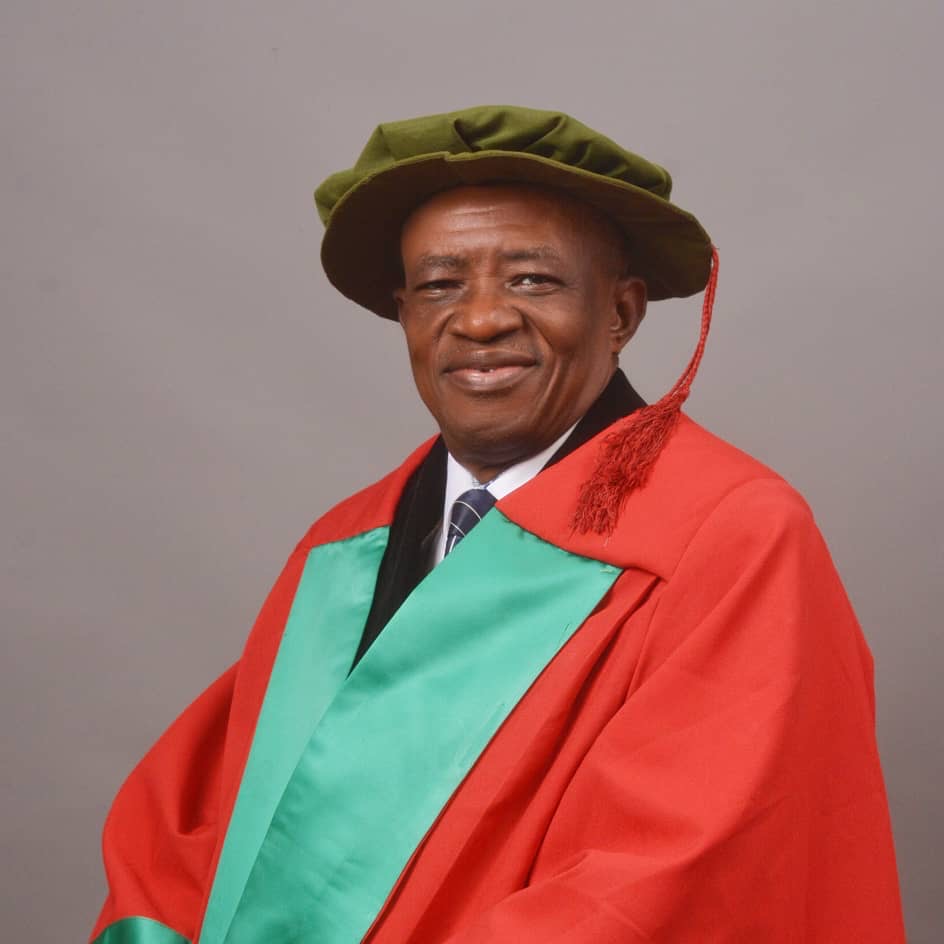
A Professor of Sociolinguistics and Psycholinguistics at the University of Nigeria, Nsukka (UNN), Prof. Chris Uchenna Agbedo, has called for linguistic emancipation, warning that Nigeria’s challenges are not only political, economic and institutional but also rooted in the deliberate manipulation and distortion of meaning.
Agbedo said the misuse of language in public discourse could conceal wrongdoing, distort reality, undermine accountability and weaken citizens’ understanding of governance.
He made the call on Thursday in Nsukka while delivering UNN’s 255th Inaugural Lecture, entitled “WordMatters: Sociolinguistic Calculus as Praxis for Interrogating Linguistic Banditry and Banditisation of Nigeria,” at the Princess Alexandra Auditorium and Theatre of the university.
The don argued that language does not merely describe reality but also constructs, conceals, legitimises and transforms it, stressing that words could either unite or divide society, promote accountability or provide cover for misconduct.
He maintained that the meanings attached to words were often shaped by context, ideology and power relations, making it necessary for citizens to critically examine public statements, the interests they serve and their consequences.
The lecturer explained that his intellectual journey from the study of linguistic sounds and structures to meaning, society and governance had informed the development of the WordMatters Framework, which provides different approaches to examining language, discourse, context, visual representation and power.
He anchored the lecture on three metaphors: Ovu, Oyibo Ịgadagbekwụ and Eji Ogbene, which, according to him, represent cultural wisdom, educational aspiration and the courage to challenge established narratives.
He explained that the Ovu philosophy, captured in the Igbo proverb, “Shí n’úkwū ókwū kwùrú ókwū” (begin a conversation from its foundation), emphasised the need to interrogate the foundations of statements and distinguish substance from appearance.
Oyibo Ịgadagbekwụ, he said, represented the fulfilment of his late father’s educational aspirations through his academic journey, while Eji Ogbene symbolised the intellectual courage and responsibility required to confront the manipulation of meaning.
At the centre of the lecture was the concept of Sociolinguistic Calculus (SLC), which he presented as an analytical framework for understanding how meanings change across contexts, how language serves particular interests and how repeated patterns of communication influence public perception.
Agbedo distinguished between linguistic banditry, which he described as the deliberate appropriation, distortion or strategic manipulation of meaning to mislead or conceal responsibility, and banditisation, which refers to the process through which such practices become normalised and institutionalised.
He explained that the framework could help identify the actors, circumstances, ideological interests and social consequences associated with linguistic manipulation, particularly in political and governance discourse.
According to him, words could be deployed to shift responsibility, disguise failures, justify questionable actions and influence how citizens interpret national developments.
The professor further introduced the Sociolinguistic Liberation Thesis, Universal Appropriation Grammar (UAG) and Governance Optimality Theory (GOT) as complementary frameworks for examining the relationship between language, power, institutional performance and governance.
He said the concepts interrogated how political actors appropriate power and resources, as well as the competing interests that influence institutional decisions and public accountability.
Agbedo also introduced the concept of Optimised Failure, explaining that governance could produce poor outcomes when institutional decisions were influenced by narrow interests rather than public good.
Using the Igbo metaphor, “Mkpọkọrọ ikwe ne ikwụ reburu ọnụ” (a broken mortar and a rotten palm nut cannot produce a good outcome), he argued that defective democratic processes and weak institutions could not deliver the expected dividends of democracy.
He therefore stressed the need for credible democratic participation and stronger institutions capable of promoting transparency, equity, accountability and justice.
Moving beyond the diagnosis of linguistic manipulation, the don presented Remedial Sociolinguistic Calculus (RSLC) as a framework for restoring clarity, reclaiming linguistic agency and empowering citizens to interrogate public communication.
He also unveiled KLiEN (Krisagbedo Linguistic Engine), a proposed multilingual, generative artificial intelligence-enabled platform designed to identify, analyse and clarify instances of linguistic manipulation.
He explained that the platform would help citizens understand the use and misuse of language without imposing censorship or replacing their independent judgment.
The lecture also explored Visual Pragmatics, an emerging approach to examining images, cartoons, memes and other visual materials as instruments through which meaning, ideology and power are communicated.
Agbedo maintained that the corruption of meaning could precede and facilitate the corruption of institutions, noting that constitutions could exist without constitutionalism, elections without democracy and courts without justice when the fundamental purposes of such institutions were distorted.
He called on Nigerians, including politicians, academics, artisans, teachers, traders, journalists and judicial officers, to develop greater awareness of the power of language and the consequences of its deliberate misuse.
The professor urged citizens to question public statements, examine the contexts in which they were made and subject claims to evidence rather than accepting words at face value.
He said reclaiming the integrity of language was essential to strengthening public discourse, promoting responsible leadership and advancing national development.
Agbedo has authored more than 14 books, contributed 16 book chapters and published over 95 peer-reviewed journal articles.
He served as Head of the Department of Linguistics, Igbo and Other Nigerian Languages, UNN, from 2017 to 2020, and Director of the university’s Centre for Igbo Studies from 2021 to 2024.
His scholarly interests include sociolinguistics, psycholinguistics, pragmatics, critical discourse analysis and the application of linguistic theories to Nigerian social realities.
Earlier, Prof Simon Ortuanya, UNN Vice-Chancellor, represented by Prof Kamoru Usman, Deputy Vice-Chancellor, Academic, said that the institution’s inaugural lecture is a significant academic tradition that provides a platform for scholars to showcase their research contributions, share knowledge and advance intellectual discourse on issues of societal importance.
The occasion attracted a large gathering of dignitaries, including members of the university management, academic and non-teaching staff, students, government functionaries, traditional rulers and other prominent personalities