Follow Us on Google

The Treasury Single Account (TSA) policy was established in 2012 under the administration of former President Goodluck Jonathan to curb financial malfeasance in federal government’s ministries, departments and agencies (MDAs) caused by the maintenance of multiple accounts across many financial institutions. Its full implementation as a mandatory policy for all MDAs took effect in 2015 during the Muhammadu Buhari administration. There is no doubt that the policy significantly succeeded in reducing corruption in the MDAs. However, ten years after its implementation, there are reports that some of the MDAs violated the TSA guidelines. In other words, some of the MDAs actually breached key provisions of the policy.
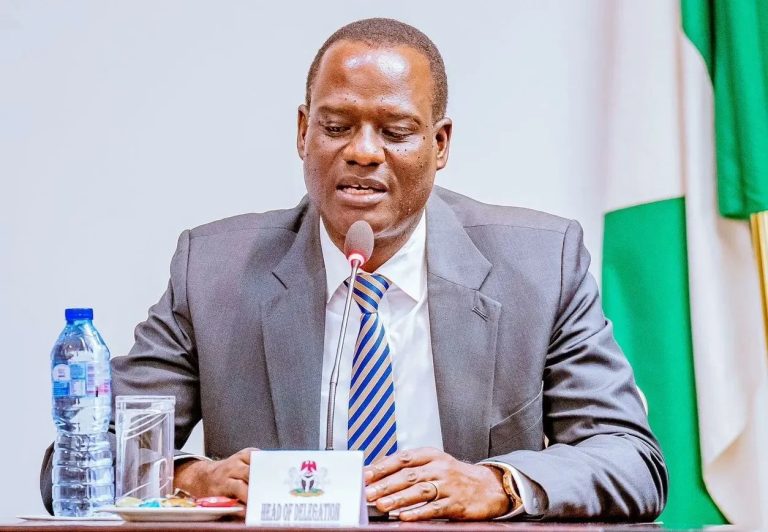
Arising from the foregoing, the federal government through the Office of the Accountant-General of the Federation (OAGF) has ordered all MDAs to submit their statements of accounts in all commercial banks in the country. The move is part of the measures to ensure accountability and transparency in revenue generating agencies as well as prevent the diversion of public funds by unscrupulous public officials. The memo to the MDAs was signed by the Accountant-General of the Federation (AGF), Shamsedeen Ogunjimi.
The AGF had in the memo observed with dismay the continuous use of commercial banks to remit government’s revenues instead of the centralised TSA domiciled in the Central Bank of Nigeria (CBN). An earlier memo in February from the OAGF directed the MDAs to close such accounts with commercial banks forthwith. He explained that lodging government’s revenue in commercial banks violates relevant provisions of the TSA policy. In a bid to ensure compliance with the provisions of the TSA, the Accountant-General has mandated federal pay officers to monitor compliance with the order and ensure that all MDAs stop operating accounts with commercial banks or circumvent any provision of the TSA policy.
The ongoing probe of the MDAs over violation of TSA framework is about the fifth time in eight years. The last time was in November 2023 by the Public Accounts Committee of the House of Representatives. The House probed the corruption in the operations of the TSA. The outcome of the report exposed unconscionable financial malfeasance in the revenue agencies, including lack of transparency and accountability in the management of government finances. It also uncovered major areas of non-compliance by MDAs, which resulted in massive leakages of government revenues.
In the report released last year, only a few MDAs were partially complying with the TSA revenue policy, while others acted in breach. Some of the parastatals alleged to have breached the TSA policy included the Nigeria Customs Service, the Nigerian Immigration Service, the Federal Road Safety Commission, Federal Medical Centres, and Nigerian Railway Corporation. The House Public Accounts Committee also discovered some discrepancies in other agencies.
We loathe the violation of the TSA policy by some revenue agencies and call for sanctions against erring MDAs. There is need to streamline the TSA policy to ensure strict compliance by the MDAs as well as for receiving institutions such as the CBN and the Office of the Accountant- General of the Federation. The TSA has ensured transparency in our payment system. Its provisions should not be violated.
Since its implementation in 2015, data from the CBN and the OAGF showed that government received over N34trillion. Under the TSA policy, it is possible to know government’s cash assets in real-time. This was almost impossible before 2015 when different MDAs operated about 20,000 accounts in different commercial banks.
Overall, the probe by the Office of the Accountant-General should be thorough and the findings made public. There should be no sacred cows syndrome in the probe. At the same time, the matter should not be swept under the carpet. Confidence will be rekindled in the TSA if the investigation is able to track all the payments received through the TSA code system known as Remita Retrieval Reference (RRR) that is attached to every revenue inflow.
To make the TSA policy more effective and efficient, the government should enhance its ICT infrastructure, implement daily cash sweeps to the central account using zero-balance accounts, strengthen monitoring and strict compliance, as well as improve accounting systems for better tracking and reporting. Addressing delays in fund disbursement and ensuring that all government cash resources are consolidated in a single window are also essential. All of this will help to promote efficient management of domestic borrowing at minimal cost, and allow optimal investment of idle cash.