Follow Us on Google
By Moses Akaigwe
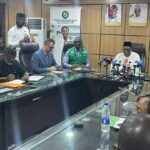
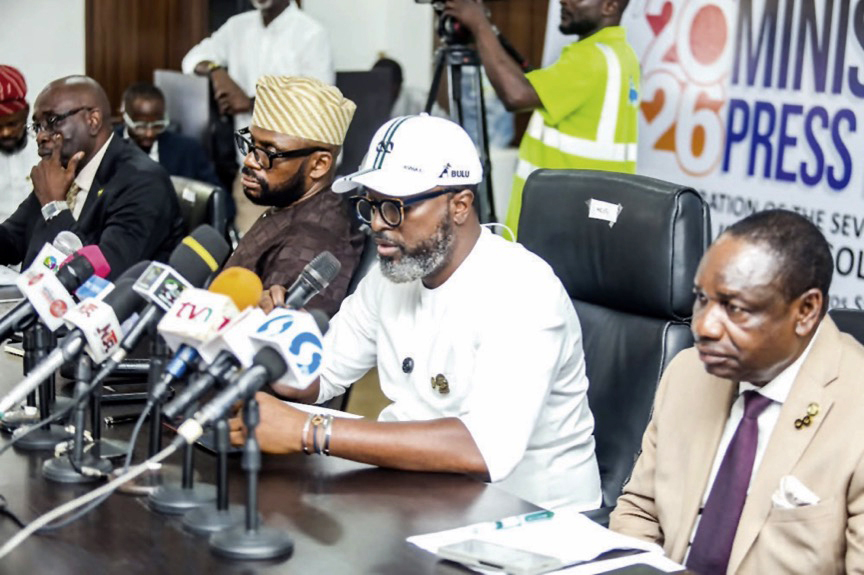
There was a high level of anticipation recently at the Bagauda Kaltho Press Centre, Lagos State Secretariat, Alausa, Ikeja, as the ministry of transportation presented an account of its stewardship at the annual ministerial press briefing.
At the event, held on May 11, 2026, the ministry highlighted major achievements recorded under the administration of Gov. Babajide Sanwo-Olu as Lagos marked the third year of his second term in office.
Addressing journalists, the Commissioner for Transportation, Oluwaseun Osiyemi, gave an insight into what to expect, saying his presentation would highlight the “ministry’s achievements, reforms, infrastructural interventions, strategic partnerships, and policy initiatives recorded within the period under review in support of the administration’s vision of making Lagos a 21st century economy.”
The commissioner said the state government has been making investments in rail, road, water transportation, traffic management, and sustainable mobility initiatives.
According to him, the administration has intensified efforts to reduce traffic congestion and improve connectivity through several ongoing and completed transport projects across the state.
Among the major achievements highlighted were the expansion of the Lagos Rail Mass Transit system, including the ongoing Blue Line Phase II project from Mile 2 to Okokomaiko, expanded operations on the Red Line, and the introduction of additional train coaches to improve passenger movement and reduce waiting time.
The ministry revealed that over 3.5 million passengers used the Blue Rail Line in 2025, while Lagos Bus Services Limited (LBSL) has transported more than 60 million passengers since inception, with over 42,000 commuters currently using its buses daily across multiple corridors.
On traffic management, the state government undertook major junction improvement projects along Toyin Street, Opebi Road, Allen Avenue, and other strategic corridors. This was complemented by the installation of intelligent traffic signal lights in Ikeja, Lekki, Ikoyi, Surulere, Epe, Gbagada, and Victoria Island to improve traffic flow and road safety.
The briefing also highlighted technology-driven transport solutions, including the E-Call Up System for trucks along the Lekki-Epe Corridor, deployment of Automated Number Plate Recognition (ANPR) cameras, digital parking management systems, and expansion of the Cowry Card unified payment system across rail, buses, and ferries.
The commissioner explained: “The E-Callup System otherwise called Electronic Queue Management Solution (EQMS) is a digital scheduling of trucks for access into the Lekki Free Zone or the maritime corridor with a view to reduce traffic congestion, reduce travel time, improve safety & security and enhance environmental sustainability.”
On water transportation, the ministry disclosed that about two million passengers now use Lagos waterways monthly. New ferry routes, safety campaigns, life jacket distribution programmes, and the OMI-EKO electric ferry initiative are repositioning water transportation as a safe and reliable alternative.
The state government also reaffirmed its commitment to environmental sustainability through cleaner transport initiatives such as electric buses, CNG-powered vehicles, electric ferries, and plans for bio-methane fuel alternatives.
Osiyemi noted that the ministry remains committed to delivering a safe, integrated, affordable, and sustainable transportation system in line with the THEMES+ Agenda of the Sanwo-Olu administration.
The THEMES+ Agenda was described as the state’s development framework focused on six pillars: Traffic and Transportation, Health and Environment, Education and Technology, Making Lagos a 21st Century Economy, Entertainment and Tourism, and Security and Governance, with the “+” emphasizing social inclusion, gender equality, and youth development.
The commissioner added that several new projects are planned for 2026, including the Green and Purple Rail Line projects, the Lekki Water Taxi initiative, AI driver simulators for training, modernization of transport infrastructure, and wider deployment of smart mobility systems
Earlier, the commissioner for information and strategy, Gbenga Omotoso, said the impact of Gov. Sanwo-Olu’s administration in the transportation sector is being felt across Lagos.
He noted that transportation extends far beyond the Blue and Red Line rail project or lNURTW activities, encompassing multiple interconnected sectors and initiatives.
Osiyemi also announced government plans to begin commercial production of biogas and bio-methane as part of efforts to reduce dependence on imported fuel and promote a cleaner environment.
To achieve this, the state has established a Technical Committee comprising various Ministries, Departments, and Agencies (MDAs).
He disclosed that a feasibility study confirmed biogas and bio-methane as viable alternatives to diesel, noting that Lagos generates about 13,000 metric tonnes of waste daily, with 45 percent being organic waste that can be converted into bio-methane fuel at lower cost.
According to him, the committee will help drive the process toward full commercial production.
Speaking on sustainability, Osiyemi said the government has introduced several programmes aimed at reducing carbon emissions and improving environmental quality.
These include the conversion of 152 First and Last Mile buses from petrol to Compressed Natural Gas (CNG), development of a seven-line electric rail network, and gradual replacement of diesel with cleaner energy sources such as CNG, electricity, and biogas.
Other News
He revealed that CNG buses introduced since 2022 have transported more than 600,000 passengers while reducing fuel costs by 50 percent.
He also stated that two electric buses deployed on Bus Rapid Transit (BRT) routes completed a 90-day pilot programme, transporting over 150,000 passengers while reducing approximately 200,000 kilograms of carbon emissions.
In addition, the state government, through the Office of the Senior Special Assistant on Transportation and Logistics in partnership with United Bank for Africa, introduced 2,000 CNG-powered trucks under Sanwo-Olu’s haulage reform programme.
This initiative is designed to replace old and unsafe trucks, reduce road accidents, and promote cleaner haulage operations.
The ministry also highlighted the Sustainability Conference organised by the Lagos Metropolitan Area Transport Authority, themed “Harnessing Clean Urban Transport Innovation and Investment in Africa.”
The conference brought together African cities, development partners, and transport stakeholders to explore cleaner and more sustainable transport systems.
He also disclosed that more electric and CNG-powered vehicles are being registered in the e-hailing sector, reflecting growing support for sustainable transportation.
Osiyemi emphasized that these initiatives align with the THEMES+ Agenda by promoting eco-friendly transportation, reduced emissions, improved traffic management, and integration of road, rail, air, and water systems.
One of the major highlights of the briefing was the disclosure that LBSL has transported over 60 million passengers across Lagos since inception.
According to the ministry’s report, LBSL moved a total of 60,882,000 passengers from May 2019 to February 2025 and currently transports an average of 42,266 passengers daily through approximately 1,000 bus trips.
The report stated that LBSL has maintained affordable transportation for Lagosians, with fares consistently lower than those charged by many informal transport operators.
Osiyemi noted that LBSL currently operates the widest public bus network in Lagos, covering all five IBILE divisions and 13 Local Government Areas, including Ibeju-Lekki, Ojo, and Ikorodu.
The agency presently operates 21 corridors and more than 40 service routes, supported by six depots and a fleet of 300 buses.
On rail development, the ministry stated that the 3.5 million passengers moved by the Lagos Rail Mass Transit Blue Line in 2025 reflects strengthened operations through additional coaches and ongoing infrastructure expansion.
Construction on Blue Line Phase II continues, including track laying, station development, power systems installation, and supporting rail infrastructure.
Osiyemi also confirmed expansion of the Red Line to improve connectivity and reduce travel time.
The first phase of the 37-kilometre Red Line corridor runs from Agbado to Oyingbo, sharing tracks with the Nigerian Railway Corporation.
He disclosed that the government recently received 24-car trains to boost Red Line operations and passenger capacity.
Feasibility studies are also ongoing for Red Line Phase II from Oyingbo to the National Theatre for integration with the Blue Line.
On the Green Line, the ministry revealed that the proposed 68-kilometre corridor will connect Marina to Lekki Free Trade Zone through Victoria Island, Lekki, Ajah, and Sangotedo, with about 17 stations.
The Green Line is projected to transport 35,000 passengers per hour, while a Memorandum of Understanding has already been signed with China Harbour Engineering Company (CHEC).
The ministry added that funding approval for Phase I of the Green Line has been granted by the Federal Executive Council.
Osiyemi concluded that these projects demonstrate the state government’s commitment to building an integrated, reliable, and sustainable multimodal transportation system for Lagos residents.