Follow Us on Google
From Okwe Obi, Abuja
Climate activists have raised concerns about industrial farming, citing potential environmental, health, and social risks associated with industrial animal farming.
At a sensitisation rally in Abuja, leaders of various environmental and food sovereignty groups urged the Federal Government to suspend the memorandum of understanding (MoU) reportedly signed with a Brazilian firm until due diligence, including full environmental and social impact assessments (ESIA), is conducted and made public.
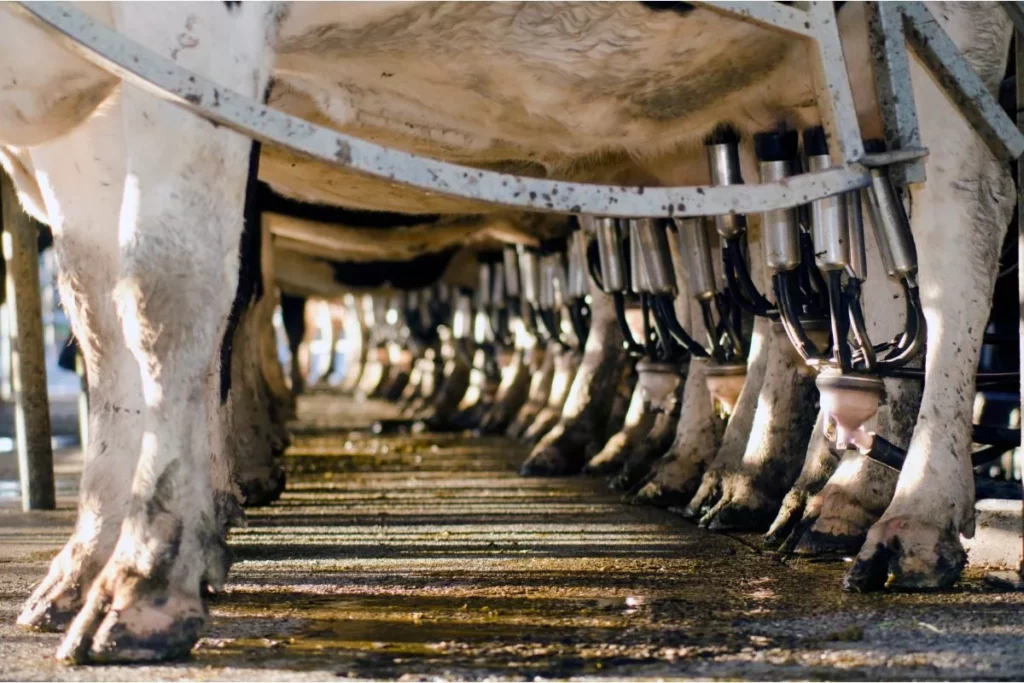
They warned that industrial or factory farming, characterised by intensive livestock rearing, heavy use of antibiotics, and large-scale consumption of land and water could devastate local ecosystems, displace smallholder farmers, and worsen pollution in host communities.
Deputy Executive Director of Environmental Rights Action/Friends of the Earth Nigeria, Mariam Bassey Olson, said the group’s campaign was not against investment but against exploitative corporate practices that prioritise profit over people and the environment.
She said: “A company, JBS, is coming to Nigeria and we are asking critical questions. Have they done an environmental impact assessment? Have they consulted the communities? What modalities have been put in place to ensure everyone is carried along?”
Olson recalled the environmental devastation caused by oil companies in the Niger Delta, particularly Shell’s operations in Ogoniland, warning that a repeat of such incidents must be avoided.
“Shell came with promises of jobs and modernisation, but communities were left with polluted water and destroyed livelihoods. We do not want history to repeat itself,” she said.
Olson, who doubles as coordinator of Food Sovereignty Programme of Nigeria, accused JBS of a track record of environmental violations globally, including deforestation in the Amazon and tax evasion scandals in the United States and Brazil.
She stressed that Nigerians have the right to scrutinise any agreement signed with the company.
“We are simply asking for transparency. Nigerians have a right to know what is contained in the MoU. These are not anti-investment questions they are pro-justice and pro-accountability questions,” she added.
Also, Director of Programmes, Health of Mother Earth Foundation (HOMEF), Joyce Brown, said industrial animal farming has failed globally to ensure food security, citing Tanzania’s success in achieving food sovereignty through support for local farmers.
“No country has achieved food sovereignty through industrial farming. The people feeding more than 70 per cent of Nigeria’s population are smallholder farmers,” she said.
Brown argued that instead of courting multinational corporations, the government should focus on empowering local farmers with access to credit, quality seeds, water, and land.
She further called on the government to suspend the MoU with JBS, strengthen environmental regulations, and prioritise agroecology a sustainable farming model that protects both people and the planet.
“Before any investment of this scale proceeds, there must be a full environmental and social impact assessment. Communities, farmers, and civil society must be adequately consulted,” she stressed.
She also reiterated calls for a ban on genetically modified organisms (GMOs) and stronger oversight on waste management to prevent pollution of water sources and farmlands.
In addition, Programme Manager at IDA Resource Centre, Mayo Ashubo, warned that allowing large agribusinesses like the foreign firm to dominate the sector could lead to widespread land grabs and economic displacement.
“Whenever big agri-companies enter communities, they take over large swaths of land and disrupt the livelihoods of local people, especially women and youth. It is a pattern we have seen globally,” he said.
Ashubo noted that despite JBS’ promises of modernisation and job creation, similar ventures in other countries have resulted in environmental degradation, tax evasion, and the collapse of local economies.
“We are not saying no to investment; we are saying no to exploitation. What Nigeria needs is investment that empowers communities, not one that destroys them,” he emphasised.
Olson concluded the event with a call for national unity and vigilance, insisting that Nigerians must protect their environment and food systems for future generations.
“We are not the enemies. The enemies are those who pollute our streams and destroy our land. The environment is our life we must defend it. This is about people over profit,” she declared.
The activists vowed to continue their advocacy and public awareness campaigns across states where JBS plans to establish operations, including Lagos, Kano, and Cross River.