Follow Us on Google
From Juliana Taiwo-Obalonye, Abuja
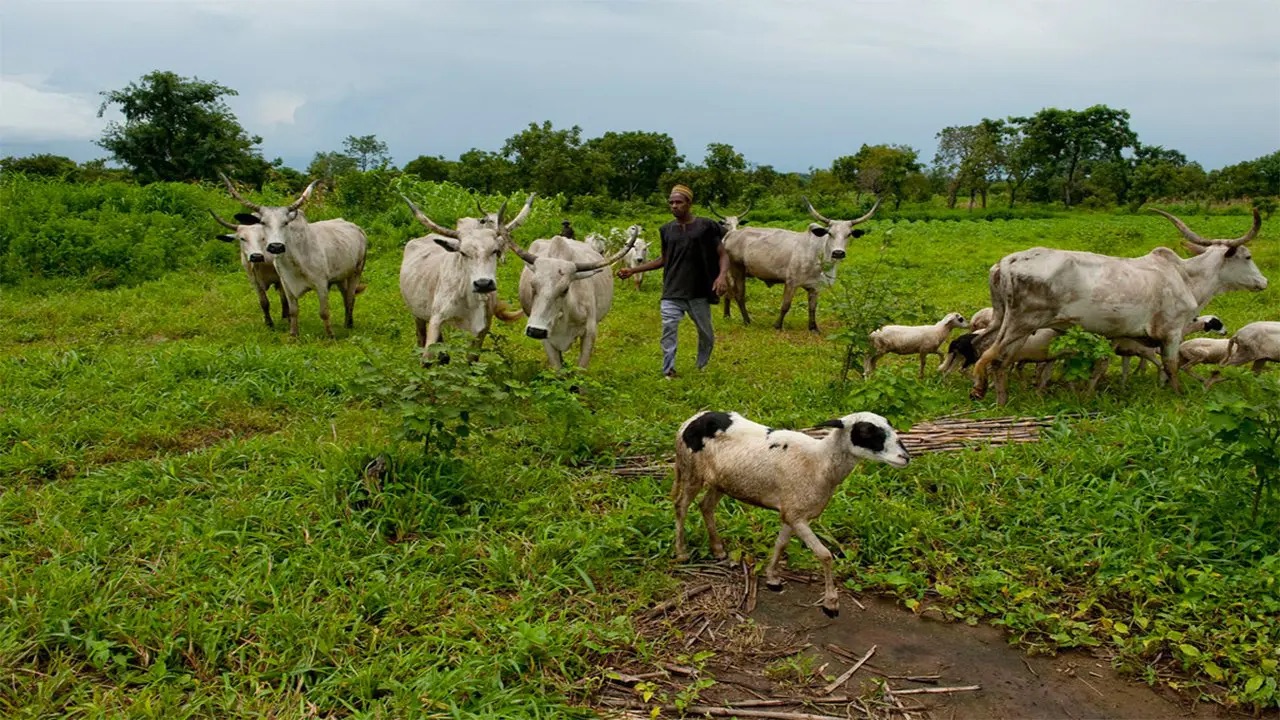
The Federal Government has unveiled an ambitious plan to phase out open grazing and transform 417 grazing reserves across the country into integrated livestock communities as part of a new strategy to tackle the farmers-herders crisis.
Under the plan, the reserves will be rehabilitated and developed into ranching hubs equipped with pasture, water, veterinary services and basic infrastructure, with the government targeting six areas identified as major flashpoints of farmers-herders conflicts.
The priority areas are Benue, Plateau, Nasarawa, Kaduna and Adamawa states, as well as the Federal Capital Territory (FCT).
The Minister of Livestock Development, Idi Maiha, disclosed this yesterday after briefing President Bola Tinubu at the State House, Abuja, on the activities of his ministry and progress on the implementation of the National Ranching Policy.
Maiha said the government was moving away from the traditional model of livestock production in which large herds travel long distances in search of pasture and water.
He said the movement of large herds had become increasingly unsustainable because grazing routes had disappeared due to expanding agriculture, urbanisation and infrastructure development.
“Large number of cattle on the move is crisis-prone because, number one, the grazing routes have disappeared. Farms, large farms have come up, aggressive urbanisation, demand for land for infrastructure development, so many other things have made nomadism not sustainable,” he said.
According to him, the government believes that providing pasture and water within developed livestock settlements would reduce the need for cattle to move through farming communities, thereby lowering the risk of clashes.
“Why don’t you provide these resources in situ and stop these animals from moving? Human beings can move; they don’t cause crises. It’s the animals’ movement that normally generates this crisis,” he said.
The minister said the government had therefore adopted ranching as a major component of its response to the farmers-herders crisis, while simultaneously seeking to transform livestock production into a modern commercial enterprise.
Maiha said a pilot ranching project was being developed in Plateau State to demonstrate how the new model would operate before its expansion to other parts of the country.
He explained that the proposed ranches would not simply be places where cattle were confined, but would be developed as integrated economic communities.
The facilities are expected to include housing, primary schools, healthcare centres, veterinary clinics, solar power installations and earth dams for irrigation and pasture production.
The minister said the government was also encouraging the cultivation of commercial pasture within the ranches or in other locations for transportation to the livestock settlements.
He said the new model would enable pastoralists to move from extensive nomadic production to settled, productive and commercially oriented livestock farming.
The government is also counting on the concentration of livestock in the reserves to attract private investment into the value chain.
Maiha said a ranch accommodating tens of thousands of cattle could support businesses ranging from milk collection and dairy processing to abattoirs and biodigesters.
“At the end of the day, each of those grazing reserves will become an economic hub. Imagine what you are going to have if you have 30,000 head of cattle in one area. The milk collection alone will attract milk processors.
“They will attract modular abattoirs. They will attract biodigesters. They will attract so many things that will come there. That is our concept, and that’s what we have been selling to them,” he said.
The Federal Government is also seeking the cooperation of pastoral communities before rolling out the ranching programme nationwide.
Maiha said the ministry had engaged about 34 pastoral organisations and held consultations with pastoralists under the leadership of the Grand Patron of Miyetti Allah and the Sultan of Sokoto, Muhammadu Sa’ad Abubakar.
He said another meeting with the pastoral groups was expected within the next two weeks.
According to him, the consultations have so far not generated significant opposition because pastoralists are increasingly aware of the limitations of the existing system.
“So far, we have not seen resistance from anybody because the reality on the ground is that nomadism, as it were, is no longer sustainable, and we need a different concept,” he said.
Other News
Govt plans electronic cattle identification
The ranching strategy also includes the use of technology to improve livestock identification, ownership records and security.
Maiha said the government planned to introduce radio frequency identification technology, with cattle and other four-legged animals fitted with electronic ear tags.
The tags, he explained, would provide information on the identity, location and ownership of animals and form part of a national livestock database.
The system is expected to help authorities trace stray or stolen animals and strengthen the fight against cattle rustling.
The minister described the initiative as part of the government’s non-kinetic approach to insecurity in rural communities.The government is also linking ranching to improved livestock productivity, arguing that better breeds could enable pastoralists to maintain fewer animals while producing more milk and meat.
Maiha said breed improvement would be pursued alongside commercial pasture production and improved veterinary services.
The strategy, he said, would reduce pressure on land while increasing the economic value of livestock production.
He disclosed that the ministry was also working on modern abattoirs, dairy production, commercial fodder cultivation, veterinary services, vaccine storage and poultry development.
Seven model veterinary clinics, he said, had already been established, while the long-term objective was to establish at least one model veterinary hospital in every state and expand veterinary clinics to underserved communities.
The government is also developing off-grid cold-chain facilities for animal vaccines to ensure that vaccines are stored and transported under appropriate conditions.
Maiha said the government was encouraging investment in modern abattoirs to replace open slaughter facilities, which he described as inadequate for modern livestock management and public health standards.
On dairy production, he said discussions were ongoing with local investors and development partners on large-scale projects.
Commercial fodder production is also being encouraged to meet domestic demand and potentially serve export markets.
The poultry sector is expected to receive attention as well, with the government considering large-scale importation of hatchable eggs as a short-term intervention to address shortages and reduce the waiting period for poultry farmers seeking day-old chicks.
The minister said the initiatives were part of the Federal Government’s broader plan to make livestock a mainstream component of the Nigerian economy.
He noted that the Ministry of Livestock Development was created in July 2024 by the Tinubu administration to modernise the sector and make it more productive, sustainable and globally competitive.
According to him, about 20 states have subsequently established ministries or agencies responsible for livestock development, creating a framework for closer cooperation between the Federal Government and the states.
Such collaboration, he noted, would be critical to the ranching programme because much of the land required for livestock development falls under the control of state governments.
The strategy therefore goes beyond the construction of ranches to the creation of a new livestock economy in which animals are identifiable, vaccinated, professionally managed and fed through cultivated pasture, while processing and other businesses are established close to production centres.For a country that has experienced years of deadly clashes linked to competition over land, water and grazing resources, the success of the policy could depend largely on whether the proposed ranching settlements become sufficiently viable to persuade pastoralists to abandon long-distance cattle movement.
Maiha said President Tinubu remained firmly committed to the initiative and demonstrated detailed knowledge of developments in the livestock sector during their meeting.
He quoted the President as describing the livestock value chains as “fantastic” and encouraging Nigerians to take advantage of the opportunities in the industry.
“The President has been very supportive, and we are very grateful for that political support and for the understanding we are getting from Mr President.
“For us, actually, we need not ask for more, but to go back and deliver,” Maiha said.