Follow Us on Google
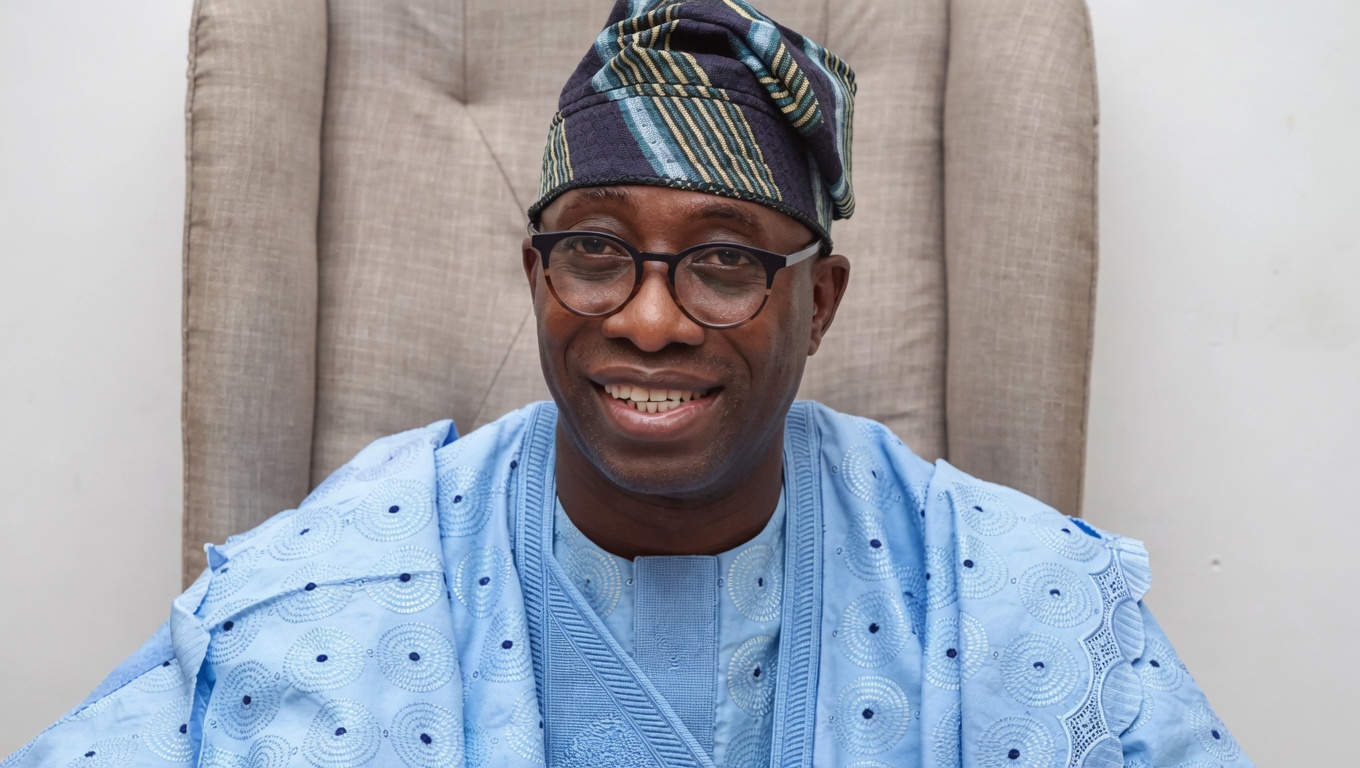
Convener of The Alternative movement, Otunba Segun Showunmi has called on the National Bureau of Statistics (NBS) to lead a “subnational statistical revolution” by publishing a standardised dashboard that tracks the performance of Nigeria’s 36 states, the FCT and local governments.
In a Tuesday post on Facebook titled, “No More Hiding Behind Nigeria’s National Numbers,” the political strategist and public commentator said Nigeria can no longer discuss development only through national averages, arguing that aggregates conceal failures and progress at the state and local levels.
Showunmi explained that national figures do not answer critical questions about where growth, jobs and investment are actually happening.
“If Nigeria’s GDP grows, which states are driving that growth? If poverty falls, where is it falling fastest? If employment rises, where are the jobs being created? If internally generated revenue increases, which states are actually expanding their fiscal capacity? If investment is growing, where is the capital going?” he asked.
“These questions should not be left to political interpretation. The data should tell us.”
He urged the NBS to publish a State Performance Dashboard disaggregating major socioeconomic indicators by geopolitical zone, state and, where feasible, local government.
According to him, the dashboard should cover at least six areas: economic productivity including state GDP, growth, per capita, sectoral output, manufacturing, agriculture, exports, business formation and employment; fiscal effort including IGR, IGR per capita, IGR relative to output, federal transfers, total revenue, capital and recurrent expenditure, debt and debt service; human development conprising poverty, education, learning outcomes, healthcare, maternal and child health, water, sanitation and electricity; and investment & business climate encompassing private investment, new businesses, business survival, industrial activity and infrastructure.
Also proposed to be covered are public finance & outcomes measuring what citizens receive in return for spending, not just how much is spent; and institutional capacity, comprising budget execution, financial reporting, procurement transparency, debt management and quality of public administration.
Showunmi cautioned against “simplistic league tables,” saying the NBS should measure absolute performance, performance relative to comparable states, and trajectory over time.
Other News
He added that states with structural disadvantages but rapid improvement should get credit, while states with strong bases but stagnation should not hide behind history.
He also proposed a Fiscal Dependency Ratio, federal transfers as a proportion of total state revenue, and a Fiscal Effort indicator to measure how much states are building sustainable revenue bases.
“Equalisation is a legitimate feature of federalism. But equalisation should help states overcome structural disadvantages; it should not become a permanent business model,” he said.
According to him, the goal is to shift Nigerian politics “from allocation politics to performance politics; from political claims to measurable outcomes; and from national averages to subnational accountability.”
“If one state is attracting investment while another is not, let us know. If one state is improving education while another is deteriorating, let us know. If one government is converting public resources into measurable improvements in citizens’ lives and another is not, let Nigerians see the difference,” Showunmi stated.
He asked the NBS to publish the underlying data in accessible, machine-readable formats for citizens, researchers, investors, journalists and civil society to interrogate.
“Good statistics are not propaganda. They are public infrastructure.
“Some governments will be uncomfortable. Some will be exposed as performers. Some will be exposed as underperformers… That is not the problem. That is the point,” he averred.
Showunmi stressed that “If responsibility is decentralised, accountability must be decentralised too. So let the NBS publish the numbers. Let citizens compare. No more hiding behind Nigeria’s national numbers.”