Follow Us on Google
By Chinelo Obogo
Stakeholders in Nigeria’s justice and child-protection sectors have called for a coordinated, reform-oriented approach to juvenile justice, stressing that early intervention, rehabilitation, and community-based support are critical to reducing crime and securing the country’s future.
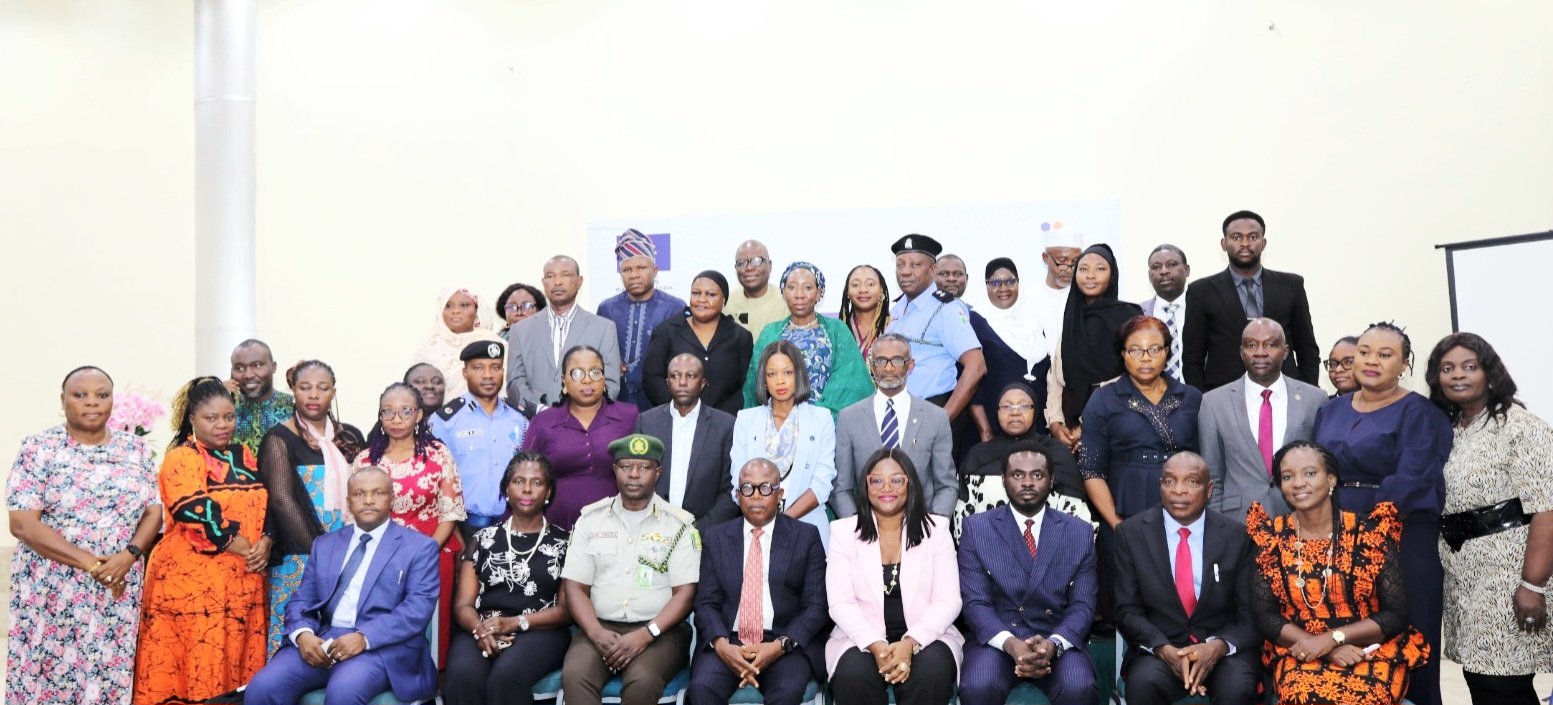
The call was made at a Sub-National Dialogue on Juvenile Justice System Reform held in Abuja under the Rule of Law and Anti-Corruption (RoLAC) Programme, implemented by the International Institute for Democracy and Electoral Assistance (International IDEA) with funding support from the European Union. The dialogue convened judges, correctional officers, legal practitioners, child-protection advocates, and civil society organisations to review current practices and agree on practical solutions.
Speaking at the session, Joshua Gbenga Dada, a RoLAC Programme Officer, explained that years of engagement with Nigeria’s criminal justice system have revealed persistent gaps in how children in conflict with the law are treated. According to him, the juvenile justice system has not received the level of attention required, as reflected in the limited number of functional juvenile facilities, family courts, and specialised judges.
“Children are the most delicate members of society,” Dada said. “How we handle them when they come in contact with the law will largely determine the kind of adults they become. If we get it right at this stage, we significantly reduce crime in the future.”
He emphasised that the justice system must move away from a punishment-centred model and adopt a reform-oriented approach that seeks to understand the underlying causes of a child’s behaviour. Such causes, he noted, often include poverty, family breakdown, abuse, and lack of access to education. Addressing these factors through structured rehabilitation and support, rather than incarceration, is key to preventing reoffending.
Participants highlighted the importance of diversion programmes, which allow children who commit minor offences to be rehabilitated within their communities instead of being sent to custodial facilities. These programmes involve family engagement, counselling, vocational training, and education, helping children reintegrate and develop positive life skills.
Legal scholar Professor Cheluchi Onyemelukwe, Executive Director of the Centre for Health, Ethics, Law and Development (CHELD), underscored that Nigeria already has a strong legal framework for protecting children, particularly through the Child Rights Act. She explained that the law provides for family courts, child-friendly procedures, and detention only as a last resort. However, she noted that implementation remains uneven across states.
“The focus should be on making existing systems work better,” Onyemelukwe said. “Family courts must be properly staffed with trained social workers and assessors, and juvenile facilities should offer education and vocational training that reflect today’s realities.”
Representatives of the Nigerian Correctional Service also spoke on efforts to provide specialised care for young offenders through designated juvenile institutions, where education, healthcare, and nutrition are tailored to children’s needs. Stakeholders agreed, however, that stronger coordination among police, courts, social services, and correctional authorities is necessary to create a truly unified juvenile justice system.
Organisers of the dialogue said the outcomes will inform policy engagement and capacity-building initiatives under the RoLAC Programme, with the goal of strengthening Nigeria’s compliance with national laws and international child-rights standards.
As discussions concluded, participants agreed that investing in a humane, rehabilitative juvenile justice system is not only a legal obligation but a strategic step toward building safer communities and a more just society.