Follow Us on Google

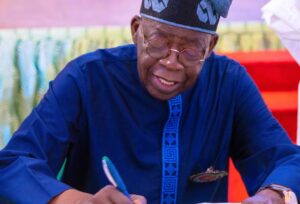
President Tinubu, on the 17th day of September, 2025 declared: “It gives me great pleasure to declare that the emergency in Rivers State of Nigeria shall end with effect from midnight today. The Governor, His Excellency Siminalayi Fubara, the deputy governor, Her Excellency Ngozi Nma Odu, and members of the Rivers State House of Assembly and the speaker, Martins Amaewhule, will resume work in their offices from 18 September 2025.”
Nobody is in doubt whether the President has the power to declare a state of emergency because section 305 (1) of the Constitution states, “the President may by instrument published in the Official Gazette of the Government of the Federation issue a Proclamation of a State of Emergency in the Federation or any part thereof.” The grouse of Nigerians is whether the circumstances that warrant the declaration of state of emergency had occurred in Rivers State prior to the declaration, and whether the power to declare a state of emergency entails power to remove the Governor, his deputy, and elected House of Assembly Members of Rivers State. No provision of the Constitution empowers the President to suspend any provision of the Constitution and remove elected representatives of the people and as such the President’s action in this regard is unconstitutional and illegal.
It’s important to note that having read carefully the statement of the President, I found no substance in it. The President doubled down in his claim that he declared a state of emergency on the 18th of March, 2025, because “there was a total paralysis of governance in Rivers State, which had led to the Governor of Rivers State and the House of Assembly being unable to work together. Critical economic assets of the State, including oil pipelines, were being vandalised.”
When the President visited Benue State to console the Benue people over the massacre of more than 500 persons in Benue, he asked the Inspector-General of Police, “how come these number of people were killed and you have not made a single arrest?” I want to see some arrests, he demanded. My question to Mr President is, “Sir, how come you took over the government of Rivers State for six months and there was no single arrest of any person who was involved in vandalising oil pipelines and critical economic assets of the state?” At least the IGP of police belatedly made some arrests some days later, but till date, after six months of Tinubu’s emergency rule, there is no arrest made that could be traceable to any vandalism of Rivers State assets under Fubara’s watch or by Fubara’s people.
The truth is that there was nothing like that. The purported intelligence report creating the impression that peace has returned to Rivers State is as spurious as the purported intelligence report that created the impression that there was threat or actual breakdown of law and order during Fubara’s regime, because peace was never threatened during Fubara’s regime. Tinubu simply succeeded in setting Rivers State back by six months as the intelligence report reaching us indicates that every developmental stride initiated by Fubara was halted during the six-month illegal tenure of the Sole Administrator, Ibot-Ete Ibas, despite the billions of naira given to the Sole Administrator by Tinubu. The real total paralysis of governance in Rivers State happened under Ibas and not Fubara. Tinubu’s state of emergency was therefore regressive not progressive in nature. It was orchestrated to siphon billions of Rivers State funds through an unelected Sole Administrator who made provision to use N22b of Rivers State funds to install CCTV cameras in Rivers State Government House.
The first job of the National Assembly is to thoroughly investigate the tenure of this ill-fated Sole Administrator to expose inefficiency, corruption, and waste that pervaded this period in line with the constitutional mandate of the National Assembly. It’s very unfortunate that all the people who took critical decisions concerning the declaration of emergency rule, and the nauseating illegal governance of Rivers State are non-indigenes of Rivers State, whereas, democratically, Rivers people elected only Rivers indigenes to govern them. The roll call include, Tinubu from Lagos/Osun State; Godswill Akpabio, Senate President, from Akwa Ibom; Tajudeen Abas, Speaker of the House of Representatives, from Kaduna, and Justice Kudirat Kekere-Ekun, Chief Justice of Nigeria, from Lagos State.
The problem in Rivers State was a political logjam, not a breakdown of law and order. And according to the Constitutional Court of South Korea, political logjams are settled politically, not by removing elected representatives of the people through any other means whatsoever. This court upheld the removal of the President of South Korea for attempting to remove elected representatives of the people by suspending some portions of the laws of South Korea. What the National Assembly owed Nigeria was to reject the purported declaration of the state of emergency, initiate impeachment proceedings, remove Tinubu from office, and make him to face trial. Tinubu, according to his Vice President, Kashim Shettima, does not have the power to remove a councillor. What Tinubu did in Rivers State amounted to treasonable felony.
Other News
Unfortunately, National Assembly failed Nigerians by purporting to approve the doom-fated state of emergency by voice vote, a procedure not known to law. Approval for a state of emergency requires two-thirds majority of the National Assembly. Knowing that they do not have the numbers, the compromised leadership of the National Assembly resorted to voice vote to illegally approve the state of emergency. How can anyone determine two-thirds through voice?
After the illegal approval of the state of emergency by the National Assembly, there were about 40 cases that emanated from the disputes generated by the declaration, including a suit by the 11 Peoples Democratic Party (PDP) governors at the Supreme Court. None of those cases was determined during the six months of the declaration of the state of emergency, including the one at the Supreme Court. The justice system failed the Rivers State people. One would have thought that due to the urgency of the situation, the Chief Justice of the Supreme Court, Kekere-Ekun, should have used her good offices to expedite action on the case in order to make a definite pronouncement on the legality of suspending the elected representatives of the people during a state of emergency. This would have provided a guide to future Presidents on how to deal with similar situations.
As it stands now, the assumption of the people is that the Supreme Court didn’t want to embarrass the President because everyone understands that the President has no power to make such declaration. However, be that as it may, the six months having run its due course, the Supreme Court can still go ahead to make the determination to safeguard our democracy from future assaults of dictators and autocrats.
Governor Fubara was elected to serve for four years from the date of being sworn in. The illegal declaration of the state of emergency has reduced his term of office illegally by six months. Fubara has the right to challenge this illegal declaration of a state of emergency that took his six months away from him in court, with a view to recovering his six months. Supreme Court has held that the tenure of a governor must complete four years from the day he was sworn in. This was how we got the staggered electoral system in our elections. If Fubara leaves office on May 29, 2027, he served for only three years and six months. He is entitled to four years from the day he was sworn in. His tenure should be due to end on the 29th day of November, 2027. Any conduct of gubernatorial election before the expiration of his tenure on the 29th day of November, 2027 should be deemed illegal and unconstitutional. This will send a conclusive message to every future President that his action cannot terminate or shorten the will of the people as expressed through elections. Power to govern Rivers State belongs to Rivers people, not to any President or his unelected Sole Administrator. Rivers State must recover all the months that the Tinubu’s cankerworm government has wasted for them.
The insinuation in Tinubu’s statement that he has lifted the state of emergency is false. The life span of any state of emergency is six months. Section 305 (6)(c) states that “A Proclamation issued by the President under this section shall cease to have effect after a period of six months has elapsed since it has been in force.” The state of emergency elapsed on its own. Tinubu had the power to revoke it before six months when Wike and Fubara publicly declared that they have settled, but he refused to do it so that his regime would complete its illegality of usurping the power of the governor to organise voodoo local government elections not known to law, using the Sole Administrator as a proxy. Another insinuation that he has reinstated Fubara and other elected representatives of Rivers State is insulting to the sensibilities of the Rivers people. You cannot reinstate whom you cannot remove. It’s only the Rivers people, through their elected representatives and the State judiciary, who can remove the governor and his deputy, not Tinubu.
Tinubu’s state of emergency is an aberration that reveals a failure of the system. We have two arms of government – legislature and judiciary- that could have performed their functions of checking and balancing the action of Tinubu but they failed Nigerians. The power in a democracy is located in the legislature, not in the executive and the only thing the evil of the executive needs to prevail is for the legislature to keep quiet. This can only be possible when the legislature is corrupt, otherwise, how can one person win more than 469 persons of separate but equal powers? Nigerians must wake up and defend their democracy.