Follow Us on Google
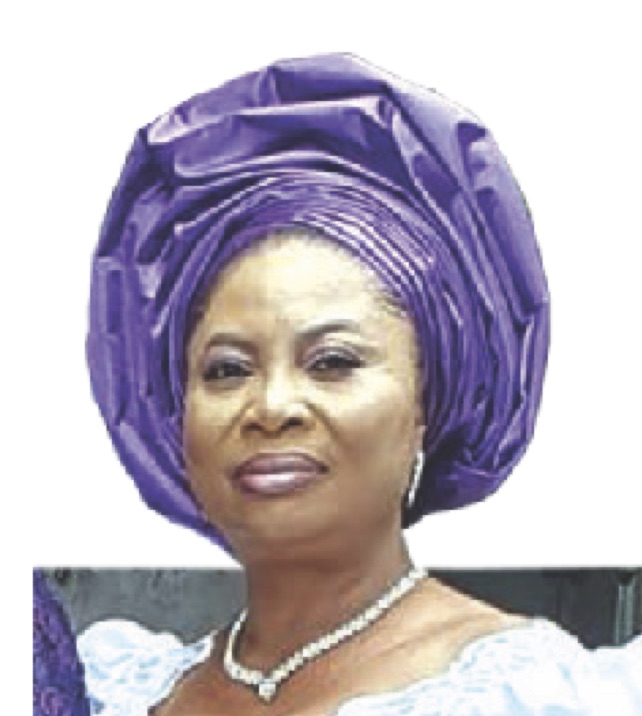
A lecturer in the Federal College of Education (Special), Oyo, Clementina Kezie is the author of Broken Reed, published by ANA’s Nigerian Writers Series. It won the 2000 ANA Drama Prize much to the surprise of the playwright. Winning the prize has changed her writing process, she told Henry Akubuiro in this interview conducted at Mamman Vatsa Writers’ Village, Abuja. For her, literary success feels like being in love and being loved in return. The writer is currently obseving the world around her, inching to tickle the quill.
What encounters — physical, spiritual or scribal — aided your early journey as a writer?
My first step in writing was in my first year in the secondary school when I was declared the best writer for a class poetry assignment. I wrote several other poems thereafter which I dramatised with a few of my classmates at every end of the year programme at Aje Comprehensive High School, Yaba, Lagos. After secondary school, I was privileged to find myself within the theatre circle in Lagos and got inspired to write my first short story which I gave to one of the then theatre directors I admired so much, the late Jide Ogungbade, whom we fondly called Pappy Jyde, to assess. I can never forget what he told me after he read my story: “The idea is big but the technique is zero.” So when eventually I got into the University of Ibadan, I initially only focused on my French studies, but later had a presence within the campus theatre circle. Again, my interest in writing refused to be suppressed and so it was that I served as an editor with the Students’ Union Press, had my own column where I wrote campus social commentaries, using the fictional narrative style to the delight of my friends and the campus public. Furthermore, being a member of the dramatic circle as an actor over the years exposed me more to the dramatic genre; and it is in this genre that I more easily find expression, having created drama skits both in French and English for various school performances.
How did you feel when you won the national ANA prize in 2020? Were you expecting it? How has that prize advanced your writing career?
I won the national ANA prize in the year 2020 in the drama category. And was I elated? Of course, I was and I still am. Was I expecting it? The answer is no. In the first place, I didn’t even think my work was good enough for the ANA prize. But Ebika Anthony, a former chairman of ANA Oyo chapter, on reading my play, BROKEN REED, encouraged me to turn in it for the competition. It wasn’t until Ebika rang me up one morning to congratulate me on making the shortlist that I began to truly feel that I have something to offer as a writer. And since then, I have pulled out some of my old writings from my drawers, which I had initially thought were meaningless and have begun to reshape them into hopefully better creative works. Such works include the story I wrote over three decades ago whose “idea is big” and whose “technique is zero.”
Do you try more to be original or to deliver to readers what they want?
I write what I feel like writing. And I believe that after writing, there will always be readers who will connect with what I have written. When I write, I do not have a particular set of readers or a particular age bracket in mind. I just put on paper what comes to me. If my content addresses you or appeals to you, then so be it. For me, originality is key. But of course, there may be times when one is compelled to write for a specific purpose or audience; because of my responsibility to society as a writer, I will write. For example, a writer who is a chain smoker may, for their skills, be commissioned to write a play on the health hazards of smoking. So since part of a writer’s duty is to recreate the world to be better, we will sometimes deliver to the readers what they want or need.
How did publishing your first book change your process of writing?
My first published book is not a literary work, it’s an academic text which I wrote in French. Nevertheless, I have had my drama skits, poems and songs performed and some of them published. But does that feel like publishing a book? However, my first experience with publishing a full creative book came with the submission of my play BROKEN REED for the ANA 2020 Drama Prize. It has been published under the Nigerian Writers Series, and republished by Ngelenge Arts House. So I would rather talk about how the recognition my play received has changed my writing process. It has made me want to write another book. But since that time, I am still toying with snippets of ideas I am not yet convinced will make a book. I have also learnt to discuss my ideas with people informally, without letting on that they are ideas being considered for a book. The feedback I get from those seemingly unimportant discussions have helped in my attempt at building up my contents. I must confess though that the process of writing is not easy.
How did you condition yourself when you realised language has power?
When I make my first draft, I use words as they come to me. I do not bother with how I’ve arranged them. I do not bother with my choice of words until I am done with putting down whatever the idea that has come to me. It is only after then that I come back to the work and begin to reorganise my words and expressions. I cannot tell how many times I rework a particular piece. I just know that I never stop to make adjustments until I can no longer find something to modify. This is because I have conditioned myself to see language to be spiritually edifying. The word, whether spoken or written, is a spiritual substance; so when used effectively makes the user powerful. When my work is finally thrown out to the public for consumption either through performances or book, and I see it generate positive reactions, I become satisfied that I have successfully used my power of language.
What does literary success mean to you?
Literary success to me feels like being in love and being loved in return. So literary success is not just about filling up my pockets with money, we all know how difficult it is to live by creative writing. Therefore, literary success is being recognised and appreciated by being read. It’s being meaningful to the society, being able to put something down not only for today’s generation, but for generations yet to come. Literary success is also seeing my work published or performed and receiving positive responses like awards and reviews.
What’s the best way for Nigerian writers to market their books?
It is unfortunate that publishing houses these days are mainly into publishing academic books and rarely publish literary books. Even when these regular publishers publish your work, the royalties you get are never fat enough to take you home. That is why when writers finally publish their books, they should be an integral part of the marketing process. Fortunately, university lecturers who have published their literary works can have them put in the curriculum and market them within the academic system. But writers who are not in the academia must have to attend literary programmes, festivals, artistic events to exhibit their books and hope to smile home with sales. Besides, writers can also try to market their books within their immediate communities.
Live theatre is gradually coming back to Nigeria, what can we do to make the fire catch everywhere?
Yes, there are a few live theatre productions going on now. But these are only happening in Lagos, Abuja and a few other places; and that’s an insignificant level of growth for the theatre industry. I say this because the Lagos International Theatre Festival and the likes, though exciting, only take care of the elites; since the tickets cost nothing less than between 5 000 and 10 000 naira, making them evidently out of reach for theatre enthusiasts or students. As it is, the average Nigerian cannot attend.
Now, we can have smaller versions of such theatre festivals outside Lagos. For instance, we can replicate these festivals at the state cultural centres, which for many years have remained underutilised edifices or served as mere event centres. Also, to build a larger audience participation, such festivals can be organised in the form of open-air performances. This will definitely bring theatre closer to the people. Play performances can be taken to the communities, market places, motor parks, churches and schools. These are more accessible spaces for the everyday people. Again, we can involve our young ones by organising theatre workshops in secondary schools across the nation. These workshops will expose students to different types of theatre and not just exam-focused drama. And when these young people see their own experiences dramatised, they are more likely to value theatre; thereby building the next generation of theatre practitioners and audiences. Without all of these and more, live theatre risks remaining limited to a small elitist segment of the society; and the fire may never catch everywhere.
In all that I have said and have not said, funding and sponsorship are germane. Unfortunately, theatre tickets cannot cover production costs and sponsors often prefer music and comedy shows. Theatre halls and rehearsal venues are expensive. Nevertheless, now that live theatre is being revived, my wish is that we do not allow ourselves to be demoralised by the many constraints that real theatre practice is faced with in Nigeria.
Do you think Nigerian literature is suffering from the spread of digital media? If so, is there a way out?
I do agree that Nigerian literature is facing challenges from digital media because the social media has taken over people’s leisure time. People are more interested in Tiktok, Instagram and YouTube. Most people now lack the attention span that reading literary texts requires. They prefer the short digital writings that lack literary depth. However, the digital media is not without its advantages. Writers can also produce e-versions of their books for a wider access. And with audiobooks, a certain segment of the society (the visually impaired), will be able to access and savour the richness of literature like everyone else.
What are you working on now?
At the moment, I’m working on some scripts. I am doing research and attending literary events. I’m observing the world around me so that when I’m ready to come out, I’ll come up with something refreshingly impactul.