Follow Us on Google
By Henry Akubuiro
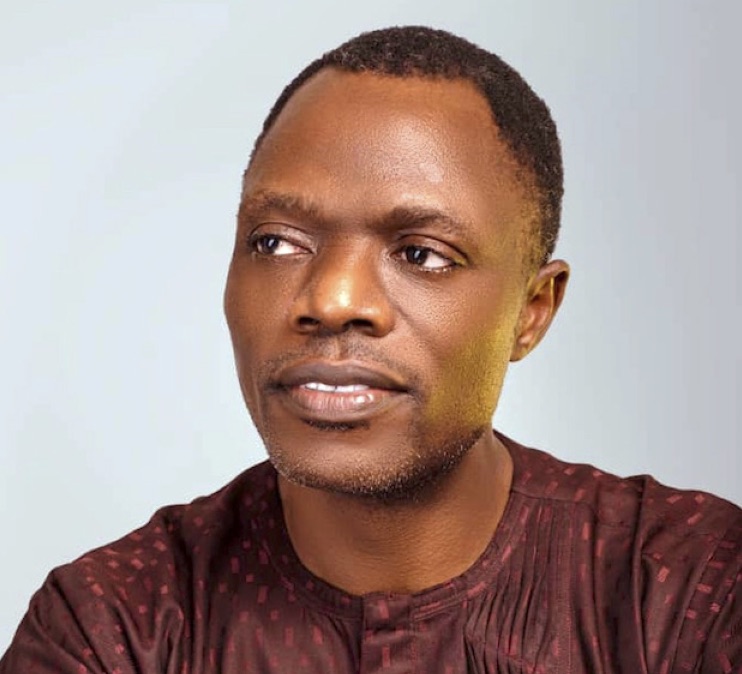
Dr. Oriade Daniel, author, leadership strategist, nation-builder and lead author of the new book, JAGABAN: The Unrepentant Democrat, speaks with The Sun about the inspiration behind the project, its research methodology and the lessons embedded in President Bola Ahmed Tinubu’s leadership journey, which dominates the offering.
You began the Tinubu book project in early 2025 and it is on the cusp of release. What inspired the project and why did you consider it appropriate at this point in time?
The project arose from my sustained interest in leadership, nation-building and the forces that shape political outcomes. From the outset, our objective was not merely to document President Bola Ahmed Tinubu’s life, but to examine his political journey as a practical leadership case study. His evolution – from pro-democracy activism and legislative service to governing Lagos State, building national influence and becoming President – demonstrates that political leadership is rarely the product of one election or one moment of opportunity. It is usually the cumulative result of preparation, relationships, strategic positioning and resilience.
Also, the timing is important, because Nigeria is asking serious questions about governance, reform, institutions and its democratic future. As the country approaches another electoral season, discussion should move beyond slogans and partisan emotions. This book is neither campaign propaganda nor an indictment. It studies the man, his methods, decisions, alliances, controversies, victories and setbacks. Nigeria must begin to study its leaders, not merely praise or attack them, because every consequential journey contains lessons and warnings for the next generation.
Your book is entitled JAGABAN: The Unrepentant Democrat – A Masterclass in Political Strategy and Nation-Building: A Global Leadership Case Study Using the Bola Ahmed Tinubu Leadership Journey. What informed this ambitious title?
Every part of the title was deliberately chosen. ‘Jagaban’ captures the public identity of a political combatant and strategist who is rarely intimidated by opposition. ‘The Unrepentant Democrat’ reflects his persistent engagement with democratic politics – from resistance to military rule to legislative service, state governance, party formation, coalition-building and the presidency. ‘A Masterclass in Political Strategy’ describes the practical core of the book. Tinubu’s rise was built over decades through preparation, negotiation, talent identification, institutional positioning and an understanding of timing. His journey teaches that political ambition without structure is merely a wish. ‘Nation-Building’ introduces the greater test: whether the ability to win power can be converted into effective governance, stronger institutions, national cohesion and improved lives. The final phrase explains our methodology. We use real decisions, conflicts, alliances, setbacks and victories to extract lessons that can be studied beyond Nigeria. Tinubu is not presented as flawless. We will examine strengths, criticisms, limitations and consequences. Sometimes leadership teaches us what to emulate; at other times, what to question, improve or avoid. That balance is the book’s intellectual foundation.
This is not the first time you have written a book about a major political figure. Many years ago, you wrote IBB: The Misunderstood Patriot, and now you are writing Jagaban: The Unrepentant Democrat – A Masterclass in Political Strategy and Nation Building. Why do you seem attracted to writing about controversial political personalities?
Thank you. I believe that is an important observation.
Yes, some years ago I wrote IBB: The Misunderstood Patriot, a book that examined the leadership journey and national influence of former Military President General Ibrahim Badamasi Babangida. Now, I am writing Jagaban: The Unrepentant Democrat – A Masterclass in Political Strategy and Nation Building, which examines the leadership philosophy and political strategy of President Bola Ahmed Tinubu.
Some people have asked whether I deliberately choose controversial personalities. My answer is simple: I choose consequential personalities.
As a researcher and leadership writer, I am interested in individuals whose decisions, leadership styles, and influence have significantly shaped Nigeria’s political landscape. Such individuals naturally attract admiration from some people and criticism from others. That is the nature of leadership. My responsibility is not to write for applause or condemnation; it is to document history, analyse leadership, and preserve lessons for future generations.
Several books and articles have already been written about President Tinubu. What will make yours fundamentally different?
The difference lies in purpose, methodology and application. We are not producing a conventional biography that merely records offices, elections and personalities. For every major episode, we ask: What challenge did he face? What options were available? Which strategy did he adopt? Who were the stakeholders? What outcome followed, and what might have been done differently? It is a research-driven leadership biography structured through practical case studies. We will distinguish facts from allegations, achievements from political claims, and strategic success from effective governance. Relevant chapters will compare his experience with leadership situations in other societies, identifying which principles are universal and which are peculiar to Nigeria.
Besides, each chapter concludes with transferable lessons and reflective questions. Readers will not simply be told what happened; they will be placed inside the decision-making environment. Tinubu, therefore, becomes more than the subject of a political story – his journey becomes a classroom for politicians, executives, public administrators, researchers and students.
Tinubu has survived political battles that ended the careers of many contemporaries. What do you think has accounted for his unusual capacity for political survival?
His survival appears to rest on long-term thinking, strategic patience, relationship management, adaptability and organisational discipline. He rarely approaches politics as a single election; he treats it as a continuing process of building influence, developing people and preparing for future opportunity. He also understands that setbacks are not always permanent defeats. Rather than disappear after disappointment, he reorganises, waits and returns through a different route or coalition. Another strength is building networks that operate beyond his immediate personality and outside election seasons. However, survival must not automatically be equated with democratic excellence. A durable structure can provide continuity, but it may also raise concerns about concentrated influence, accountability and internal democracy. The deeper lesson is not merely how to remain relevant, but how to build enduring institutions without weakening competition. Political survival becomes valuable to society only when influence is converted into responsible governance and measurable public benefit.
Tinubu is often described as a coalition-builder and talent hunter. Is his approach genuine mentorship, strategic calculation or both?
I believe it is both. Genuine mentorship and strategic calculation are not necessarily opposites. A leader may recognise talent while understanding that capable people strengthen an organisation and extend its influence. Tinubu appears willing to identify people with competence, ambition or electoral value and create opportunities for them. His coalition-building also reflects an understanding that politics involves managing diverse interests; successful coalitions are built by identifying a common objective, negotiating differences and creating sufficient value for the parties to remain committed. Yet mentorship must not become permanent political ownership. Those who receive opportunities should retain the freedom to develop independent ideas and disagree responsibly. Otherwise, mentorship becomes patronage. The practical lesson is that leaders should develop people rather than recruit only loyalists. Tinubu’s experience is both a model and a warning: talent identification can create a powerful leadership pipeline, but its democratic value depends on whether those individuals ultimately serve institutions and citizens rather than functioning solely as extensions of a benefactor.
Tinubu’s political journey has been accompanied by significant controversies. How will the book examine them without becoming defensive or accusatory?
We are approaching every controversy with evidence, context and fairness. A serious book must neither suppress legitimate questions nor repeat allegations as though repetition makes them facts. We will distinguish verified facts, judicial findings, official records, political claims, media reports, opinions and unresolved allegations. Where an issue is relevant, we will explain its origin, examine available evidence and document how Tinubu or his authorised representatives responded. Where the evidence does not support a definite conclusion, we will say so. Objectivity does not mean creating artificial balance between truth and falsehood; it means applying the same evidential standard to supporters, critics and the subject himself. Our purpose is neither to defend Tinubu at all costs nor prosecute him through literature. Readers may disagree with our conclusions, but they should see that those conclusions emerged from disciplined research and fair evaluation.
Is there a significant difference between Tinubu the political strategist and Tinubu the President, and has his political genius translated into national governance?
There is an important difference. Political strategy concerns acquiring influence, building coalitions, managing opposition and winning power. Governance concerns using that power to strengthen institutions, implement policy and improve citizens’ lives. Tinubu’s political credentials were established over decades, but his presidential record must be assessed separately through measurable outcomes. His administration has shown willingness to take difficult decisions, notably reforms to fuel subsidies and foreign exchange. Recent assessments indicate stronger growth and improved macroeconomic stability, but poverty, food insecurity and the cost of living remain serious concerns. It is therefore premature either to declare the administration an unquestionable success or dismiss its reforms entirely. The evidence presents a mixed and evolving picture. The final test is not whether reform looks impressive in reports, but whether it produces employment, affordable food, reliable infrastructure, security and stronger institutions. Political genius may win power; nation-building is measured by what that power delivers.
Supporters call Tinubu’s economic decisions courageous reforms, while critics emphasise hardship. How will your book assess their intentions, implementation and consequences?
We will ask three separate questions: Were the reforms necessary? Were they properly sequenced and implemented? Have their benefits reached ordinary citizens? A policy may be economically necessary but poorly executed; it may promise long-term benefit while imposing an immediate and disproportionate burden on vulnerable people. The fuel-subsidy and foreign-exchange changes were intended to address serious fiscal and structural distortions. Yet leadership is not measured only by the courage to take difficult decisions. It is also measured by preparation, communication, sequencing and protection for citizens during transition.
We are examining whether adequate social safeguards were ready, whether savings were transparently redirected into productive sectors and whether small businesses, workers and low-income households received meaningful protection. The decisive question is whether reform eventually produces affordable food, jobs, reliable electricity, infrastructure and opportunity. Positive macroeconomic indicators alone cannot settle the debate. Sound economic policy must ultimately become lived economic progress.
What will determine whether history remembers Tinubu as a strategist, democrat, reformer, power broker, nation-builder or controversial survivor; and why should readers outside Nigeria study him?
Tinubu’s legacy is not yet settled. Political strategy brought him to the presidency, but history will judge what he does with that power. The verdict will depend on whether reforms produce inclusive prosperity; whether institutions become stronger; whether insecurity is reduced; whether living conditions improve; and whether his leadership strengthens cohesion across Nigeria’s divisions. History will also ask whether he built systems capable of functioning independently of his personality. A political leader may dominate an era, but a nation-builder creates institutions that remain effective after he leaves office. International readers should study him because his journey raises universal questions: How does an opposition politician survive authoritarian pressure? How are diverse interests combined into an electoral coalition? How does a regional base become a national movement? Can skills used to acquire power be converted into the capacity to govern? Nigeria’s diversity makes it an important laboratory for coalition-building, federalism, reform and leadership in complex societies. Political victory creates a chapter in history; nation-building determines the judgment written at its end.