Follow Us on Google
NGF PHC rivalry turns clinics into heroes
By Juliana Taiwo-Obalonye
Picture Aisha, a weary mother from a dusty village in Borno State, her two-year-old son limp in her arms, burning with malaria fever. She treks five kilometres under a relentless sun, past barren fields scarred by insurgency, only to arrive at the local primary health centre (PHC), dilapidated shell with no electricity, no clean water and shelves barren of even analgesic medicines. The single nurse on duty, overwhelmed by a queue of desperate patients, shakes her head: expired drugs, no vaccines, no hope.
Across Nigeria, similar nightmares unfolded.
Picture also how Fatima in Yobe’s remote hamlet watched her infant waste away from untreated diarrhea, the PHC gate padlocked amid bandit threats, forcing her to rely on herbalists. In Kwara’s rural outposts, Mama Aisha laboured alone through childbirth, haemorrhaging fatally without a midwife, as the nearest functional clinic lay 20 kilometres away, accessible only by impassable roads.
In Abia’s southeastern villages, young Chioma buried her twins who fell to measles after their PHC ran dry of vaccines, the nurse long absent for unpaid salaries. In Jigawa’s arid north, Zainab’s family battled unrelenting malnutrition, trekking to a ghost facility where stunted children queued in vain for supplements that never arrived. This wasn’t fiction; it was the grim daily reality for millions of Nigerians before bold reforms took root. In those dark days, Nigeria’s primary healthcare system—the supposed bedrock for over 200 million people—teetered on collapse.
Maternal mortality raged at 814 deaths per 100,000 live births in 2018, according to World Health Organization figures, claiming over 58,000 mothers annually in needless agony during childbirth. Child stunting gripped 37% of under-fives, robbing a generation of potential, while wasting left another 7% on the brink of starvation. Zero-dose children—those missing basic vaccines—swelled to 2.1 million by 2022, fuelling polio outbreaks that infected hundreds in conflict-ravaged northern states.
Penta3 immunization coverage stagnated in the low 60s nationally, skilled birth attendance hovered below 40%, and only 20% of PHCs were fully functional, per NPHCDA audits. Malaria devoured lives, family planning access was a myth for rural women, and routine check-ups? A luxury for the urban elite.
These statistics hid human heartbreaks: farmers like Ibrahim in Zamfara burying infants to vaccine-preventable diseases; nomadic herders in Nasarawa watching families succumb to malnutrition amid clinic closures. PHCs, envisioned as grassroots fortresses under the 1978 Alma-Ata Declaration, had morphed into ghosts—underfunded, understaffed, forsaken. Health budgets languished, with states allocating peanuts amid competing priorities, leaving local governments to shoulder impossible burdens without resources.
The journey to redemption began in Seattle in 2019, when 12 visionary governors gathered under a foundation’s auspices to chart a new course for primary healthcare in Nigeria. They endorsed the Seattle Declaration, a bold pledge to reform, prioritize, and sustainably finance PHCs.
This wasn’t mere rhetoric; it ignited a decade-long push. As the governors pursued consistent progress, it became one of the clearest demonstrations of Nigeria’s commitment to turning the tide—sparking compacts, competitions, and cash infusions that would culminate in the Primary Healthcare Leadership Challenge (PHCLC).
This challenge, organized by the Nigeria Governors’ Forum (NGF), Federal Ministry of Health and Social Welfare, National Primary Health Care Development Agency (NPHCDA) and UNICEF, among others was the spark Nigeria needed. Each year, 13 awards are presented: the best-performing state and first runners-up across the six geopolitical zones, plus a national award for the overall best-performing state—totaling $6.1 million annually. Its raison d’être? To ignite accountability, foster healthy rivalry among states, and funnel prizes into measurable improvements—rewarding excellence in care quality, patient satisfaction, funding, leadership, and outcomes. Aligned with the Federal Government’s National Health Sector Renewal Investment Initiative (NHSRII), it aimed for universal health coverage, transforming PHCs from symbols of despair into beacons of hope.
The challenge’s evolution tells a story of mounting momentum. The maiden edition’s Gala/Awards Night dazzled on May 17, 2023, where Borno State triumphed with $700,000 as overall best performer and $500,000 as North-East zonal winner. Zonal victors that year—Kwara (North-Central), Jigawa (North-West), Ebonyi (South-East), Rivers (South-South), Ondo (South-West)—each pocketed $500,000, while first runners-up like the Federal Capital Territory (North-Central), Bauchi (North-East), Zamfara (North-West), Abia (South-East), Edo (South-South), and Ogun (South-West) claimed $400,000 each.
The second edition, on December 12, 2024, upheld the 13-award structure: $700,000 for the overall best state, $500,000 for zonal winners, and $400,000 for first runners-up. A special PH Innovation Award went to Gombe State, spotlighting creative strides.
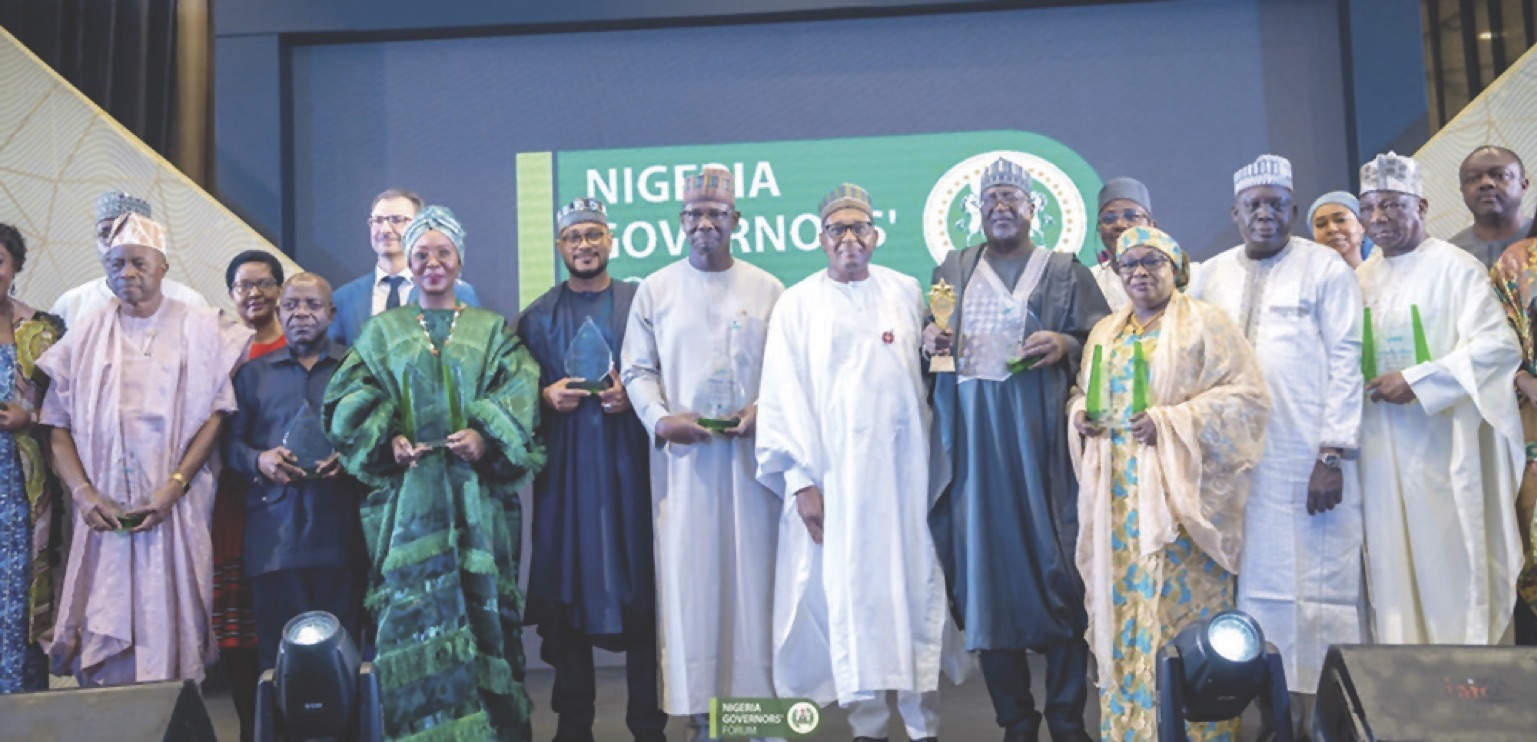
At the 2025 glittering third edition’s Award Night in Abuja, unfolding from Friday evening into Saturday’s early hours, crowned Yobe State as national champion, scooping $1.2 million ($700,000 grand prize plus $500,000 North-East zonal win). Their triumph stemmed from stellar key performance indicators: upgraded facilities now buzzing with power, water, and stocked pharmacies; nurses reinforced by recruitment drives; immunization drives slashing zero-dose rates; and patient satisfaction soaring as mothers like Aisha, Fatima, Chioma, and Zainab finally found care. Zonal victors—Nasarawa (North-Central), Zamfara (North-West), Abia (South-East, $500,000 under Governor Alex Otti’s equitable push), Rivers (South-South), Osun (South-West)—each netted $500,000. Runners-up like Gombe, Kwara, Kaduna, Anambra, Bayelsa, and Ogun grabbed $400,000, fueling a virtuous cycle of emulation.
These wins sync with governors’ seismic budget surge: N2.36 trillion for 2025 health spending—30% ringfenced for PHCs—vaulting from N831 billion in 2022, N927 billion in 2023, and N1.4 trillion in 2024. The dividends? Transformative. National Penta3 coverage climbed to the high-60s (75%+ in top states), over 500,000 zero-dose children vaccinated since July 2024 (closing 24% of the 2.1 million gap via outreaches like October’s polio-RI drive). Skilled birth attendance and ANC4 coverage topped 50%, family planning uptake grew 10%, malaria interventions expanded nationwide, though stunting lingers at 40% and wasting persists in vulnerable pockets. Circulating vaccine-derived poliovirus type 2 (cVPV2) cases plummeted from triple digits to under 50 across 45 local government areas, with integrated campaigns in 20+ states bridging immunity gaps—despite lingering hotspots in Sokoto, Zamfara, Taraba, Katsina, Bauchi, and Borno (123 cases total).
Other News
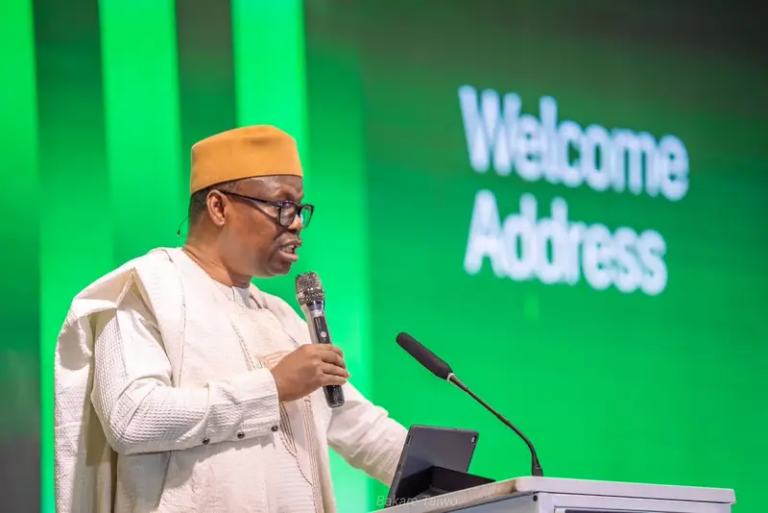
Speakers at the event humanized these stats, blending policy with poignant personal stakes. Vice-President Kashim Shettima, represented by Coordinating Minister of Health and Social Welfare, Ali Pate, thanked governors for three years of compact-driven transformation, noting 20 states exceeded 2024 targets.
“Health is a fundamental aspiration of every human being. It is a material thing, it is a physical thing, and it is also a way for us to build our country, to unite it, and to inspire it,” he declared, invoking a timeless proverb: “A healthy person has a thousand wishes, but the sick man has only one wish, which is to get healthy.”
Shettima framed health as a multilayered investment—for today’s productivity and tomorrow’s legacy—while tackling affordability amid soaring drug, treatment, and insurance costs. The federal government is slashing prices, but states must allocate transparently.
He projected optimism: “Wherever you see good health, someone has invested in it. State governments, Federal Government, all of us have to invest in health… Investing yields multiple dividends: healthier populations, human capital buildup, social resilience, job creation, and Nigeria producing ‘long-lasting citizens’ as Africa’s first world-class health hub.”
He urged hitting N3.5trn total state allocations next fiscal year, uniting states, locals, partners, civil society, and private sector.
NGF Chairman and Kwara Governor AbdulRahman AbdulRazaq, represented by Nasarawa Governor Abdullahi Sule, unveiled the budget milestone: “Indeed, over the last three years, States have increased their budget allocations to health, resulting in significant infrastructural upgrades across PHC facilities and expanded recruitment of human resources for health. The combined health budget for the 36 States has grown from N831 billion in 2022, to N927 billion in 2023, N1.4 trillion in 2024, and N2.36 trillion in 2025 with 30 per cent of these annual budgets dedicated to PHC.”
He spotlighted falling institutional maternal mortality and intentional leadership: “The steady progress from the first to the second round and now to the third demonstrates clearly that when leadership is intentional and accountable, measurable and transformative change is possible.”
A 2026 expanded scorecard will track Health Sector Renewal Compact pledges transparently.
Speaking for winning states, Otti expressed profound gratitude to global partners—World Bank, UNDP, UNICEF: “When you know what you are doing and you keep doing it, someone will notice… The Challenge Fund has helped states distinguish themselves through measurable results.”
He extolled rivalry’s power: “True advancements often stem from competitions that spur top-tier performance… Inter-state rivalry has elevated benchmarks, fostering innovation, transparency, and superior results in healthcare delivery… Treat healthcare expenditure as an essential investment in human lives and national growth—not mere overhead.”
Otti pledged boundary-pushing on metrics, thanking collaborators on behalf of federal and state leaders.
NPHCDA Executive Director Muyi Aina praised governors’ partnerships for driving nationwide PHC revamps, from infrastructure to human resources.
Nkata Chuku rooted the saga in Seattle: “The journey began at Seattle in 2019 with twelve governors to chart a new course for primary health care in Nigeria. Your endorsement of the Seattle Declaration, and the consistent progress you have pursued remains one of the clearest demonstrations of Nigeria’s commitment to reform, prioritize, and sustainably finance PHC.”
She hailed 2025 data—routine immunization surges, 500,000+ zero-dose vaccinations, polio slashes—amid $27 million invested (70% in awards). Challenges persist: insecurity, zero-dose clusters, seasonal surges, data gaps, stunting, wasting. “The 2025 trends are encouraging, but they also remind us that progress is fragile, especially in the context of polio recovery and essential service delivery…The Challenge Fund is a tool. Your leadership is the engine that will deliver lasting change for every Nigerian family.”
For Aisha, Fatima, Mama Aisha, Chioma, Zainab and countless others, these shifts mean clinics alive with light, vaccines, running water, births attended—health no longer a gamble but a guaranteed right. Yobe’s win, born from Seattle’s seed, signals Nigeria’s healthcare dawn.