Follow Us on Google
FG trapped between revenue, medical value, crime concerns
From Okwe Obi, Abuja
Cannabis sativa cultivation is a currently a hotly debated issue in Nigeria, especially after it was legalised in some countries, including the United States.
The plant, vilified and quietly valued, is unsettling the federal government due to the surge in illicit drug use and trafficking.
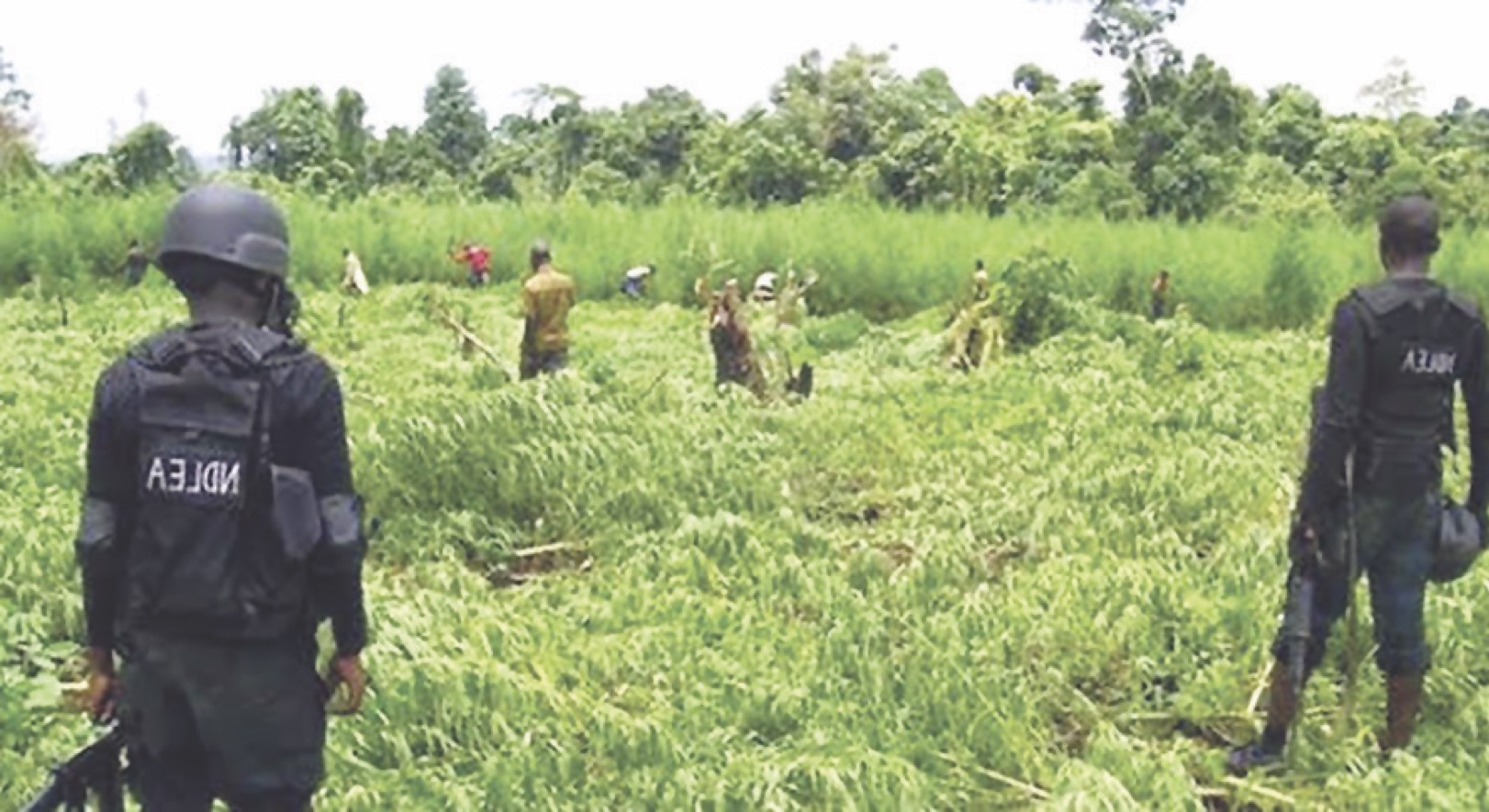
To stem what may snowball into a national disaster, the federal government has tasked the Ministry of Agriculture and Food Security and the National Drug Law Enforcement Agency (NDLEA) with tightening control over its cultivation.

While cannabis remains outlawed in Nigeria due to its psychoactive compound, tetrahydrocannabinol (THC), which is linked to irrational behaviour and criminal activity, the debate around its cultivation and use is obscured.
Globally, cannabis is increasingly recognised for potential medicinal applications, ranging from pain management in multiple sclerosis to easing nausea and vomiting.
The evidence, however, remains contested, leaving Nigeria trapped in a triangle of cure, control and crime.
Cannabis is mostly cultivated in Benue, Edo, Cross River, Lagos, Delta, Osun, Oyo, Ogun and Ondo states.
However, NDLEA chairman/chief executive, Mohammed Buba Marwa, revealed that out of 14.3 million drug users in Nigeria, 10.6 million abuse cannabis alone, making it the most commonly abused psychoactive substance in the country.
Marwa explained that the Alternative Development Project had secured the buy-in of the United Nations Commission on Narcotic Drugs, which has expressed willingness to support the Nigerian government.
He admitted that persuading cannabis growers to abandon cultivation would require incentives for them to comply.
According to him, the ministry and the agency would establish a technical committee to work out the details of the collaboration.
“I have actually had a meeting with some cannabis growers and discussed this idea with them,” he added.
On his part, Minister of Agriculture and Food Security, Abubakar Kyari, said the NDLEA would receive support to actualize the plan.
Other News
According to Kyari, President Bola Ahmed Tinubu’s Renewed Hope Agenda places national and food security at the heart of governance, arguing that drug control is inseparable from national security.
He said: “There is a direct correlation between drug abuse and criminality. If nothing is done by all stakeholders, the country may be breeding criminals, instead of the next generation of leaders.”
The minister reiterated that agriculture offers immense opportunities to achieve both food security and national stability by creating employment, ensuring youth and women inclusivity and improving livelihoods.
He assured Nigerians that the ministry would collaborate with the NDLEA to support cannabis growers with agricultural inputs such as seedlings, tractors, fertilizers, and other tools, while also facilitating the reintegration of rehabilitated persons through agricultural programmes.
“We should join hands. This is the collaborative effort that President Tinubu has already mandated us to pursue — not only achieving food security, but also creating jobs, improving livelihoods and giving hope to youth and women through access to capital and credit. We will partner with the NDLEA to support both the alternative development initiative and the rehabilitation agenda,” Kyari stated.
National president of the All Farmers Association of Nigeria (AFAN), Kabir Ibrahim, welcomed the idea.
He argued that the initiative would drastically reduce insecurity and boost food production, as farmers would be able to access their farmlands without fear of kidnapping or attack.
“I see it as a comment and contribution of the HMA on the drug connection with insecurity and the attainment of food security.
“You have to weigh the advantages and disadvantages. My understanding of the relationship between the NDLEA and the Ministry of Agriculture, especially regarding the commercial cultivation of marijuana in Nigeria, is that the effect of drugs hampers both farming activities and food security.
“Parents and the government must take proactive measures. Sometimes, these measures may be disruptive but, if cannabis cultivation worsens insecurity and threatens food production, then it must be stopped.
“Yes, cannabis may have benefits, but the detrimental effects outweigh the positives. It is like sugar: sweet and energy-giving, but harmful in excess because it can weaken the immune system and cause diabetes. Banning it, therefore, would ultimately be for the good of the people.”
On how government could assist cannabis growers to abandon the trade, Ibrahim said: “For me, I have not seen any strong representation of marijuana farmers among the people we engage with. They are not a voice we hear, so we do not even consider them a recognized group. You are the one saying they exist as a formidable force — I don’t know that.”
Meanwhile, a cannabis farmer in Obudu Local Government Area of Cross River State, who pleaded anonymity, expressed doubts about the initiative.
He insisted that, if the government bans cannabis cultivation, farmers must be sufficiently empowered.
“Let us see how it goes. But is the government willing to pay for the seeds to stop us from cultivating it? This is a business I have been doing all my life. Where do I start from?
“It is legalised in many countries, and those countries are making millions of dollars. Here, the government is fighting us.
“We have heard promises again and again, but have not seen any real commitment from the government. Most of our fellow farmers have been arrested. We want them released.”
The government’s latest stance highlights the complexity of balancing public health and security concerns with evolving global perspectives on cannabis.