Follow Us on Google

From Isaac Anumihe, Abuja
Governments all over the world use demographic data for national development. Authorities also use data in sectoral planning to influence the direction of government’s priorities.
In every head count, youths constitute the majority population. So, Nigeria requires accurate information on characteristics like the age and sex of the population and how they are distributed spatially. This is the basis of policy and planning for education, employment, and health systems.
Demographic data usually come from four main sources: population censuses; specialised surveys, registration systems for vital events, including births and deaths; and government’s administrative records
The quality and reliability of a nation’s demographic information is partly a reflection of the quality of the census.
Census in Nigeria is always used to influence political decisions in the area of developments, demographic delineation, revenue allocation, state creation, among others.
To this effect, the project is very controversial and most times deadly because of the protestations that follow every census in Nigeria.
Since 1866, when the first head count was observed in Nigeria till 2006, when the last census was done, it has always been characterised by strong feelings.
With a projected population of 216,783,381, Nigeria is the sixth most populous country in the world and the most populous country on the African continent.
By United Nations standard, census should be done every five years, but because of the controversies that trail every census in Nigeria not every administration likes to dabble into it.
It is against this backdrop that the actual population of Nigeria is not known. While some bandy 200 million, others say it’s 280 million.
So, to avoid unnecessary speculation, President Muhammadu Buhari’s administration decided to take the bull by the horns to organise another head count in 2023.
But this is coming close to the election year. More so, it is taking place at a time the nation is battling with banditry, terrorism, kidnapping, robbery and all manner of crimes.
No doubt, this census is coming with a lot of trepidations, fear and apprehension because the atmosphere is already tensed up with political campaigns and insecurity.
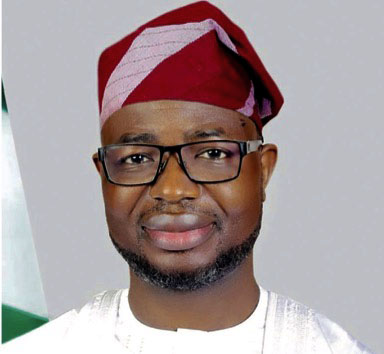
However, the Director General of National Population Commission (NPoC), Mr Osifo Telson Ojogun, has assured that the 2023 census would not be used in the forthcoming 2023 elections.
This would go a long way to douse tensions among the political class and the voting public.
In a conversation with Ojogun, he told Sunday Sun that without undermining the dangers of insecurity, the commission had undertaken a trial census and because of insecurity the commission is using locals who understand the terrains of the enumeration areas (EAs). Hear him:
What have you put in place to ensure that next year’s census will be credible and acceptable by Nigerians?
I think the foundation of every credibility is quality of service. Quality of service in the sense that you carry people along to understand the process. So, the processes are being exposed to every community, every nook and cranny in this country. For the technicians, we are stepping up a five quality agenda that stems from all the processes -recruitment and every facet of the census. In addition, for the first time we are doing a post-enumeration survey of a trial census. That’s a quality assurance mechanism. After every enumeration there’s a level of crosschecks. And just like somebody mentioned we have our dashboards that will show 36 indicators coming in. Some indicators don’t change suddenly. If there’s any change in indicators we need to actually query it and look at what could have gone wrong. But don’t forget also that we are using high level technology. All our Enumeration Areas (EAs) are digitised. This situation helps us to ensure that we leave no one behind.
The issue of security in Nigeria is germaine. How will you assure Nigerians that everybody will be counted?
Now, we have actually mapped out security-prone areas – no doubt about that. We are conscious of them and as we stated in the presentation, about 98 per cent of the areas have been mapped out and totally digitised. Then for areas that we have not been able to reach, we are getting into them now. We are getting into Agbadan in Borno State. The security apparatus is also helping us. We are about to start with Birnin Gwari in Kaduna State. I think in the next two days we will be getting into Birnin Gwari to cover all those loopholes. The first thing that we need to do is to make sure that we get everywhere. How we are going to do it is to seek the assistance of the security apparatus of Nigeria. Then, the second thing I mentioned earlier is that the community leaders play a lot of roles. They will tell you when to go out and when not to go out. We also mentioned that we are going to use the locals. We are going to jump-fence our recruitment so that people work within the context of their localities. They know their danger areas and how to approach them. These are some few methods we intend to use. There are other technologies we intend to use to reach unreachable persons or difficult areas. But these are just simple things – the ones Nigerians will understand. But one critical thing is that no one will be left behind. Our questionnaires are rich. Even if we meet you in Internally Displaced (ID) camps, we will be able to relocate you in our locality based on our questionnaire. Our analysis method is also super-rich. We have staff who have experienced censuses in about 10 countries, including difficult countries. I think there’s nothing difficult for us to actually do at this particular level.
How will Nigerian Statistical Association (NSA) award spur the chairman to do more?
In the citation they already mentioned who he is. He’s a man of the people – a grassroots person. Being a fellow of this great association, it’s a way to tell us that we are getting that credibility needed. For a Nigerian Statistical Association to induct you into them at this critical point in time, means that the work of the chairman and the commission is being recognised and it will spur him to do more. At the long run you realise that the chairman is working. He has the backing of this group and acceptability is almost assured.
How will this census be acceptable when two local governments in Borno and Kaduna states are excluded?
Let me correct the impression. They are not excluded. It is a game of weighing. We are not keen about taking extreme risk at the detriment of our field functionaries. It doesn’t mean that they are excluded. They are not going to be excluded at the long run. We are already getting into them. As the security challenges improve, we demarcate them. Having said that, there is what we call polygonisation. We have polygonised those areas. No matter what happened they are a recognised set of persons. Many methodologies that have been used all over the world for security-challenged areas like Afghanistan and the rest. I think in either Mali or so, they adopted methodologies that could analyse certain features. But those things are not critical for us to mention because they are things that many people will not understand. But the message that will be sold to us is that every part of this country will be reached one way or another. I don’t see any part that is not going to be reached.
Don’t you think that the locals you’re going to use will be biased because it is their own locality?
Understand that we have methodologies that can tell stories of what is in existence. Let me start by telling you that we use locals and the use of locals does not take away what is there. One, we are going to train them. It’s not the question of just using locals anyhow. We are using a methodology that spellchecks what is being done. I will tell you how it works. We visit 100 per cent of an EA. Another set of persons will visit five per cent; another set of persons takes two per cent. These are cascaded for you to come out with an answer. Some people will say why not use fingerprint. I heard somebody asking that question. Fantastic! The international standard for census does not permit you to use fingerprints because you are not expected to give out the biometrics of anybody. Now, if you cannot do that what are the methodologies or steps? These are the steps we are going to use. One, there is no building that we are going to approach without seeing it on the satellite. No building that we are going to enumerate without seeing it on the map. We have the technology to do that. So, we are matching imageries with what is on ground. So, having said that, when you match satellite imageries with what is on ground, one, you are sure of the buildings you are going to. Then having said that, you will use enumeration methodologies to review what you are doing. We have a dashboard where data come in and you continue to analyse it. Secondly, we have this method of enumeration where you do the work, I crosscheck your work, another person crosschecks my work and we cascade it to look at some basic indicators.
How do you contain the activities of Independent People of Biafra (IPOB) in the Southeast?
It’s not the job of NPoC to contain IPOB. It’s to see how we can work in that environment to do the work.You should realise that we have done some work there. One of the laws is that there are critical times you do your enumeration. I have said that locals will be used and they have been doing it and nothing has happened.
Will the census be used in 2023 elections?
We are not going to use it because it will not be published before the elections will hold.
So what will be the impact of it in the election?
Census is not politically-motivated. If we are to use it the tendency for it being used will be skewed.
How will it impact on the economy?
Census is the foundation of every planning because you’re talking about 100 per cent coverage. It’s not a sample that you say that there are sampling errors. Sampling error in census is almost zero.