Follow Us on Google
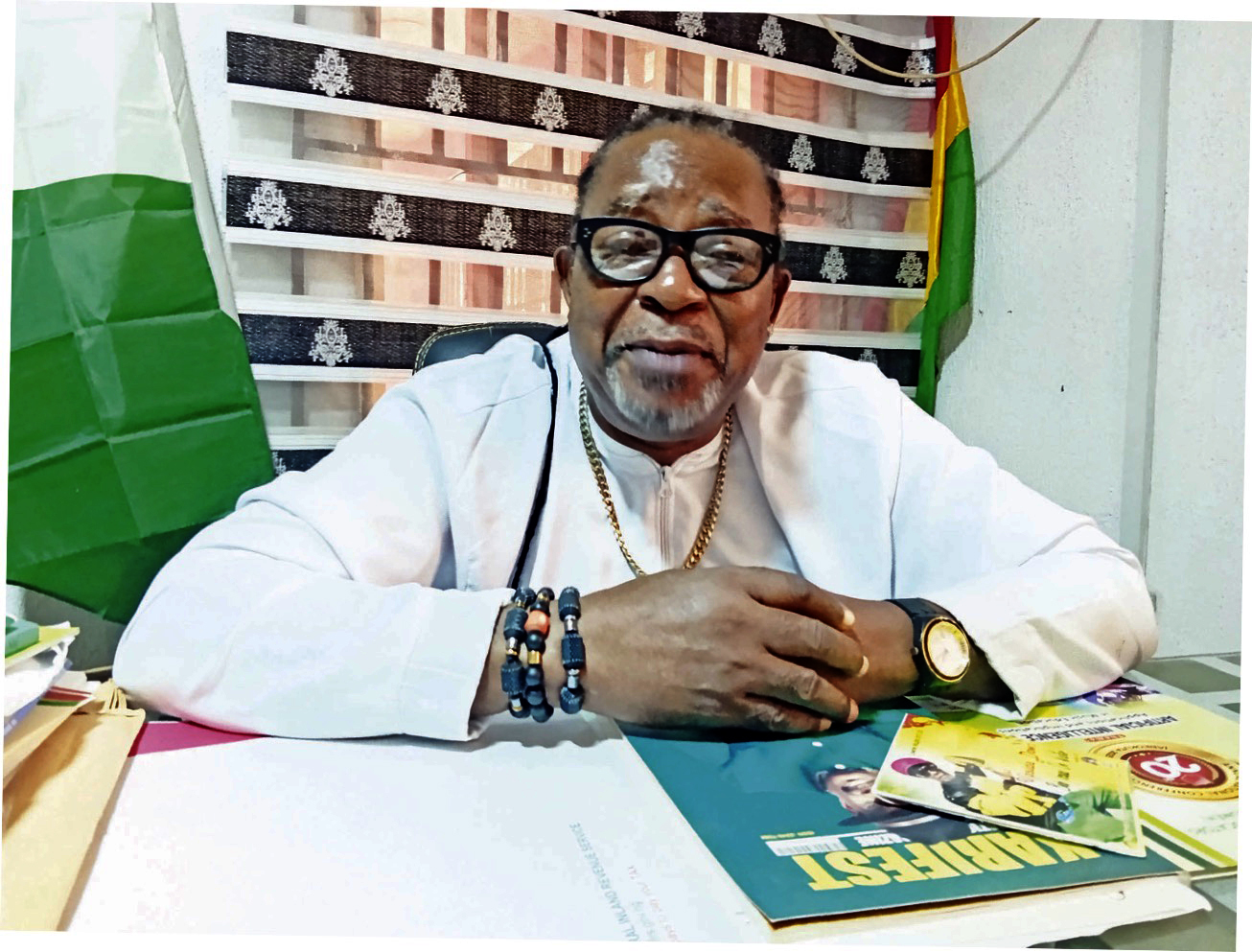
Oritsebemigho Williki, better known as ‘Orits Williki,’ is a Nigerian reggae artiste. He was the rave of the moment at his prime, with hits like Fight the Fire, Mubalamumbe, Tribulation, Conqueror, among many others.
After 40 years in the music industry, Williki spoke to Saturday Sun recently.

Apart from being a popular musician, tell us more about yourself, including your academic background.
Williki is a very large and respected family in Warri. Well, as for education, I do not usually discuss it because I have a different perspective about that. I do not believe that someone can ever say they are fully educated because learning never ends. Only the dead are educated, because it ends when they die.
What do you mean only the dead are educated?
We never stop learning. Many of the great thinkers whose works we study today like Aristotle are no longer living, yet we continue to learn from them. I believe that when God gives someone a talent, that person should develop it to the fullest. Success does not always depend on going through the conventional educational system. If you look around, the brightest students in school are not necessarily the most influential. After all professors conduct elections, yet the people who emerge as leaders may have had little formal education. That shows education is really a lifelong experience. Until I die, I believe I am still learning.
From a broadcasting voice and concise grammar, it is obvious you received some formal education, which must have helped shape your music career.
Certainly, basic education provides a foundation. But many of the great musicians we admire never formally went to school or studied music. People like Mike Ejeagha (Gwogwongwo crooner) and Rex Lawson did not read music in the academic sense, yet they became legends because they developed the gifts God placed in them. I believe it is a mistake for anyone not to discover and develop the talent God has given them. Whatever you learn in school simply becomes part of the foundation upon which you build on.
Some young people who believe ‘education is a scam’ may see a role model in you. Am I correct?
I understand why they might think so. It is simply because many people educate themselves through the internet, daily experiences, observation and practice. Learning from experienced people and consistently improving oneself can make one exceptional. Education comes in different forms.
At what point did you discover your talent as a musician?
I was born into a Christian family. My father was a Reverend with the Baptist Mission. He preached the gospel, organised evangelistic campaigns and planted churches in my state then. By the age of eight, I was already singing in the church choir. It was exciting for me as a young boy to wear the choir robe, stand in the front row and sing. My father was also a musician. He played the accordion, sang beautifully, and we, his children, provided background vocals. Whenever he ministered at crusades and open-air rallies, music was always part of the message.
But sadly, my father passed away at the age of 48. After his death, I made a personal decision to continue from where he stopped, to reach out to people, save souls and preach God’s word through music.
That is why I always say I have been playing gospel music, even when people classify my songs differently. Almost every song I have written has a biblical inspiration. In the days of vinyl records, I even included the Bible passages that inspired each song that I wrote. My goal has always been to reach out to a wider audience with the message of God through music.
After 40 years on stage, going down memory lane, what do you think has changed in the industry?
It has been a wonderful journey, although many things have changed. During our time, there were many talented musicians where everyone had room to thrive. Some people listened to Sir Shina Peters; others preferred Onyeka Onwenu, Ras Kimono, Majek Fashek, The Mandators, Evi-Edna Ogholi or Orits Wiliki etc. The sky was so big for everyone to fly. In fact, it was wide enough for everyone. The media landscape was also different. We had only a few radio and television stations, most of which were government-owned before AIT/RayPower came on board and they were professionally managed. Radio presenters researched every artiste and every song before broadcasting it. They discussed the musician, the message and the meaning behind the music. As a result, music inspired people positively. There was less cultism, fewer drug-related problems, and music served as a source of hope and moral guidance.
Today, however, there are songs I would not allow my grandchildren to listen to because I do not believe they promote healthy values. Some of today’s social challenges which include cultism and drug abuse are influenced by the kind of messages young people constantly consume through music.
Back then, many of those songs would never have been approved for broadcast because broadcasters followed strict content standards.
Interestingly, I was a broadcaster before I became a full musician. That experience gave me a strong appreciation for quality content and creativity.
One area where today’s generation deserves great credit is creating a distinct Nigerian sound. During our time, we tried to define Nigerian music, but regional influences made it difficult. Apala was for the Yoruba, Highlife was Igbo originated etc. Today, wherever you travel in the world, people can easily recognize Nigerian music through Afrobeats and other contemporary sounds. That is a remarkable achievement.
I must also tell you that recording music has also become much easier because someone can sit in the comfort of his bedroom with his laptop and build a studio at home.
In our days, recording was a major accomplishment. First, you had to produce a demo tape, which record companies would carefully review. If they believed in your talent, they signed you and recorded your music. Being accepted by a record label was a dream come true because only artistes with exceptional potential got that opportunity.
Some musicians are inspired by drugs, wine, women or weed. What inspires you?
Yes and no. My music itself is my drug. When it is played exactly the way I composed it, it gives me all the inspiration I need. That is why throughout my career, especially during live shows and concerts, I do not drink and do not smoke. I may take a glass of red wine occasionally, but do not do all the drinking, smoking and drug. Even someone like Ras Kimono never smoked or drank.
What about women?
Well, you know better. Anything done in excess becomes abuse. I have female friends, but I know where to draw the line. Some artistes believe they need to get high before going on stage because of stage fright. I do not. Music is already my drug. If I added another one, I would probably destroy myself. Journalists have followed my career over the years, and if I lived that kind of lifestyle, they would know. I thank God and my late father, who raised us with discipline.
How was growing up? Can you also talk about your relationships and marriage?
If not for my father, I probably would have become a gangster. Like every normal child, I experienced street life while growing up. When we hear of a strong boy in another community, we would organise a fight to bring that champion down. After I lost my father, everything changed because I became responsible for my younger siblings.
I learnt a lot by observing people around me, especially older musicians. Some believed success meant having many wives and children with different women, but I did not see happiness or success in that lifestyle. I watched families struggle over inheritance, like the famous Bobby Benson Hotel on Ikorodu road, where years of disputes left the property abandoned before it was eventually reclaimed and put to proper use. Experiences like that shaped my understanding of relationships and family responsibility.
Now, many parents preferred careers like medicine, law or engineering. How did your parents react when you diverted into music?
My father knew I was already involved in gospel music, so that softened his concerns. That calmed him down a little bit, but he was not in full agreement that music was it. Still, he hoped I could be cloned to become a pastor. Today, three of my younger brothers are pastors in different churches.
Perhaps that would have made him happier, but I believe wherever he is now, he is proud because I have reached millions of people through reggae gospel music.
Your dreadlocks have become part of your identity. How long have you had them?
By October, it will be about 29 years old of all natural hair. There are no extensions. My long dreadlocks attract a lot of attention. People often would want to touch it to confirm if it is real, but I do not allow that. If I do not trim it, it would sweep the ground.
Are you comfortable living with such long hair? How do you sleep with it?
I am very comfortable living with it. When I sleep, the hair sleeps. I have gotten used to it.
Have you had any memorable encounter through your hair?
Yes, there have been. One day at the airport, a woman looked at me consistently and asked, are you Orits Williki? I said yes, and she dragged me to her husband. She wanted her husband to allow her grow her dreadlocks. And in my presence, the man agreed.
Sometimes too, the hair is embarrassing because I might be in a hurry and someone has just stopped me to ask if my hair is real. If I do not stop to respond, they will think I am unfriendly.
Do you ever plan to cut your dreadlocks?
It will be as the spirit directs. You might be interested to know that maintaining them is expensive and time-consuming as well. My hairstylist comes to my house once every month, and the entire day is spent relocking the hair. That is the only thing I would do that day. Sometimes it is tiring and boring, but it has become my identity. Without it, people might walk past me without recognising Orits Williki.
What do your children think about your dreadlocks?
They love it. Whenever I joke about cutting them, especially my youngest daughter who I call my mummy will say ‘Don’t try it.’
In one of your videos, you criticised the government. Why?
I have always been an activist musician. Many of my songs address the failures of leadership and the challenges facing Nigerians. Back in 1999, I wrote the theme song for the FIFA World Youth Championship, “Nigeria ‘99,” describing Nigeria as the “Land of Plenty.” God has blessed this country with enormous natural resources, yet we remain one of the poorest nations because of poor leadership, greed, corruption and corrupt politicians. Each government appointments are often based on politics, ethnicity, religion, or personal connections instead of competence. That is why progress remains difficult in the country.
If you check very well, you will see that the middle class has disappeared from the radar. What you have today is very rich and very poor. Then, the poverty in the land pushes some into crime because there are no other options. As a country, we need accountability, transparency, and selfless leaders who will genuinely serve the people. Legendary Fela Anikulapo-Kuti talked about it; we have added our different voices. Throughout my career, I have also mentored many musicians, including Zigzag, Ras Kimono, Majek Fashek, Mandators, Chris Mba, Isaac Okafor, and Alex O. My studio continues to serve as a place where upcoming artists receive guidance.
What advice would you give to aspiring reggae musicians?
First, let them be sure they have the calling. If they do, they will know. So many people join the race simply because they see others becoming famous, but having passion is very essential. If one genuinely has the calling, the person will know. Let them first make people happy with their creativity. Financial rewards will come later. In our time, we focused more on the art than the business. Today’s generation has social media, which has made promotion much easier. If we had those opportunities, things might have been very different.
How lucrative is the music industry today?
Music is a huge business if you understand it and manage it well. Unfortunately, in our time, we did not have enough professionals handling different aspects of the industry. Many of us had to write, sing, manage, and promote and do everything for and by ourselves.
Today, the industry has become more organised. That is one reason I sacrificed a lot to fight for intellectual property rights as the Chairman of the Musical Copyright Society Nigeria (MCSN).
What are your thoughts about the forthcoming elections?
I have seen it in my vision that glitches and network are monsters to watch out for in the next election. I believe it will be unlike any previous election because Nigerians are becoming more determined to defend their votes. Citizens must remain vigilant. If people vote and stay behind to protect the integrity of the process, election rigging becomes much more difficult. Nigeria belongs to all of us and should never become the personal property of a few individuals who have hijacked it.
How do you think insecurity can be addressed in this country?
Some 35 years ago, I wrote a song titled ‘Don’t Blame the Youth.’ In that song, I talked about hunger, banditry, starvation, nepotism, and conflict. This was very long before many of those issues became widespread. Looking back today, it was as if I was predicting the future. Artistes are meant to be the conscience of society. We can only continue speaking through our music and hope the leaders will listen to us.
Have you ever worked closely with politicians?
We once supported Governor Ifeanyi Okowa during his campaign, but politics is politics and politicians are politicians.
To you, will it be music until the curtain draws or are there some other things in the pipeline?
Yes, it is music all the way.
What other thing would you have loved to do if not music?
I would have loved to be an actor. We already produce films, so acting has always been another passion of mine.