Follow Us on Google
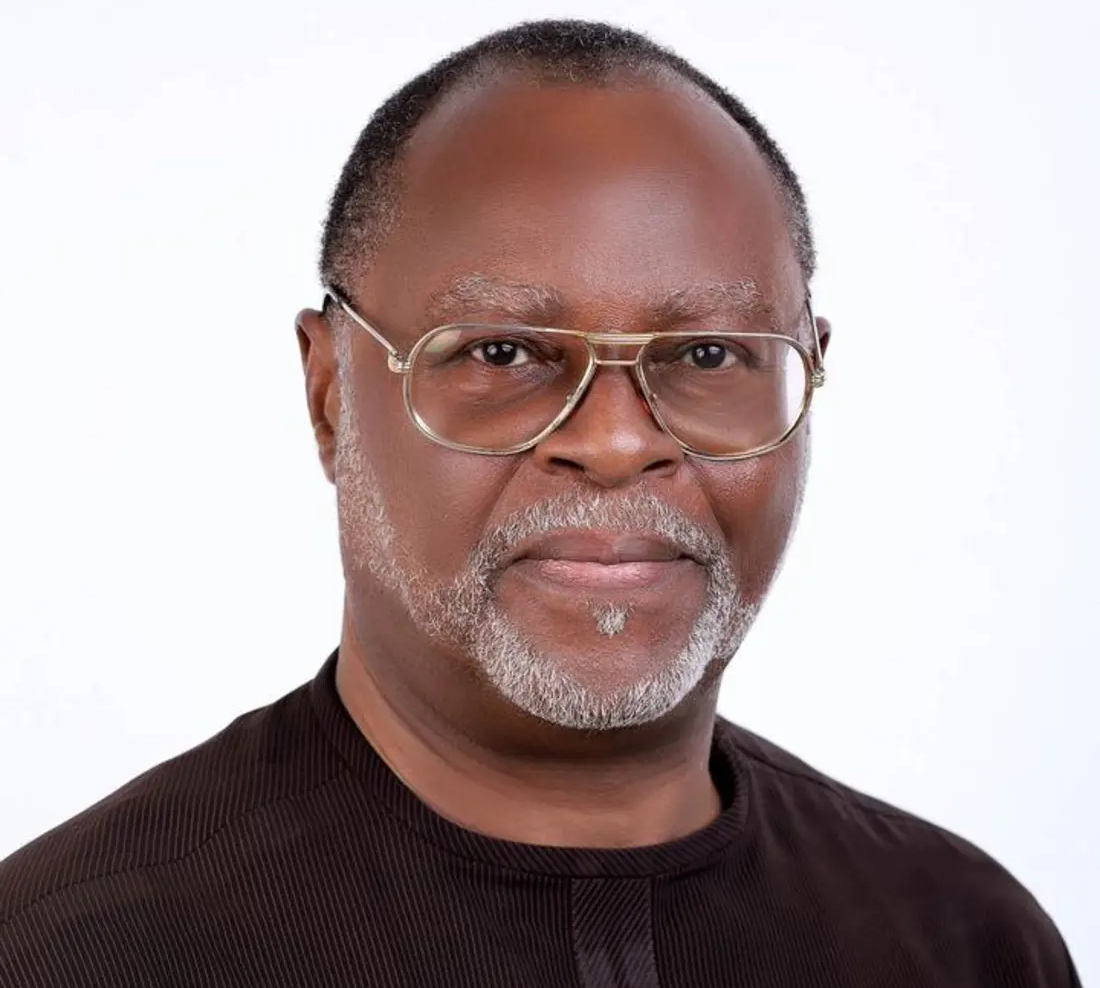
Nigeria’s democracy is witnessing a dangerous regression, with shrinking civic space, weakened institutions and growing pressure on organised labour threatening the gains of the Fourth Republic, a founding member of the Alliance for Democracy (AD), Prof. Udenta Udenta, has warned.
Udenta said the mere replacement of military rule with elected governments could not be regarded as the achievement of democracy, insisting that the country’s democratic institutions must be strong enough to protect citizens’ rights and hold those in power accountable.
He spoke on Saturday in Abuja at a reunion of former leaders and members of the defunct AD, where participants reflected on the political struggles that preceded the return to civilian rule in 1999 and expressed concern over the direction of Nigeria’s democracy.
“Democracy is not fully achieved simply because military rule has ended. Today, we see a shrinking civic space, weakening democratic institutions, labour organisations under pressure and increasing concerns about state capture,” Udenta said.
The former National Secretary of the AD said the current political environment demanded greater vigilance from citizens, the media and democratic institutions, warning that legal authority obtained through elections and court judgments was not sufficient to guarantee political legitimacy.
“A government can be legal yet struggle with legitimacy if citizens are dissatisfied with its performance,” he said.
Udenta’s remarks came against the backdrop of the reunion, hosted by former Bayelsa State governor and senator representing Bayelsa West, Seriake Dickson, which brought together surviving leaders, ideologues and founding members of the AD.
He said the gathering was intended to reconnect members of the political generation that helped shape the transition from military rule, while also providing an opportunity to reflect on the state of the democracy they had fought to establish.
Udenta rejected suggestions that the AD had become irrelevant because it no longer exists as a registered political party, arguing that its ideological legacy remains alive in the people who participated in its formation and democratic struggle.
“It is not a question of whether a party is defunct or not. You say AD is defunct, but I am not defunct. Dr Mansur Abubakar is not defunct.
“We are alive and well, as are many of the party’s leaders, stalwarts, ideologues and founding members across the country,” he said.
According to him, the AD represented civic engagement, social justice and a strong ideological commitment to democratic governance during Nigeria’s transition from military dictatorship.
He recalled the position of the late human rights lawyer, Chief Gani Fawehinmi, who regarded the AD as a platform that represented genuine democratic aspirations during the transition period.
Udenta also dismissed suggestions that the reunion was a move towards an alliance between former AD members and the National Democratic Congress (NDC), saying no political decision was taken at the meeting.
“No, not at all—not yet. Our primary objective is to bring our people together, reconnect and determine who is still active and available. Some former AD members are now in the NDC and several other parties. That is not our focus today,” he said.
Other News
He said the immediate concern was to rebuild relationships among former members, honour those who had died and reflect on the contribution of the AD generation to Nigeria’s democratic development.
The former AD National Secretary also criticised the ideological character of the ruling All Progressives Congress (APC), arguing that the party lacked the ideological foundation that characterised the AD.
He said some politicians who moved from the AD tradition to the APC were motivated more by the pursuit of political power than ideological conviction.
Udenta, however, acknowledged President Bola Tinubu’s contribution to democratic politics during his tenure as Lagos State governor under the AD, saying Nigerians should independently assess the performance of subsequent administrations.
On the possibility of the AD returning as a registered political party, he said the issue was not currently under consideration.
“Our overriding concern is the survival of democracy and the continued existence of the Federal Republic of Nigeria. We remain committed to contributing whatever energy, experience and wisdom we have left to that cause.”
The meeting also featured a minute of silence in honour of deceased AD leaders and pro-democracy activists, including Dr Abraham Adesanya, Chief Bola Ige, Chief Ayo Adebanjo, Obi Wali Briggs and Yusuf Mamman.
On his part, Sen. Dickson described the gathering as an opportunity for former political comrades to reconnect nearly three decades after working together during the formative years of the Fourth Republic.
He recalled that the AD was among the three political parties registered at the beginning of Nigeria’s current democratic dispensation and said many of those present had played significant roles in the struggle for civilian rule.
Dickson said the reunion was not convened to take major political decisions but to revive old relationships, celebrate a shared history and honour those who contributed to the restoration of democracy.
“Today provided a welcome opportunity to reconnect, renew old friendships and revive the bonds of comradeship forged during those formative years of our democratic struggle,” he said.
He said participants agreed to sustain the engagement and continue to “rub minds together” on issues concerning the country as future discussions unfold.
Dickson also paid tribute to departed leaders and activists, saying their sacrifices remained an important part of Nigeria’s democratic history.
“The history of this democratic era cannot be properly told without recognising their courage, commitment and selflessness. Difficult decisions were taken, enormous sacrifices were made and countless hours of service were devoted to ensuring that democracy took root in Nigeria,” he said.
The gathering brought together Udenta, former FCT AD Chairman Dr Mansur Abubakar, Dickson, an 86-year-old founding member popularly known as “Baba”, and other veterans of the party and pro-democracy movement.