Follow Us on Google
• How Nigerians’ desperate search for relevance, fame, fortune online can end in shame, legal troubles
It begins innocently enough. A young Nigerian picks up a smartphone, records a video and posts it online. Within minutes, the views begin to climb. Then come the likes, comments, shares and followers. For some, it is the beginning of a career. But for others, it is the beginning of something far more complicated.
In Nigeria’s increasingly crowded digital space, the pursuit of fame, relevance and financial reward has created an intense competition for attention. Content creators, influencers, skit makers, bloggers and ordinary social media users are constantly looking for the next idea capable of breaking the internet.
Sometimes, that idea is funny. Sometimes it is inspiring. Sometimes it exposes wrongdoing. And sometimes, in the desperate race to go viral, the line between creativity and recklessness becomes dangerously blurred.
A disturbing incident in Anambra State has once again underscored the need for caution, circumspection and discretion in the use of digital platforms.
When a video allegedly showing the sexual abuse of a minor began circulating online earlier this month, outrage spread rapidly across social media. The controversy eventually attracted the attention of law enforcement.
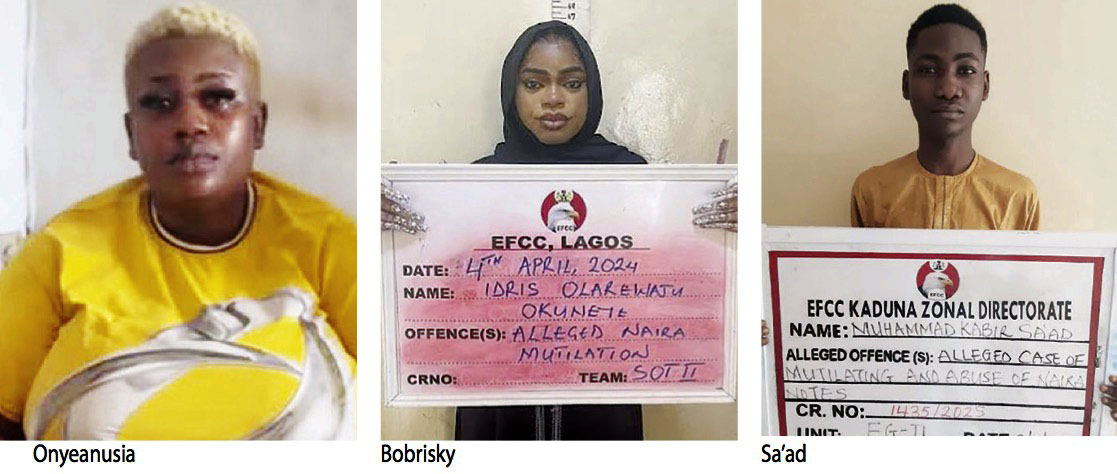
On September 10, 2026, the Anambra State Police Command announced the arrest of 36-year-old Anulika Onyeanusia in Onitsha over an alleged case of child pornography. Police said four children, aged two, three, six and nine, were rescued during the operation, while sex toys and other items were recovered. The suspect’s husband was also reportedly being questioned as part of the investigation. The police said the investigation followed intelligence obtained through open-source information concerning the trending video.
The case has since moved beyond the video itself, raising uncomfortable questions about the growing culture of viral content, the protection of vulnerable people and the lengths to which some individuals may go in the pursuit of attention.
When going viral becomes liability
Social media has transformed the meaning of fame. A decade ago, becoming a celebrity often required years of work in entertainment, journalism, politics, sports or other traditional industries. Today, a smartphone and internet connection can potentially turn an unknown person into a household name overnight.
TikTok, Instagram, Facebook, YouTube and other platforms have created opportunities for Nigerians to make money, build businesses, promote talents and reach audiences previously accessible only to established media organisations.
But the same ecosystem has created a fierce battle for attention. A creator with 10,000 followers wants 100,000. Someone with 100,000 wants one million. And with advertisers, brands and event organisers increasingly interested in digital influence, followers and engagement can translate into commercial opportunities.
The result is a powerful incentive to produce content that attracts attention. Digital media analyst Mabel Ogbona said the competition for visibility can sometimes encourage creators to become increasingly provocative. “Controversy can generate attention quickly. A creator who posts an ordinary video may receive modest engagement, while a shocking video can attract thousands of comments and shares,” she said.
According to her, the danger begins when creators start treating controversy as a business model without considering the consequences for the people featured in their content. “When the content involves minors, alleged abuse, public officials or conduct prohibited by law, the consequences can extend beyond likes and comments. The creator may face questioning, arrest, investigation or prosecution,” she said.
The Anambra case, she noted, represents an especially disturbing example because the alleged victim is a child.
The child behind viral video
While the adults involved in a controversy may become subjects of public debate, the most vulnerable person can easily disappear beneath the noise. In the Anambra case, the police said four children were rescued.
For child-protection advocates, the protection of those children must remain central to the story. The internet, however, has a long memory.
Once a photograph or video is circulated, removing the original post does not necessarily erase it. Screenshots can be taken. Videos can be downloaded and reposted. Websites can reproduce them. Private conversations can become new distribution channels.
That means a child who appears in disturbing material may continue to suffer the consequences long after the initial outrage has disappeared from social media timelines.
The International Federation of Women Lawyers (FIDA) Nigeria, has consequently warned against publishing identifying information about children involved in the case, stressing that public interest in accountability does not justify exposing a child’s trauma to further circulation.
The distinction is important. Sharing information that enables authorities to identify suspected wrongdoing is different from repeatedly circulating graphic or identifying material involving a child.
The first may assist an investigation but the second may compound the harm. However, for journalists, bloggers and social media users, the question should therefore not merely be: Will this go viral? It should also be: Who could be harmed if I share it?
From child abuse allegations to naira abuse
The Anambra controversy is not the first time viral social media content has resulted in law-enforcement action in Nigeria. In another category of cases, content creators have found themselves on the wrong side of the law over the treatment of the Nigerian currency. One of the most prominent examples is Idris Okuneye, popularly known as Bobrisky.
In April 2024, a Federal High Court in Lagos sentenced him to six months’ imprisonment without an option of fine after he pleaded guilty to four counts relating to abuse of the naira. The case followed videos and other evidence concerning the spraying and handling of naira notes.
The case demonstrated how conduct that might be viewed by some social media users as entertainment can nevertheless attract criminal proceedings when it falls within the scope of an existing law.
A similar development occurred in 2025. Muhammed Kabir Sa’ad, a Kaduna-based content creator known online as Youngcee0066, was arrested by the Economic and Financial Crimes Commission after a video showed him throwing naira notes on the ground and stepping on them while challenging the EFCC to arrest him.
He was subsequently convicted and sentenced by a Federal High Court in Kaduna to six months’ imprisonment or a N300,000 fine. The cases underscore a simple reality of the digital age: posting something online does not place the conduct beyond the reach of the law.
Other News
The business of controversy
Why, then, do people continue to produce content capable of generating outrage? Social media analysts said part of the answer lies in the economics of attention. For many creators, visibility is currency.
A large following, Ogbona said, can bring advertising opportunities, brand endorsements, event invitations, collaborations and other commercial benefits. Engagement can determine how prominently an account or video is promoted by an algorithm. And controversy can produce engagement very quickly.
“A creator who spends hours producing an educational video may receive a fraction of the attention generated by another creator who posts something provocative in seconds. That creates an uncomfortable incentive. The more outrageous the content, the greater the possibility of comments, reposts and arguments,” he said.
But the economic value of attention can obscure its human cost. Someone whose privacy has been violated may not receive any financial benefit from the millions of views generated by the content.
A child whose image becomes part of a disturbing viral story has no control over the audience consuming it. An individual falsely accused online may spend years trying to repair a reputation damaged within hours.
The creator may gain followers. The audience may gain entertainment. But someone else may pay the price.
When public outrage meets due process
Social media has also changed the relationship between citizens and law enforcement. In the Anambra case, police said information from open-source intelligence concerning the trending video contributed to the operation that led to the arrest and rescue of the children.
That demonstrates one of the potentially positive uses of social media. A crime that might previously have remained hidden can now attract public attention almost instantly. Citizens can provide information, investigators can monitor publicly available material and authorities can respond to incidents brought to their attention.
But there is another side. Public outrage can move much faster than an investigation. A video may be incomplete. A recording may lack context. An allegation may turn out to be false. An innocent person may be identified as a suspect before investigators establish the facts.
A lawyer, Yemi Olude, said public anger should not be confused with proof of guilt. “The legal question depends on the actual conduct, the evidence available and the relevant provisions of the law,” he said.
According to him, different controversies raise different legal questions. “A video involving alleged child abuse raises different legal issues from a satirical video about a politician or a video involving currency abuse. That distinction matters because public outrage, although important, is not the same as proof of guilt,” he said.
The warning is particularly important in an age when an accusation can become a permanent search-engine result before the accused person has had an opportunity to respond.
The new responsibility of bloggers
Bloggers and independent content creators have become important players in Nigeria’s information ecosystem. They break stories and expose wrongdoing. They amplify voices ignored by mainstream media and sometimes provide information that assists law enforcement. But influence brings responsibility.
Should a blogger publish a disturbing video involving a child simply because it is already circulating? Should the identity of an alleged offender be published before authorities confirm the facts? Should private addresses, phone numbers or photographs be posted merely because they generate engagement? And at what point does reporting become exploitation?
These questions are becoming increasingly important as the distinction between journalism, commentary and entertainment continues to blur online. In sensitive cases involving children, that responsibility becomes even greater.
FIDA Nigeria has also called for digital evidence to be properly investigated where technology has allegedly been used to create, transmit, distribute or monetise sexual material involving children. Such investigation, it said, should extend to devices, social media accounts, payment trails and anyone suspected of facilitating or benefiting from the alleged exploitation.
Victims not always the ones posting
Perhaps the most disturbing feature of viral controversies is that the person who suffers the greatest consequences is often not the person who created the content. It could be a child. It could be someone whose private image was circulated without consent. It could be an individual captured in a humiliating situation. It could even be a person falsely accused of an offence.
The creator controls the upload while the audience controls the shares. But the victim may have no control over what happens next. A single video can become thousands of copies. A joke can become a permanent embarrassment. An allegation can become a digital scar. And an attempt to gain relevance can end up destroying the privacy or dignity of another person.
The price of fame
For many young Nigerians, social media represents hope. It offers a route out of obscurity. It can create income where formal employment opportunities are scarce. It can give talented young people audiences that traditional gatekeepers might never have allowed them to reach.
While there is nothing inherently wrong with seeking fame, building influence or making money online, the danger begins when the pursuit of these goals encourages people to ignore consent, privacy, dignity, safety or the law.
The Anambra case has placed this dilemma under an especially harsh spotlight. A video allegedly involving the abuse of a child became a viral sensation. The police intervened. Four children were reportedly rescued. An investigation followed. But behind the headlines is a child whose experience cannot be reduced to clicks, views or shares. That is perhaps the larger lesson from Nigeria’s growing culture of viral fame.
The internet can create celebrities overnight. It can also create suspects overnight. It can turn ordinary people into influencers, witnesses, victims or accused persons before they fully understand what is happening.
And while a viral story may disappear from the front page after a few days, its consequences can remain for years. For creators, the question is therefore no longer simply how to become famous. It is also what kind of fame they are pursuing—and who may be made to pay for it.