Follow Us on Google

By Okwe Obi, Abuja
The political atmosphere is already electrified ahead of the 2027 general election, with political parties and their candidates inundating voters with promises and pledges, if elected.
Beyond the electioneering, supporters of political parties have resorted to violence, hate speech and blame trading.
Now, the “Rrainbow Coalition” championed by the Minister of the Federal Capital Territory (FCT), Nyesom Wike, has changed the dynamics and permutations, nudging the parties to craft more appealing campaign promises to woo voters.
The frontline political parties battling for victory are the All Progressives Congress (APC), African Democratic Congress (ADC), Nigeria Democratic Congress (NDC), Social Democratic Party (SDP) and the Allied People’s Movement (APM).
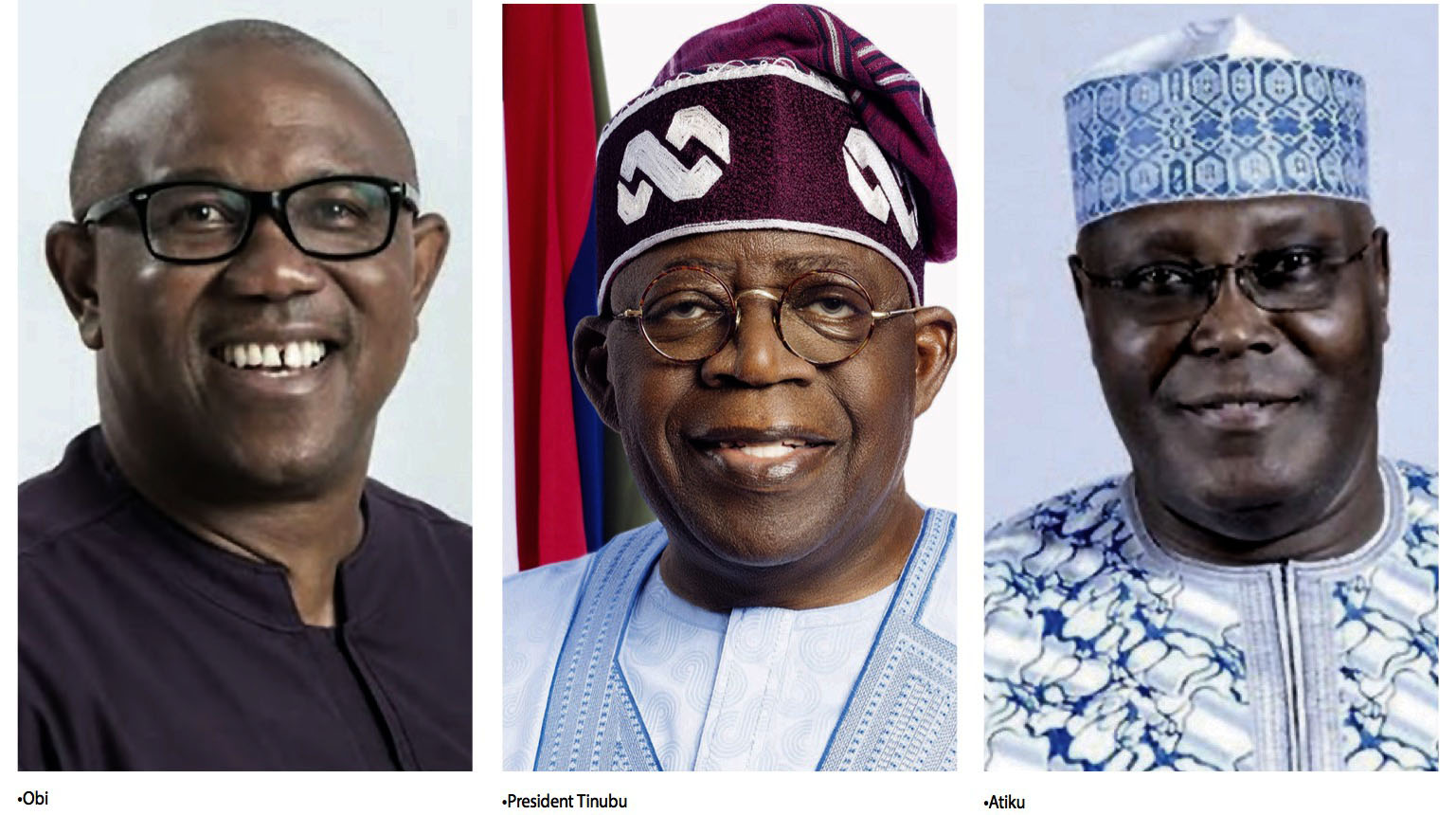
The candidates are President Bola Tinubu, seeking reelection, former Vice President Atiku Abubakar, former Anambra State governor, Peter Obi, a lawyer, Adewole Adebayo, and Oyo State governor, Seyi Makinde, among others.
While some of the political parties and their candidates are feeling the pulse of the people and making genuine promises, others are dishing out unrealistic pledges and duplicated assuranaces.
Daily Sun looked at the campaign promises of frontline presidential candidates and how realistic they are:
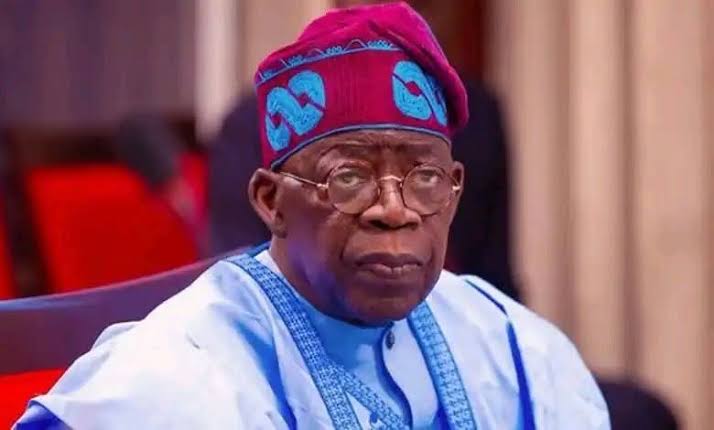
President Bola Ahmed Tinubu
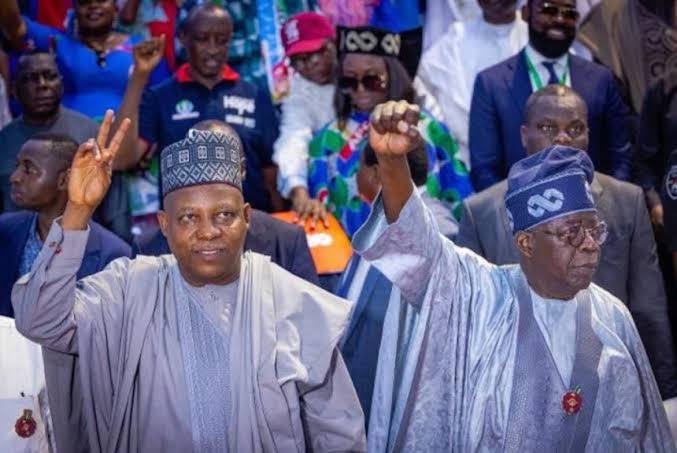
President Bola Tinubu is fighting to retain his seat in 2027, as the APC has lured about 30 governors into its fold to work for his re-election. In his first term, President Tinubu made campaign promises that have fallen flat. Now, the former Lagos State governor is largely repeating the same promises tagged: ‘Renewed Hope Agenda 2.0,’ which are eight agenda divided into four pillars —Secure and Resilient Nation; Better Quality and More Affordable Life for Every Nigerian; Energy, Infrastructure and Economic Growth; and Effective and Accountable Governance.
Under the four pillars, the party highlighted 35 promises
Point 1: Secure the Nation: The party promised to restore peace in every community, complete the establishment and equipping of the four new Army divisions in Makurdi, Ilorin, Jalingo and Benin City, recruit and train the 28,000 additional personnel approved, and report publicly on their deployment. The party pledged to sustain intelligence-led kinetic operations against insurgents and kidnapping networks to degrade and dismantle their operating bases, backed by independent verification of reported operational outcomes to build public trust.
The ruling party said it would strengthen surrender and rehabilitation frameworks through standardised, verifiable reporting on all screened, reintegrated, and prosecuted ex-combatants.
In addition, it said it would set up specialised zonal counter-terrorism capabilities while fortifying physical security across schools, commercial markets, places of worship, and vital transport corridors.
More so, it assured Nigerians of its determination to expand peace-building, trauma support, and deradicalisation programmes to enable long-term social recovery, rebuild civic trust, and safely resettle internally displaced families in their homes.
Further the President said his party would build a police service people can see, trust, and call, train and deploy the 50,000 newly recruited officers and expand recruitment and tactical training towards a 1:400 police-to-citizen ratio, maximising visible patrols across residential neighbourhoods, commercial centres, schools and transit corridors; launch full implementation of the Harmonised Police Reform programme, deploying modern digital record systems, geographic mapping tools, officer body cameras, emergency dispatch channels, and forensic infrastructure nationwide.
The APC leader, said he would transfer static private-protection duties to a fortified Civil Defence service, beginning with recruitment of the 30,150 approved personnel, returning trained police officers to frontline public safety and crime prevention; work with the National Assembly, State Houses of Assembly and governors to enact a constitutional and legal framework for accountable state and community policing, maintaining strict national standards and citizens’ rights; and Protect borders, farms, forests and shared wealth.
Then, under Point 2, which is better quality and more affordable life for every citizen, the President claimed that his administration would guarantee school access, safety, and educational retention.
He said his plan would be achieved by Scaling the HOPE-EDU nationwide to halve the number of out-of-school children by 2031, extend AGILE (now in 18 states) to further states where the number of out-of-school girls is highest, and establish dedicated return-to-school pathways for teenage mothers.
He pledged to build on the 80,284 teachers already certified and licensed, recruit and train 20,000 additional teachers, prioritising female educators and underserved rural communities nationwide.
According to him, his administration would enforce safe-school standards, expand school water and sanitation facilities, and publish an annual education dashboard tracking enrolment, dropout, and completion rates.
The President noted that his administration if reelected would expand primary care, health insurance, and medical anufacturinh, by expanding static and mobile primary care, upgrade secondary facilities across all local government areas, and strengthen referral networks to tertiary hospitals, raising the share of functional primary health centres from 53 per cent today towards 90 per cent by 2031 and extending direct quarterly financing under the Basic Health Care Provision Fund from about 8,300 to all 17,600 primary health centres.
He said his government would sustain maternal, newborn, immunisation, cancer-screening, and early-detection programmes, prioritising families with the greatest financial need and tracking the proportion of births attended by a skilled health provider as a headline HOPE-PHC indicator.
On Point 3, which centres on energy, infrastructure and economic growth, the President assured Nigerians that his administration would deliver power to Nigerians, saying power must stop being a binding constraint on factories, exports, investment and household welfare.
He noted that under the Electricity Act, 2023, he would strengthen coordinated federal and state market development, competitive embedded and captive generation, transparently contracted bilateral supply and bankable distribution investment.
He stated that he would execute commercially viable gas-to-power projects by addressing gas supply contracts, transportation, payment security and dispatch constraints together; not by adding stranded generating assets. Transmission reinforcement, the Presidential Power Initiative, network automation and investment in industrial feeders will be programmed against demand from factories, agro-processing zones, technology parks and export-processing facilities.
Other News
On the last point, which borders on effective and accountable government, the President pointed that, if reelected, he would make justice faster and fairer by scaling e-filing and electronic case management across all federal court divisions, extend them to magistrate courts and digitalise court processes nationwide by 2029, supported by a dedicated funding line for court facilities.
According to him, his government would ensure that there would be judicial financial autonomy in every state, as there would be structural review of the judicial system and begin phased implementation of its recommendations.
He said his administration would strengthen timelines for filings, hearings and judgments, with transparent digital tracking to reduce avoidable adjournments; appoint additional judges where justified, expand Alternative Dispute Resolution and extend the Police Duty Solicitors Scheme and legal aid; implement the National Policy on Justice and strengthen the National Judicial Council’s disciplinary timelines and transparency so misconduct is dealt with promptly and publicly.
In summary, the President said he would deepen the capacity of anti-corruption agencies and courts to investigate, prosecute and conclude cases lawfully and promptly; strengthen asset recovery, action against money laundering and trafficking, and reintegration support for survivors of trafficking; and commission an independent audit of unfinished and under-used public assets and recoverable waste within the first 100 days, publish the results, and report each year what has been recovered, completed or put to use.
Atiku Abubakar
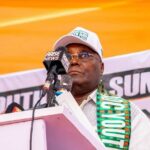
The ADC’s flagbearer has vowed to return fuel subsidy, which was removed by the President Tinubu in 2023. Atiku, who is from Adamawa State and the region battered by bandits and other forms of insecurity, promised to tackle insurgency and to transform the economy for the better.
The former Vice President also said his administration would reopen land borders to revive cross-border commerce, trade and regional economic ties, particularly benefiting northern commercial communities.
According to him, his administration would focus on enterprise, including a $10 billion startup and entrepreneurship financing programme to support youth and women, along with plans to privatize ailing public refineries and expand local production.
Contrary to the bloated team of President Bola Tinubu, Abubakar said he would shrink government to save money for the country.
On the issue of agriculture and food security, he noted he would initiate policies to improve security in farming hubs, lower production costs, and expand financial access for farmers to make food more affordable.
The ADC leader and serial contestant said he would overhaul healthcare infrastructure, ensure better compensation for health workers, and expand educational access, among others.
Among all the candidates, President Tinubu has the highest number of campaign promises, making election observers to interrogate his sincerity when millions of Nigerians are afflicted with hunger and insecurity.
Peter Obi
Obi, who is taking a shot at the presidency for the second time, said his government would turn Nigeria from a consuming nation to a producing nation.
Obi, like Tinubu and Abubakar, also pledged to address insecurity and entrench responsible leadership.
He said: “Number two is to secure Nigeria. It is our duty to ensure that Nigerians live in safety, in a country where people are no longer killed daily.
“I assure you that no mother will continue to cry over the loss of her children. No woman should experience the pain of losing her husband, and no father should suffer the agony of losing his wife.”
The 2023 Labour Party presidential candidate, most importantly, said he would heal the wounds of division and unite the country along ethnic and regional lines.
While campaigning in Jos, the Plateau State capital, Obi said: “Our number one commitment is to unite the Federal Republic of Nigeria because today we have no unity. We are divided along tribal and religious lines. That should not be. We are Nigerians.”
Adewole Adebayo
SDP’s Adebayo, who unveiled his 2027–2031 manifesto in Abuja recently, christened: Farewell to Poverty and Insecurity, assured voters of a country free of insecurity.
The lawyer said: “We are promising that, in four years, we are going to defeat insecurity.”
In addition, he maintained that his administration would establish at least four functional refineries, increase electricity generation to 75,000 megawatts and keep the pump price of petrol at not more than N200 per litre, among others.
The second time presidential contestant said: “The plan is to have four functional refineries in Nigeria and generate 75,000 megawatts of electricity.”
Seyi Makinde
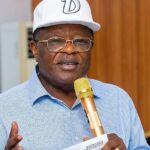
Governor Makinde of Oyo State, a first-time contestant on the APM platform, said his presidency would reset Nigeria’s economy, security, education and governance so that the country can work for every Nigerian.
Makinde, who is believed to be a spoiler for President Tinubu, said things must be done right in the country.
However, political pundits have questioned his seriousness and genuineness in the race because the APM lacks the political spread to win the election.
Political observers opine that their manifestos are almost the same, without clear-cut measures to address how they intend to solve the hydra headed hiccups bedeviling the country.