Follow Us on Google

From Christy Anyanwu, London
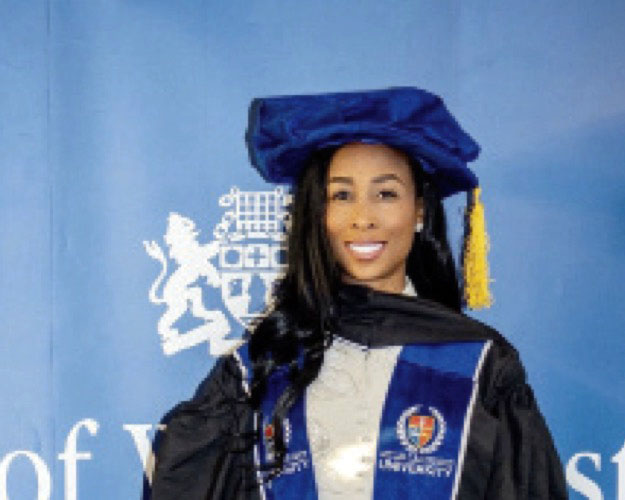
Entrepreneur, international business strategist, author and global health advocate Lady Anne Welsh works at the intersection of investment, public engagement and social impact. A former investment banker, she is Executive Director of Premier Invest and the founder and CEO of Painless Universal, a platform that helps people make sense of the challenges affecting their lives and find practical ways forward.
For Anne, being an “Architect of Change” means helping build systems that give more people a fair chance to participate and succeed. It means asking who can access an opportunity, whose voices are missing and what needs to change for progress to last.

Through Painless Universal, Anne brings together patients, healthcare professionals, researchers, policymakers and business leaders to improve health literacy, influence policy, support research and encourage investment in health and wellbeing. Her book, Painless: Living with Pain, Finding Your Joy, was endorsed by Dr Tedros Adhanom Ghebreyesus, Director-General of the World Health Organisation. President Olusegun Obasanjo also contributed a chapter reflecting on his work with Anne, her experience of sickle cell and the lessons he has drawn from her life and leadership.
She recently spoke with Sunday Sun in London.
Where in Nigeria do you come from?
I was born in Kaduna, and my parents are from Anambra State. I spent part of my childhood in Nigeria, living in places including Kano, Bauchi and Enugu. So, I’m proud to say I was born in the North and have roots in the South-East.
How would you describe growing up in Nigeria?
Growing up in Nigeria was fascinating. I love Nigeria, and I’m grateful for what that time gave me. It helped me understand my culture and taught me resilience, adaptability and the importance of community.
You learn that people make a way, even when circumstances are difficult. You also learn to value family and the connections between people. Those lessons have stayed with me throughout my life and work.
Do you speak Igbo?
Yes, I speak Igbo, and I speak a little Hausa too.
When did you return to the UK, and what was life like at that point?
I came back to the UK when I was 17, and I’ve been here ever since. In some ways, it was a relief because the healthcare support I needed for sickle cell was more accessible. But returning was also challenging.
I arrived at an awkward point in the school year, when many people were finishing their A-levels. The school wasn’t sure where to place me, so I had to start again with GCSEs, even though I felt I should have been preparing for university. I was one of the oldest pupils in my class, and at first I wasn’t sure where I fitted in. It was difficult, but my siblings were here, and that made a big difference.
I’ve often told the story of wanting a part-time job, as many teenagers did. Because of sickle cell, I found that I couldn’t manage the work. I didn’t want that to make me feel useless or left behind, so my sisters went out to work and I looked after the accounts. They told me what they had earned, I balanced the books and worked out what they owed me.
It gave me a role. I felt included and responsible, even though I couldn’t do the job I had first imagined. My sisters were wonderful, and I think that generosity came from how our parents raised us.
My dad used to say, “My little Lady Anne has a little illness. Let’s include her, understand the challenge and help her through it.” That stayed with me. Life may change what you can do, but you can still look for a way to contribute and find purpose.
Other News
What do you do now?
I’m an entrepreneur, and I work across several areas. I run Painless Universal, a platform that helps people living with pain find information, support and a way forward.
We began by focusing on health-related pain. But I realised that pain is universal. It can come from illness, grief, relationship difficulties, divorce, family struggles, war or losing a job. My own experience began with health pain, but I also faced barriers around work and taking part in everyday life.
Painless Universal helps people understand what they’re going through and find practical information that may help. We also work with organisations to make their messages clearer and more accessible. Sometimes people don’t know where to turn because they haven’t been given information in a way they can understand or use. We help close that gap.
Alongside this, I work in strategic investment and finance. Africa needs substantial investment, but access to capital remains a challenge. I work with firms and partners to connect investors with opportunities and help make projects bankable. Relationships matter in that work: people need to understand one another, communicate clearly and build the trust that allows investment to move forward.
Is Painless Universal on TV or radio? What is the platform about?
Painless Universal is an online platform. We publish a magazine, produce podcasts, host events and create other ways for people’s experiences and voices to be heard.
People come to the platform looking for information about something they’re facing. It might be diabetes, a new diagnosis or another difficult experience. We bring together practical information and personal stories, so people can hear how someone else navigated a similar challenge. The aim is to help people feel less alone and better informed about their next steps.
How do you stay connected to your Nigerian roots?
I do go to Nigeria, and I’m looking forward to going again. I also work across different sectors, including investment and infrastructure. I recently travelled to speak at an investment summit organised by Powered by Africa, where I discussed how we can help bridge the financing gap and bring more investment into Africa.
Do you help NGOs get funding?
That isn’t the main focus of my work. I’m more focused on the broader systems that can create jobs and long-term opportunity.
When businesses are able to grow, they can employ people. When people have work, they can support their families, save and plan for the future. Strong businesses can also contribute to the communities around them. That’s why I focus on helping businesses and major projects access the investment they need to operate and grow.
Charitable support can be important, but it cannot be the only answer. I believe in building opportunities people can sustain. As the saying goes, if you teach someone to fish, they can feed themselves for longer. Employment and economic participation can give people more security and choices.
How do you feel about receiving the doctorate?
I feel privileged and honoured. I’m grateful that the work I’m doing is being recognised.
Living with sickle cell can mean facing uncertainty and hearing that there are things you may not be able to do. I look at what I’ve achieved despite the limitations and barriers, and I feel proud. But I also know it has never been my achievement alone. It has taken my family, my friends, my children and a wider community of people who have supported and encouraged me.
Living with pain has taught me humility and gratitude. You never know who may help you through a difficult moment, so I try to remain open to people and appreciate the support around me.
Your experience of sickle cell is powerful, and there are many misconceptions about what people living with it can achieve. Do you have children?
I have two children. Life with sickle cell isn’t easy, and I don’t want to suggest that the condition simply disappears. But with the right medical care, support and understanding, people living with sickle cell can build full and purposeful lives.
We need to challenge assumptions about what people can achieve and make sure support is available when it’s needed. My own journey has taught me that a diagnosis does not define the whole of a person’s life.