Follow Us on Google

• 500 innovations to be showcased to global experts, investors
• Researchers seek pathways to commercialisation, job creation
From Fred Ezeh, Abuja
Nigeria’s quest to harness its intellectual capital, home-grown technologies and research capabilities for economic transformation will take centre stage this week as researchers, scientists, inventors, academics, policymakers, investors and international development partners converge in Abuja for the 2026 Tertiary Education Trust Fund (TETFund) National Research Fair and Exhibition.
The four-day event, scheduled to commence on Tuesday, November 24, will showcase between 400 and 500 research-driven innovations from universities, polytechnics, colleges of education, research institutions and independent inventors across the country.
The exhibition, holding at the Abuja Chamber of Commerce and Industry Trade Fair Complex, Airport Road, was designed to provide a meeting point between the academic community and the business world, with a focus on moving research outputs beyond academic publications and laboratory experiments into the marketplace.
With the theme, “From Research to Market: Driving Innovation, Enterprise and National Prosperity”, the second edition of the fair is expected to deepen conversations around the economic value of research and the need to establish stronger connections between knowledge institutions and industries.
The initiative comes at a time when Nigeria is seeking to diversify its economy, strengthen local manufacturing, reduce dependence on imported technologies and create sustainable employment opportunities through innovation and enterprise development.
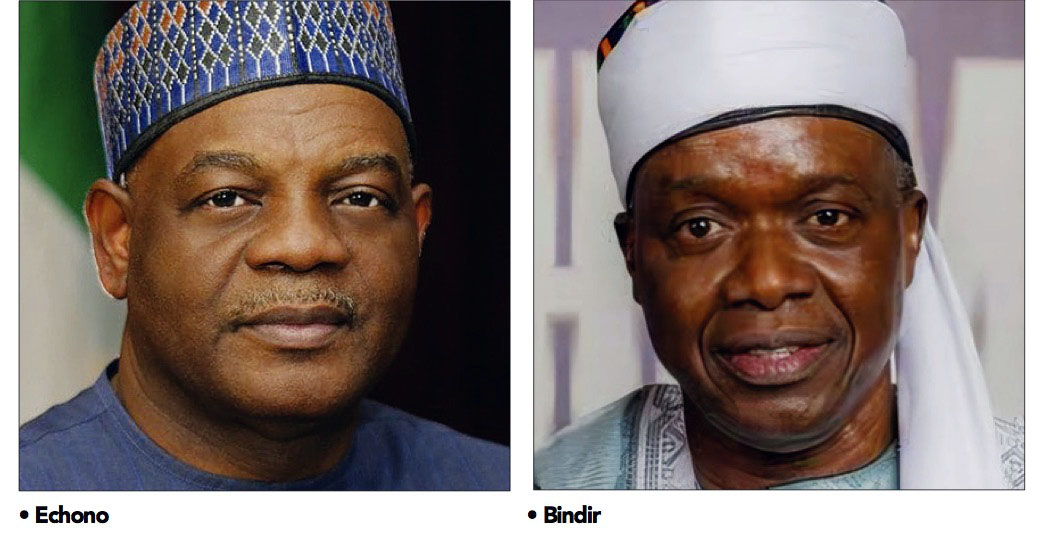
Chairman of the organising committee, Umar Bindir, disclosed that the committee received between 4,000 and 5,000 applications from universities, polytechnics, colleges of education, research institutions, private inventors and other innovators across the country. “But between 400 and 500 innovations were shortlisted after a screening exercise designed to identify projects that had attained reasonable levels of development and demonstrated practical applications,” he said.
According to him, the objective is to showcase functional research outputs capable of addressing real-life challenges and attracting the investment and institutional support required for commercialisation.
Taking research to the marketplace
For years, Nigerian universities and research institutions have produced academic papers, scientific discoveries, prototypes and technological innovations, but many of the achievements have remained within laboratories and institutional repositories without finding practical applications in the wider economy.
The challenge has not necessarily been a shortage of intellectual capacity or innovative ideas, but the absence of effective structures connecting researchers with investors, manufacturers, industries and institutions capable of transforming their discoveries into marketable products. This is the gap TETFund hopes to address through the National Research Fair and Exhibition.
The initiative represents an effort to change the traditional perception of research as an activity largely confined to academic advancement and publication, by demonstrating its capacity to generate wealth, create employment, support industrial development and solve societal problems.
Bindir said the innovations selected for this year’s exhibition cut across critical sectors, including agriculture, healthcare, sanitation, science,, clothing and other areas of national development.
The intention, he explained, is to provide a platform where Nigerians can appreciate the practical value of research and the capacity of knowledge institutions to develop home-grown solutions to challenges confronting the country.
For instance, innovations in agriculture could contribute to improved food production, processing and preservation, while discoveries in healthcare could support local production of medical equipment, diagnostic technologies and other essential products.
Similarly, technological solutions in sanitation, housing and manufacturing could help reduce production costs, improve service delivery and provide alternatives to imported products.
“The exhibition will therefore provide an opportunity for researchers to demonstrate that investments in knowledge generation can produce tangible economic and social benefits,” he said.
Showcasing intellectual capacity
One of the major attractions of the 2026 exhibition will be the number and diversity of innovations expected to be presented.
According to Bindir, the organising committee received between 4,000 and 5,000 applications from different parts of the country, indicating significant interest among researchers, inventors and institutions, but between 400 and 500 innovations were selected for exhibition after the screening.
He said the committee deliberately prioritised innovations that had attained reasonable levels of development and demonstrated practical applications, rather than projects still at preliminary research stages. “There will be more opportunities ahead for those at preliminary research stage. Perhaps, by then, they would have made some good progress.
“The selection process is important because the objective is not merely to assemble researchers and display scientific ideas, but to identify technologies and products with realistic prospects of attracting investment and entering the marketplace.
“The innovations will provide visitors, investors and industry representatives with opportunities to interact directly with their developers, understand the technologies behind their discoveries and assess their potential commercial applications.
“But beyond the participating institutions, the inclusion of independent inventors and private innovators is expected to broaden the exhibition’s reach and demonstrate that Nigeria’s innovation ecosystem extends beyond conventional academic institutions,” Bindir explained.
Bridging the commercialisation gap
Perhaps the most significant aspect of this year’s fair is its emphasis on ensuring that promising innovations do not end their journey at exhibitions and academic recognition.
Bindir acknowledged that many Nigerian researchers and inventors possess the technical knowledge and creativity required to develop useful products but lack the financial resources, business expertise and institutional support needed to commercialise their inventions.
To address the challenge, the organising committee said it has invited intellectual property professionals to provide free advisory services to innovators on patents, trademarks and industrial designs.
“The intervention is expected to help researchers understand how to protect their inventions and establish the legal foundations required for licensing, technology transfer and commercial partnerships.
“Business development experts have also been engaged to guide participants on business registration, enterprise development, product standardisation and the practical challenges of establishing sustainable businesses.
“More importantly, banks, investors, industries and relevant government agencies are being brought together to explore funding opportunities, partnerships and other forms of support for promising innovations.
“This is particularly important because the journey from a successful prototype to a market-ready product often requires substantial investment in further research, product refinement, certification, manufacturing facilities, marketing and distribution,” he said.
He further explained that the 2026 edition will build on the deal-room arrangement introduced during the previous exhibition, which connected inventors with financial institutions and created opportunities for investment and business partnerships.
Meanwhile, this year’s arrangement is expected to strengthen the involvement of the business community, encouraging companies not merely to attend as observers but to identify, adopt, finance and support innovations with commercial potential.
Giving an insight into achievements recorded from previous editions, Bindir disclosed that between 30 and 40 innovations have reached advanced stages of development and were undergoing commercialisation-related activities.
He, however, acknowledged that several others remained at intermediate stages and required additional support to become market-ready.
TETFund’s partnership with Innovat8 Hub is also exploring ways to support such innovations and bridge the gap between research development and commercial application.
Investment in research and global
collaboration
The National Research Fair is part of TETFund’s broader intervention to strengthen research, innovation and development within Nigeria’s tertiary education system.
Established to provide supplementary funding for public tertiary institutions, the Fund has over the years supported infrastructure development, academic programmes, research activities, staff development and other interventions aimed at improving the quality of higher education.
Its research intervention is particularly important in a country where universities and other higher institutions are expected to contribute not only to teaching and manpower development but also to technological advancement and solutions to national problems.
The maiden National Research Fair, held in November 2024, provided an initial platform for showcasing innovations from tertiary institutions and connecting researchers with industry players.
The experience informed the decision to expand participation in the 2026 edition and broaden the composition of the organising committee to accommodate representatives of the organised private sector, innovation hubs, relevant ministries, the Nigerian military, the Association of Nigerian Inventors and community inventors.
TETFund Executive Secretary, Arc. Sonny Echono, emphasised the need to deepen collaboration among researchers, industries and investors when inaugurating the 2026 organising committee in July.
He highlighted the importance of developing a comprehensive database of research outputs from universities, polytechnics, colleges of education and research institutes across the country.
Such a database would provide an important national resource for identifying existing innovations, tracking their development and connecting promising discoveries with potential users and investors.
Beyond the domestic exhibition, the 2026 fair will feature an international symposium beginning November 25, with participants expected from China, India, Canada and Japan, alongside representatives of international institutions, including the World Bank, UNESCO and the African Development Bank.
A Japanese expert is expected to deliver the keynote address, while other international participants will contribute perspectives on research development, innovation, technology transfer and the commercial application of scientific discoveries.
The international engagement is expected to expose Nigerian researchers and inventors to global standards, emerging technologies and successful models of research commercialisation.
It will also create opportunities for collaboration between Nigerian institutions and foreign universities, research organisations, technology companies and development partners.
Turning intellectual capital into national prosperity
Ultimately, the significance of the 2026 TETFund National Research Fair and Exhibition will be measured not only by the number of innovations displayed or the calibre of intellectuals in attendance, but also by the partnerships, investments, businesses and employment opportunities that emerge from it.
For universities and research institutions, it provides a platform to demonstrate their capacity to produce knowledge that responds to real economic and social needs. For investors and industries, it offers access to home-grown technologies that could support production, improve competitiveness and open new business opportunities.
For young researchers and inventors, it presents the possibility of seeing their ideas move beyond academic recognition into commercial application.
Bindir has urged ministers, governors, heads of government institutions and other stakeholders to attend the exhibition and explore opportunities for collaboration with the innovators.
He also commended Echono for providing the administrative and logistical support required to organise the event.
As Nigeria’s intellectual community gathers in Abuja, the larger expectation is that the exhibition will help reposition research from an activity whose value is measured largely by academic publications into a productive national asset capable of generating wealth, creating jobs, supporting industries and solving practical problems.
The ultimate ambition is for Nigeria to move beyond being a consumer of technologies developed elsewhere to becoming a country whose researchers and inventors develop products and solutions that can serve both domestic and international markets.
If the connections being pursued through the fair are sustained beyond the four-day event, the gathering could represent an important step towards building an economy in which knowledge is not merely acquired but converted into innovation, enterprise and national prosperity.