Follow Us on Google
By Merit Ibe
In an effort to save the environment, tackle rising unemployment, strengthen biodiversity and ultimately boost the circular economy, Alef Recycling, a bottle‑to‑bottle rPET recycler based in Ogun State and Nestlé Nigeria have joined forces to turn plastic waste to wealth through recycling.
The effort was inspired by the fact that Nigeria’s plastic pollution problem is staggering, with over 2.5 million tonnes of plastic waste generated annually across the country, according to the United Nations.
Out of this volume, only a small fraction is recycled.
From clogged waterways to littered streets and endangered wildlife, the impact of rising plastic waste is glaring.
As Nigeria moves toward a sustainable future, the need for regulatory support, citizen awareness and more partnerships between companies willing to walk the talk has never been more urgent.
With collaboration, manufacturers can close the loop, collect, recycle, reuse and not just dump plastics into the environment.
The country also needs more corporate will and public awareness to move forward for a better economy.
Calls remain to scale collection systems, expand local recycling capacity and demand govt policies that hold companies to account.
Recently, the Ogun State government unveiled two strategic initiatives designed to drive a circular economy in the bid to confront the escalating menace of plastic pollution and promote sustainable waste management.
The initiatives are Plastic for Cash and Blue Box initiatives, two transformative programmes aimed at reducing plastic waste, incentivising recycling, and promoting sustainable environmental practices.
At the unveiling, Ogun State Commissioner for Environment, Ola Oresanya, noted that beyond policies and programmes, addressing plastic pollution requires a shift in individual and collective behaviour.
“Beating plastic pollution is not a one-day event, it is a lifestyle change, a policy priority, and a collective responsibility that must be embraced by all.”
The commissioner expressed optimism that with sustained public awareness, strategic partnerships, and community involvement, a sustainable waste management and circular economic practices in Nigeria is possible.
Amid this crisis, a partnership between a global food giant and a local recycling pioneer is proving that change is possible and profitable.
The partnership over the past two years has reshaped the country’s approach to plastic waste and circular economy.
Alef Recycling operates a plant that transforms discarded plastic bottles into high-quality recycled PET (rPET) pellets. These pellets are used to make new bottles that meet stringent safety standards from NAFDAC, EFSA, and the FDA.
The company’s strategic alliance with Nestlé Nigeria has become a model for turning plastic waste into economic opportunity. Together, they have built a system that not only recycles plastic but also uplifts communities, creates jobs, and promotes a circular economy.
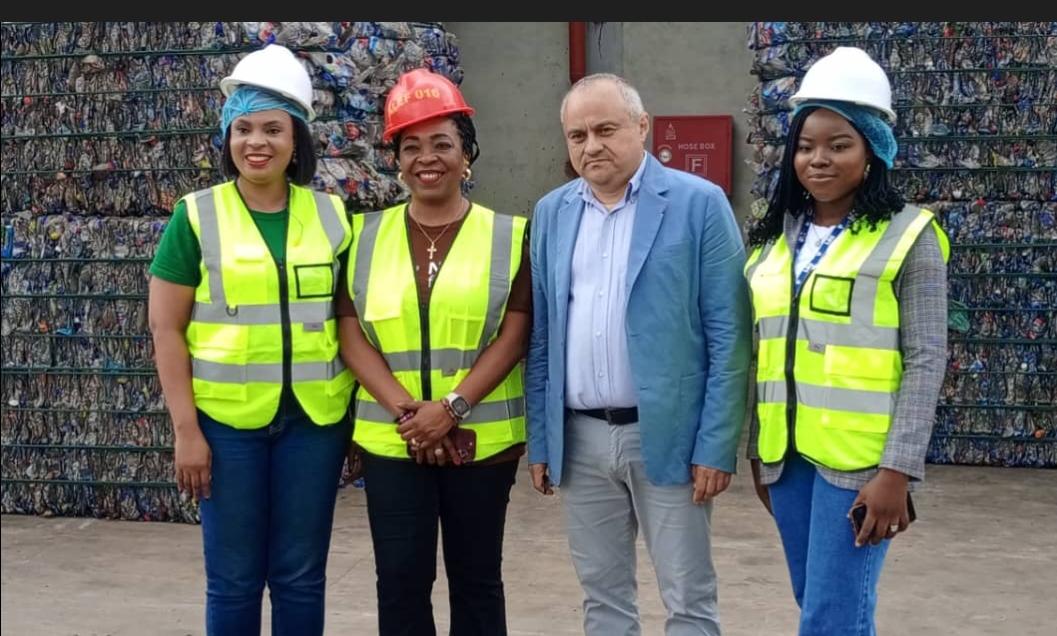
A recent facility tour of the plant gave access into the company’s operations and its role in food-grade plastic recycling in Nigeria.
The Alef facility is involved from the collection and sorting of post-consumer PET bottles to their transformation into high-quality, food-grade recycled PET (rPET) pellets.
Alef Recycling’s Managing Director, Wissam Ramlawi, during the tour of the operation said:
“This isn’t just about recycling, it’s about changing how Nigerians think about waste. “We’ve invested in world-class infrastructure not only to meet global standards but also to make sure we’re enabling companies like Nestlé to fulfill their sustainability promises with 100 per cent traceability.”
The plant, equipped with advanced optical sorters, hot-wash systems, and the Starlinger iV+ extrusion line, is capable of turning used plastic bottles into new ones that meet international food safety standards set by NAFDAC, EFSA, and the FDA. Alef is currently the only plant in Nigeria with this capability.
The strategic partnership with Nestlé Nigeria, which currently uses Alef’s rPET in the production of its Pure Life 50 per cent recycled bottles, is first-of-its-kind initiative in Nigeria.
“The collaboration with Nestlé shows how manufacturers can close the loop, collect, recycle, reuse and not just dump plastics into the environment,” Ramlawi added.
He noted that the factory takes in around 20,000 tonnes of bottles per year, adding that efforts are underway to expand capacity to meet rising demand from food and beverage companies across West Africa.
The plant has been creating local jobs and building valuable recycling infrastructure within Nigeria.
It has been training waste workers, engaging employees, and mobilising volunteers to generate behavior change and elevate often overlooked contributors to recycling ecosystems.
Alef employs hundreds of waste pickers, collectors, and SME aggregators in its supply chain. The company emphasized that investing in the informal waste economy is critical for scale and social impact.
Sustainability
In December 2023, Nestlé Nigeria unveiled the Nestlé Pure Life bottled water made with 50 per cent recycled PET (rPET), a first for Nigeria and the ECOWAS region. This marked a milestone in Nestlé’s journey toward its 2025 goal of 100 per cent plastics neutrality, operating on a “one tonne in, one tonne out” principle that ensures every tonne of plastic sold enters the market responsibly.
Nestlé’s Managing Director, Wassim Elhusseini, stated that the company’s shift to 50 per cent rPET is “the first to achieve this milestone in Nigeria.
“This collaboration aligns with the Food & Beverage Recycling Alliance (FBRA), an industry initiative supporting collection, sorting, and recycling of post-consumer packaging across Nigeria. Nestlé Nigeria, a member alongside over 28 other companies, works with FBRA to strengthen national recycling systems.”
Since 2019, Nestlé and partners including Alef, Wecyclers, and local waste‑picker initiatives have removed over 61,000 metric tonnes of plastic from Nigerian environments.
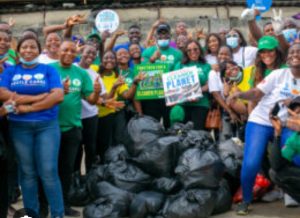
Their annual Nestlé Cares Clean‑Up Campaign, has mobilised 500+ volunteers in 11 major Nigerian cities from Lagos to Port Harcourt, collecting 5,600 kg of waste, including 379 kg of recyclables.
Further, Nestlé has pushed social impact through its Employee Plastics Collection Scheme and a comprehensive Safety, Health and Environment (SHE) training program for over 100 waste‑workers in Lagos and Abuja. These programs focus on occupational safety, proper PPE usage, and dignified inclusion within the plastics value chain.
The partnership serves as a model for how multinational brands can foster circular economy systems through shared responsibility with governments, recyclers, and NGOs.
Impact
By replacing virgin plastic with rPET, Nestlé Nigeria has reduced pressure on fossil resources and is helping to divert plastics from landfills, waterways, and communities.
As the partnership evolves, Nestlé Nigeria aims to expand rPET usage across more packaging formats, deepen local recycling capacity, and support government agencies strengthening standards and compliance.
Recycling is about systemic transformation, where design, recovery, recycling, and social inclusion converge to help chart a cleaner, more circular future for Nigeria.
Rather than exporting recyclables for processing abroad, collaboration is building home‑grown PET recycling capacity that aligns with local regulations and strengthens domestic supply chains.
Ramlawi, Alef Recycling’s Managing Director said it has been a long rigorous journey, noting that the partnership is a significant step but it does not solve Nigeria’s plastic crisis. Infrastructure is limited, public awareness in Nigeria still hasn’t adopted circular models.
He was optimistic the company will continue to refine its food‑grade pellet output and aims to scale capacity to meet growing demand from Nestlé and other FMCG companies.
The Nestlé–ALEF partnership showcases what’s possible when corporate sustainability pledges combine with local technical capability and regulatory backing. By embedding rPET into mainstream products, strengthening recycling ecosystems, and engaging communities across Nigeria, the collaboration will deliver both environmental and economic dividends.
As both companies scale, their success story may well become a model for circular economy adoption across Africa, proving that profitable business and responsible practices can go hand in hand.
Challenges
Alef boss acknowledged the challenges in Nigeria, but was hopeful that with government’s support and enabling environment, things would improve overtime.
Other News
“I’ve been here for almost 15 years now.
I think the biggest challenges are roads, power, and security.
“If they are fixed this country will be the best in the world. And we’re hopeful. I see improvement every year in spite of all the problems.
We are really focused on food grade when you’re talking about just taking this bottle and making fiber, many companies can do that but to get this whole technology in place to get the food grade, we have the largest capacity and this is what we’re trying to maintain. Hundreds of millions have been invested.
I’m very hopeful of the new legislation coming up. I think this will drive more investment”.
On pollution he said: “We control the air pollution and we’re doing a lot of things to reduce the noise pollution from the factory.
“We ship the waste products to other companies for further production.
This is why you don’t see garbage around.
“We incentivize the collectors to make the work easy. It’s not like giving them money, you give them the market.
Nestle came in for us, not because of price, they came in because of responsibility.
Once there is a market, solutions will come in terms of technology. There is a lot of technology that can deal with most of the waste.
When you create the right ecosystem, investments will flow in”.
On collaborating with the government, he said Alef is in talks with NESRA.
“The agency is aware of what we do. I don’t intend for the government to give money. All I want is for the government to do the roads. If the government can fix the roads and create an environment that is okay for us.
“They should create the environment for us to work, they’ve given us the necessary approval to work, I’m very grateful for that and that’s what I’m expecting from them.”
On corporate social responsibility (CSR), the Alef boss said:
“We support the local community and schools.”
Victoria Uwadoka, Nestlé’s Corporate Communications Director, said the vision is broader: “Good food and good life also mean a clean, green environment. Whatever we put into the environment, we remove as well. We are moving towards full circularity and that’s why this partnership with Alef is so important.”
“For us at Nestle, there are two things that are important; one is the people and then the products.
“We have an ambition to achieve zero waste to landfill.
Everything that comes out of our operation should be reused, recycled and we’re reducing the quantity of everything that we use. Like water, power, the quantity of packaging and optimizing the packaging.
“If it is 20 kg, 20 grams, no need to have a big packet, we have a small one.
Whatever we put in the environment, we’re removing as well. So, if we put one bottle in, we make sure that we remove one bottle.
We’re moving towards full circularity and that’s why we’re very happy with our partnership with Alef.
As soon as we have the legislation that allows us to go up to 75 per cent, we will go up to 100 per cent we will”.
On the importance of sustainability, she said: “There’s desertification coming. The mosquitoes are there because we have clogged our waterways and then malaria kills.
“There is also the impact on water. If we keep on living the way we do, these contaminants will find their way into our waterbeds with impacts. That’s why we’re also working to change mindsets and behaviour.
“And that’s why our partnership with the media and Alef is important.
Just to ensure that we’re creating a better environment.”
Nestle Nigeria has partnered with several organisations such as Food and Beverage Recycling Alliance (FBRA), Wecyclers, Alef Recycling, Chanja Datti and Maladase Ecopreneurs Management Ltd. (MECOM) to advance a plastics-value-chain circular economy.
Nestle’s sustainability efforts reflect strong partnership orientation with government bodies (e.g., National Environmental Standards and Regulation Enforcement Agency – NESREA), recyclers, social enterprises (Wecyclers), market authorities, and local communities.
The company’s “Employee Plastics Collection Scheme (EPCS)”, launched in 2022, encourages employees to collect plastic waste (both Nestlé’s and non-Nestlé brands) and earn rewards. Through this scheme alone they diverted ~5,922 kg of plastic from landfills.
In packaging , Nestlé Nigeria was commended by the Federal Government for using 50 % recycled PET (rPET) in its bottled water brand (Nestlé Pure Life) and thereby reducing use of virgin plastic by half.
This shows how the company is not only disposing of waste but designing the product/packaging system to reduce waste, reuse materials, and partner with recyclers and collectors — a much deeper approach than just “clean-ups”.
Also, Nestlé Nigeria has run nationwide clean-up and community sensitisation campaigns across multiple cities (Lagos, Kano, Abuja, Ibadan, Port Harcourt, etc).
They also engage volunteers via their “Nestlé Cares” platform (employee volunteering) to drive these activities.
Nestlé Nigeria also emphasises locally sourcing ingredients and empowering local farmers (for example in their cereal brand, Golden Morn) – thereby reducing import-dependence and supporting local agricultural production.
They introduced eco-friendly packaging for products like Golden Morn, designed to be recyclable and support their goal.
At the 2024 “SERAS Africa Sustainability Awards”, Nestlé Nigeria won awards for “Best in Food Security” and “Best in Circular Economy” recognising their efforts in local sourcing, packaging innovation, and plastic waste reduction.
This year 2025, the company has won several awards on sustainability.
According to Uwadoka, sustainability here isn’t just about waste or environment; it links to livelihoods (farmers), local economy (local sourcing & jobs), packaging design, etc — i.e., a holistic model of “shared value”.
Nestlé Nigeria has also launched a training programme for 100+ plastic waste workers (collectors) in Lagos and Abuja, giving them safety, health & environment (SHE) training, personal protective equipment (PPE), and skills so they can be part of the waste-management value chain.
Often waste-collectors are overlooked in sustainability talk. By empowering them, the company is tackling both social inclusion and environment — which adds depth to their partnership narrative.
As part of the company’s “Our Planet” pillar, they planted 1,000 trees at their dairy demonstration farm in Paikon-Kore, Abuja, to support climate resilience and offset carbon.
They’ve reported internal awareness-raising campaigns about waste segregation, and worked with local authorities for events like World Oceans Day, tree-planting days, etc.
In summary, Nestlé Nigeria’s stride in sustainability is multi-dimensional; Environmental: waste clean-ups, plastics reduction, circular economy, packaging redesign
Social/economic: supporting waste-collectors, local sourcing (farmers), job creation in recycling value chain
Collaborative/partnership: working with recyclers, government agencies, communities, social enterprises
Production/operations: redesigning their packaging, internal employee engagement (EPCS), sustainable sourcing
Recognition & credentials: external awards (SERAS) confirming their progress.