Follow Us on Google
From Jude Chinedu, Enugu
The Women Aid Collective (WACOL) has called on governments, traditional rulers and law enforcement agencies to take urgent steps to end the disinheritance of Nigerian women and girls, warning that discriminatory customs continue to expose them to poverty, violence and homelessness.
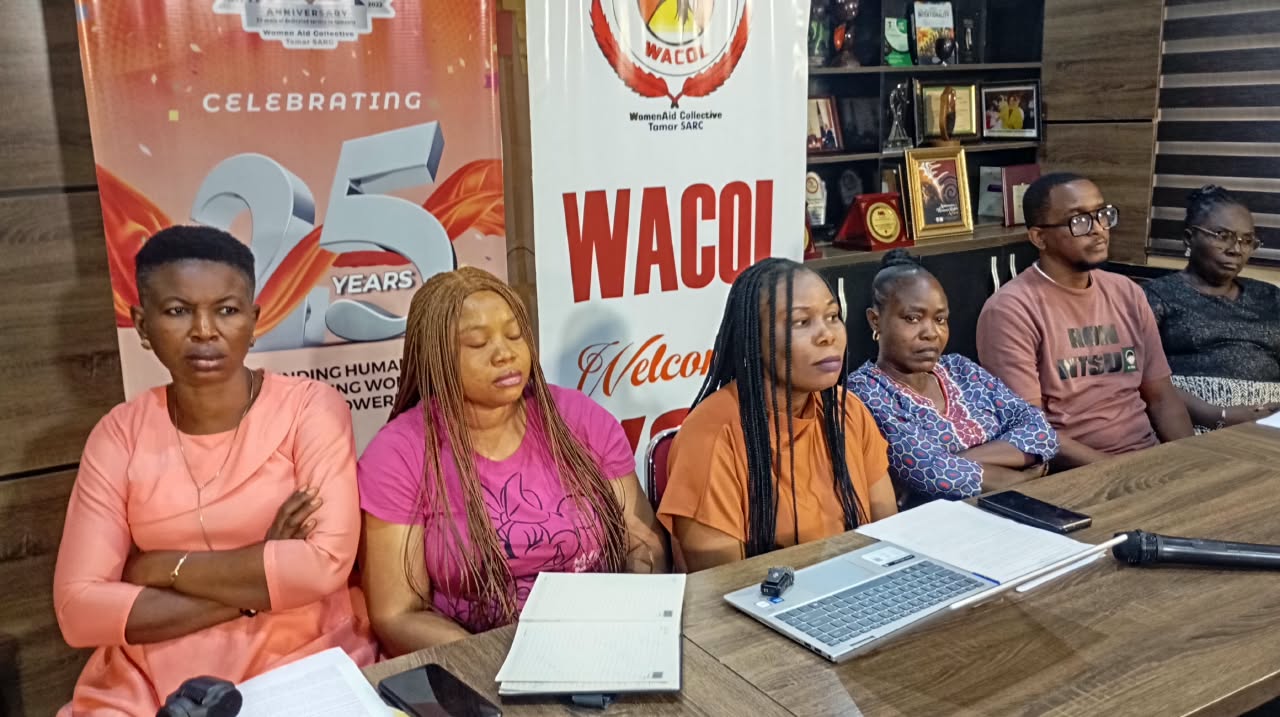
WACOL’s Founding Executive Director, Prof. Joy Ngozi Ezeilo, SAN, made the call at a press conference at the organisation’s office in Enugu to mark Nigeria’s 66th Independence anniversary.
Ezeilo said despite landmark Supreme Court judgments outlawing discriminatory customs against women’s inheritance, such practices remained widespread, particularly in rural communities.
She described the situation as “a disconnect between the law in the books and the law in action”.
According to her, the Southeast was particularly affected, with discriminatory inheritance practices leaving women economically vulnerable and denying them property that could serve as a lifeline.
“The point I’m making is that the Southeast is worse off, and we need to take this seriously, because it contributes to violence, and not just violence, to extreme poverty of women and children deprived of inheritance that could be a lifeline,” she said.
Ezeilo said land remained a critical economic asset, stressing that denying women access to land, farms and economic trees deprived them of the means of production and wealth creation.
She disclosed that WACOL had documented more than 3,000 cases of women being disinherited, including over 120 cases in 2026 alone. The cases, she said, ranged from widows being thrown out of their matrimonial homes to daughters being denied their fathers’ properties because of their gender.
She cited the case of a woman from Eha-Amufu, Enugu State, whose uncles allegedly attempted to demolish her father’s house, which she had built, and seize the land on the grounds that women could not inherit their fathers’ property under local tradition.
WACOL also cited the case of Mrs Ekwutosi Ezeonyekwere, a widow from Umuchu, Anambra State, whose husband’s family allegedly locked her out of his shops and sold his land without her consent.
Another case involved Mrs Nebo from Udi Local Government Area of Enugu State, who was allegedly locked out of her family home by her stepson, while her late husband’s ATM card was seized. WACOL said it subsequently secured a court injunction on her behalf.
Ezeilo said such cases should not be treated as family or cultural disputes, noting that Section 42(1) of the 1999 Constitution prohibits discrimination on the basis of sex.
She cited Supreme Court decisions in Ukeje v. Ukeje, Anekwe v. Nweke and Mojekwu v. Mojekwu as landmark judgments rejecting discriminatory customary practices against women.
However, she said the judgments had not translated into compliance at the grassroots.
Ezeilo called for a comprehensive national law on women’s inheritance rights and urged traditional rulers, community leaders and law enforcement agencies to abolish and prosecute discriminatory practices.
“At 66, Nigerian women should work, tie their shoulders and have equal rights to live, for inheritance, to land, to housing, to everything that is due to them as full citizens of Nigeria,” she said.