Follow Us on Google
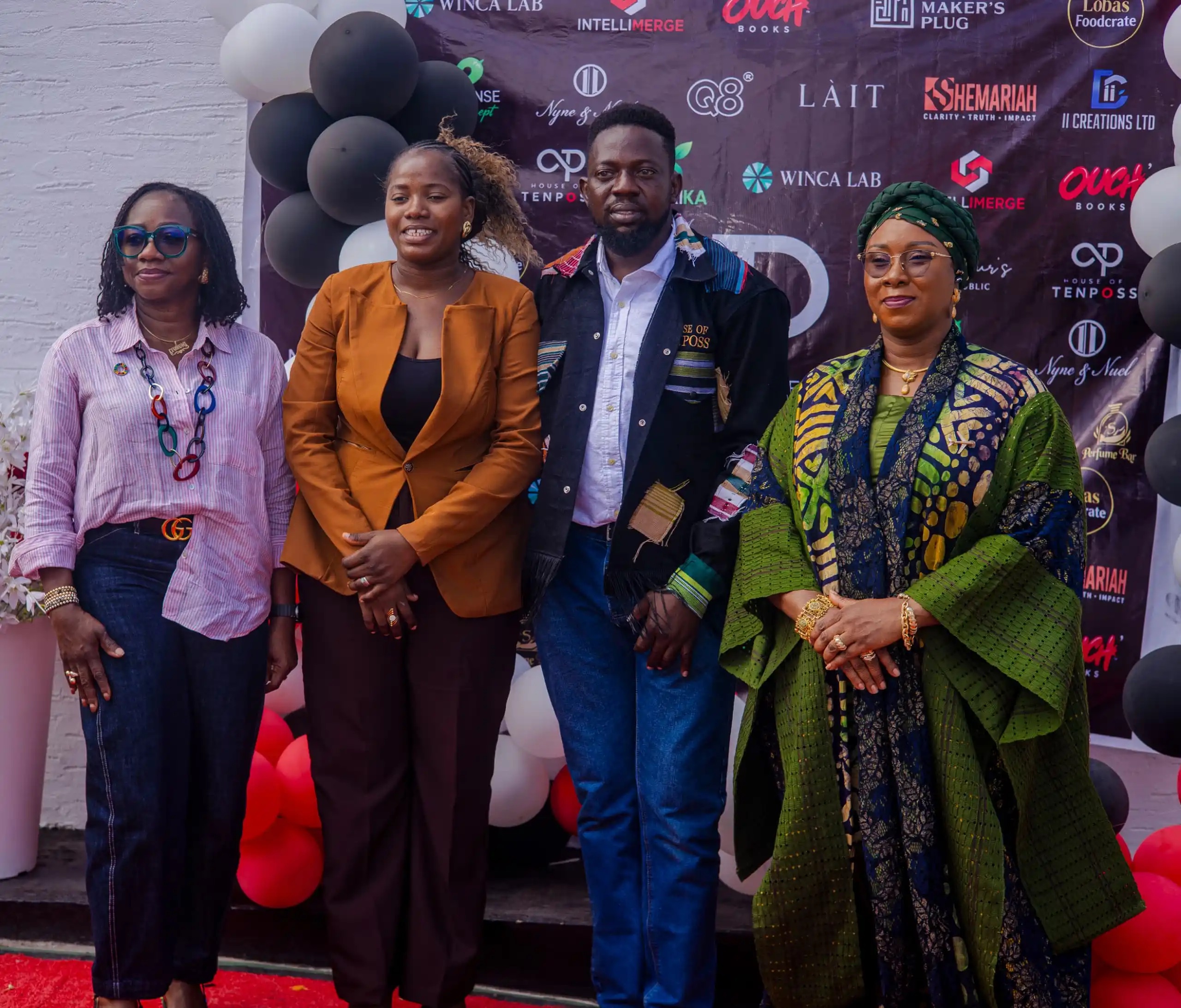
House of Tenposs has launched operations with a plan to develop Nigerian ideas, products, technologies and brands for local and international markets.
The creative enterprise comprises four standalone subsidiaries—Gush Book, Nutrika, Bill-Am and Winca LAB—which contribute to its vision of building locally owned businesses with global appeal.
Minister of Aviation and Aerospace Development, Festus Keyamo, represented by Mrs Janet Oputa, formally opened the enterprise and commended its founder and Chief Executive Officer, Ojo Ayoola, for his ingenuity and commitment to innovation.
Keyamo highlighted the Federal Government’s aviation reforms in safety, sustainability, maintenance and space development, but said government efforts could not replace private innovation and ownership.
“None of that can substitute what the inventor of the House of Tenposs is building,” he said, encouraging Ayoola to remain committed to his vision.
He urged Nigerians to embrace entrepreneurship, saying the country’s future would be shaped by people willing to take risks and create value.
Ayoola said ownership was essential to Africa’s global relevance, arguing that control of ideas, intellectual property, brands, production capacity, technology and access to markets would enable Africans to become creators of globally useful solutions.
“When we own the idea, the intellectual property, the brand, the production capacity, the technology and the route to market, we stop being only users of what others create. We become creators of value that others can use,” he said.
Other News
Citing Andela and Flutterwave, Ayoola said businesses developed in Africa could address local challenges while creating opportunities in international markets.
He said Andela connected African talent with international opportunities, while Flutterwave developed payment infrastructure for businesses operating across markets.
“These stories matter because they show that African problems can produce African capability and African capability can travel,” he said.
Ayoola described the idea behind House of Tenposs as a progression from possibility to ownership through three stages: independence, interdependence and dominion.
Independence, he explained, involved developing the intellectual, technical and productive capacity to stand on one’s own, while interdependence meant building partnerships based on mutually beneficial exchanges.
Dominion, he said, meant attaining such competence in solving important problems that people beyond Nigeria would come to depend on locally developed solutions.
Special Adviser on Climate Change and Circular Economy to Lagos State Governor Babajide Sanwo-Olu, Titilayo Oshodi, also encouraged Nigerians to embrace the risks associated with ownership and entrepreneurship.