Follow Us on Google
…As passengers turnout nosedives
• Blame situation on bad economy, insecurity
By Cosmas Omegoh and Agatha Emeadi
The fortunes of many road transport companies are currently nosediving. Some of them operating on inter-state routes – particularly Lagos to the Eastern corridor – are having difficult times as a result.
Many of the said companies, especially the upcoming ones are now experiencing low passenger patronage and corresponding profit decline.
A considerable number of their passengers are no longer turning up like they used to do in the recent past.
Sunday Sun gathered that the current economic challenges in the country are forcing people to reorder and repurpose their earlier travel plans. Those who hitherto travelled regularly at the slightest prompting are no longer doing so. And this has added to hit hard the transporters and the patronage they used to receive.
Sunday Sun learnt that the recent increase in fuel pump price had affected everybody’s behaviour in very many ways. With PMS now selling at prices above N600, up from N185 per litre, transport fares on all routes have shut through the roof.
But, the transporters who are still managing to brave the odds have to recover their huge expenses on fuel first and other operating costs before talking about making profit.
And what is more, following the government policy that has seen the naira maintaining a free fall, the local currency has sustained an unstable and ridiculous exchange rate regime with the dollar. Up from N430 in the recent past, the naira exchange rate with the dollar is now in the region of N900, with its prospect of hitting the N1,000 mark looking as clear as daylight. This continues to have telling effects on the purchase of spare parts and other vehicle consumables whose prices have attained much higher level than before.
Consequently, a bus fare which only two months ago stood at N15,000 is now N25,000, with some transporters charging as high as N35,000 from Lagos to the East, depending on the type of vehicle, its quality and age.
Now, part of the reasons many travellers have cut back on the frequency of their travels, Sunday Sun learnt, border on the insecurity in the Southeast. The sit-at-home order being enforced on behalf of Sam Ekpa, leader of a faction of the Indigenous People of Biafra (IPOB) has also influenced things. Before now, every Monday was an off day. Indigenes of communities where insecurity was rife preferred to stay put in the cities to avoid unpleasant situations at home.
Although IPOB has denounced the sit-at-home order, insisting that its enforcers are not its members, fears of the activities of the hoodlums have continued to mount. Many who do not want to become their victims have continued to stay away from home despite assurances by the various state governments and the police of the people’s safety.
The recent two-week sit-at-home declared by Ekpa, for instance, was said to have affected many businesses and social lives. Some people who had burials, marriages and other ceremonies, as well as business activities to attend, were said to have changed their plans for fear of the unknown.
Now, because of the prevailing challenges, many transport operators were believed to be experiencing low passenger turnout.
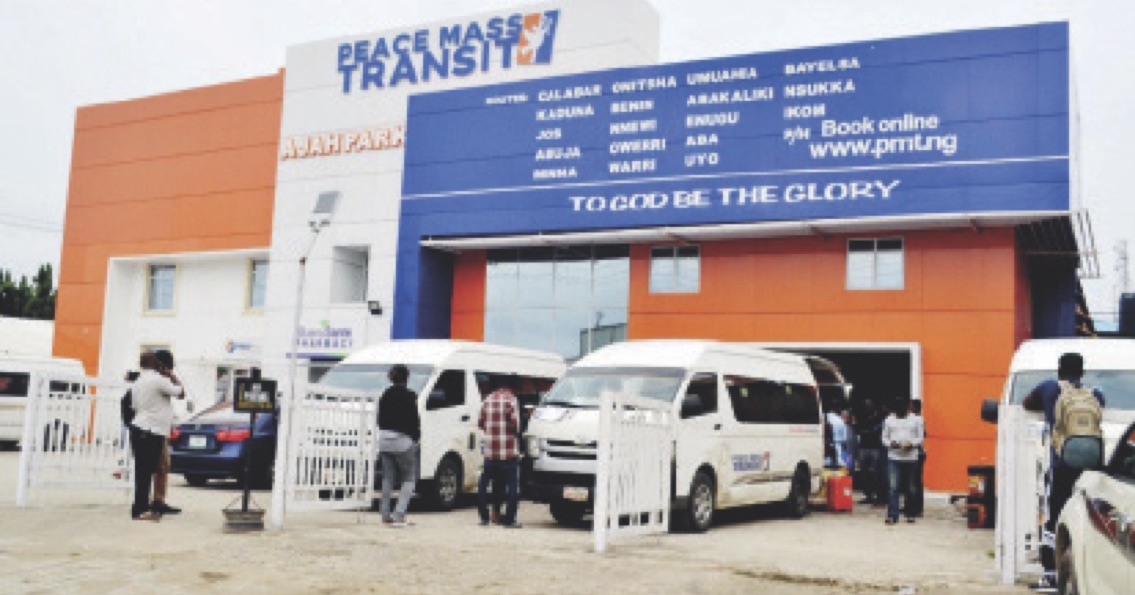
Our correspondents confirmed the challenge when they visited some transport firms, where far fewer passengers were noticed.
At Ijesha market in Surulere, for instance, a popular transport company, which has an office in the area, just two passengers were seen. The company hitherto operated three sprinter buses to the East on a regular basis.
One of the workers who preferred anonymity described the situation as “unfortunate.”
His words: “This is what the bad economic policies of the present administration has caused.
“This is what we have to put up with. Those of them in the government need to do something fast about this to save us, the masses.”
He told our correspondent that the company was charging N22,000 for a bus ride to Owerri, up from N15,000 even when they had just two passengers.
Now, because poor passenger turnout, the company had to make contact with its branch offices to accommodate the passengers who showed up. Our correspondent later learnt that the said two passengers were taken to Cele bus station where they boarded with other passengers from other parts of Lagos.
Our correspondent who visited Mazamaza on the Lagos-Badagry Expressway, learnt that transporters who operate in the area were also experiencing low passenger patronage.
About 9:00a.m on that day, lots of sprinter buses that would travel to the East were seen. The fare stood at N17,000, up from N15,000. But the usual hustle and bustle was seemingly missing.
A bus driver who identified himself as Martin admitted that high cost of fares was affecting their operations.
“Many passengers are no longer travelling like before perhaps because of the rising cost of fares.
“Insecurity in some parts of the Southeast too is a challenge.
“Now, we ought to be charging above N17,000 at least to recover the cost of fuel and have a little to take home. But when you don’t find passengers to fill your bus, what happens next?” he queried.
A manager in one of the major transport companies in the area who also preferred to be anonymous told our correspondent that many passengers preferred night travel.
“We are aware of this current challenge. That is why we have kept fares on our luxury buses at N15,000.
“We refused to raise fares so that our customers could afford them; most of them are traders who prefer overnight travels.
“When you come here in the evenings, you will think that people are travelling for Christmas. Perhaps that is so because our luxury bus fare is cheap,” he explained.
Anyadike Samuel, a driver, who operates a Sienna car, lamented the high cost of fuel on long distance routes.
“Before now, with about N20,000, you could fill your tank and remain assured that would go a long way, but not anymore.
“Now, if you charge higher fares so as to recover the cost of fuel and other operating costs, you might not see any passengers to carry.
“Then what about the rising cost of spare parts, and the number of police checkpoints on the road where you must drop some money? Indeed, many of us are only struggling to sustain this business,” he said.
Speaking on the security challenges in the Southeast, a staff of one of the transport companies based in Ejigbo-Ikotun axis in Lagos, admitted that the issue had affected the transporters in some way.
The man who chose to be anonymous said: “We are not permitted to speak for the company, but I can tell you that as a driver, areas around Orlu up to Onitsha can be nightmarish sometimes.
“The fear of the unknown gunmen in those areas sometimes can be the beginning of wisdom.
“When the so-called two-week sit-at-home was declared, many of us didn’t figure out what our fate was going to be.
“One day, those unknown gunmen came out in their numbers on the Onitsha-Owerri Expressway and started shooting sporadically.
“While confusion reigned, three heavy-duty vehicles ran into them. The trailers were instantly burnt by those hoodlums who kept shooting. Everyone abandoned their vehicles and ran for safety, leaving the area in confusion.
“When the video of what went down later surfaced, people were gripped by fear.
“Of course, if you live in Lagos or elsewhere, won’t you begin to fear the area?”
He maintained that “everyone is suffering the challenge, including the transport companies and their passengers.
“I’m sure that stories like that have been making their own impact on our business over the past weeks.”
He, however, assured that the condition was beginning to ease off, saying: “But I’m quite confident that things are changing now for the better.
“Business has started picking up again; we have started loading our buses fully including those going to and coming from East.
“This is happening now without fear unlike what the situation was about weeks ago when passengers were scared stiff.
“To be honest with you, some passengers travelling to the East at that time had to burst the idea.
“We were hit by low patronage. Our vehicles were loading between seven and eight passengers against full load of 15 passengers.
“But we didn’t stop our operations because of the kind of vehicles we use; luxury buses owners suffered great losses because their vehicles cannot maneuver through the bushes or alternative roads easily.”
On the fares charged, he said, “we now collect N21,000 for regular seats and N23,000 for executives seats.”
Asked how they were managing to survive the turbulent times, he said: “We are struggling hard to be in business.
“The bug biting inter-state transport companies, is also biting other businesses in one way or the other; it has not been easy with anyone, including other businesses since we all are operating within the same bad economy.”